Dig discovers earlier hill-living evidence

 NNP
NNPPeople may have lived in the British uplands up to 400 years earlier than previously believed, archaeologists have said.
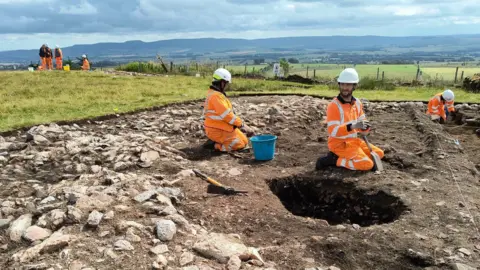
Excavations last year at Harden Quarry in the Northumberland National Park suggest people lived on the Cheviot Hills as far back as 2400 BC.
Archaeologist Clive Goodman said we already knew people from this era lived along river valleys, but the uplands were not believed to have been cleared for farming and settlements until late into the Bronze Age.
The latest findings suggest people did exploit the Cheviot Hills from an earlier date, and Goodman said: "This could also be part of a bigger UK wide pattern."
The team which excavated the site for several months in 2025 found platforms where roundhouses may have once stood and piles of stones cleared by Bronze Age farmers to create fields.
Scientists dated a piece of burnt charcoal found below one of these piles of stones and said it was significant because fields were often burnt to aid plant growth.
The estimated age was about four centuries earlier than farming was thought to have occurred in the area.
 NNP
NNPThe team also found multiple burial cairns – piles of stones that were used as grave markers – on the site.
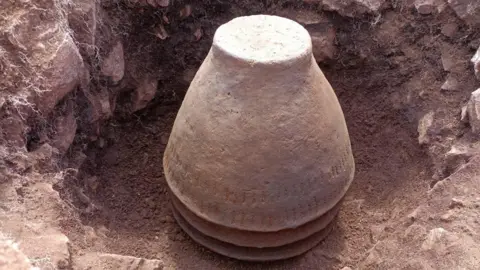
In these cairns the team found stone grave boxes, which once likely held skeletal remains that had since decomposed, as well as a fully intact pot containing cremated remains.
Goodman said the team believe at least one of the grave boxes is from about 2400 BC because a pottery fragment, which is known to be from that time period, was found next to it.
Meanwhile the pot, which Goodman called a "work of art", could originate from between 2200 to 1800 BC.
The items are all currently being analysed, he said, and the findings pose the question about whether this behaviour in Northumberland was a "one-off" or not.
"If we excavate other [upland] sites, will we get the same result?" Goodman asked.
"I think it opens up this incredible view of the early Bronze Age period."
