Anglo-Saxon monastery dig gets £250k funding

 BBC
BBCResearch into an 8th Century Anglo-Saxon monastery is set to continue following National Lottery funding.
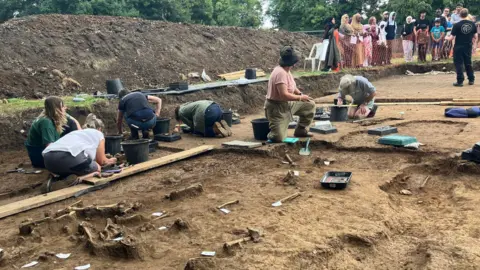
University of Reading archaeologists have been excavating Cookham Abbey, a monastery ruled by Mercian Queen Cynethryth 1,200 years ago.
The site alongside the River Thames in Berkshire has already revealed artefacts, including a well-preserved watermill and dozens of burials from a monastic cemetery.
A £249,755 grant from The National Lottery Heritage Fund will allow further research and interpretation as well as enabling a programme of outreach activities for the public.
The University of Reading team first discovered the Anglo-Saxon site in Cookham, Berkshire, in 2021.
Since then students and staff have been taking part in annual digs at the site and a neighbouring cemetery.
They have developed Cookham Abbey's reputation as a key site for understanding monastic life at the beginnings of English Christianity.
The forthcoming summer excavations will be accompanied by a year-round programme of activities, including a travelling roadshow bringing archaeological finds, virtual reality experiences and storytelling workshops to schools, community groups and care homes
There are also plans for heritage walks linking Cookham Abbey to other ancient sites and natural heritage along the Thames
The project will also create online resources featuring research findings, a curated exhibition of artefacts and photographs.
Prof Gabor Thomas, who lead the University of Reading's excavations, said the funding would be "transformational".
"It will take understanding of this hugely significant site to a much deeper level and deliver a step-change in our public engagement work, especially with stakeholders in the local region," he said.
