How will SEND reforms meet London's growing needs?

 BBC
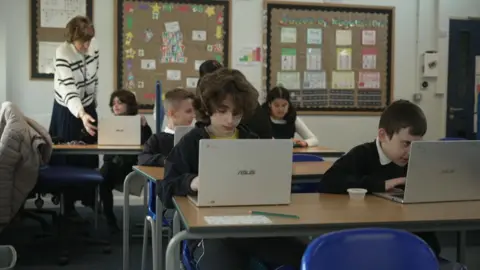
BBCThe number of pupils in London requiring support for special educational needs and disabilities - known as SEND - has risen sharply in the past decade, raising questions about why need is growing and whether proposed reforms will work.
BBC London received a huge response to our first special report - with many asking why there's been such an increase and others asking how the newly pledged reforms will impact Londoners.
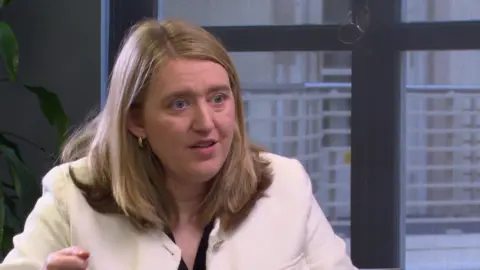
Some of those questions have been put to the Minister for School Standards, Georgia Gould MP.
Here's what she said:
How big is the SEND need in London?
Our analysis found that pupils receiving SEND support in the capital have increased by a third.
And those with the highest level of need – pupils with EHCPs - have almost doubled in that time.
Experts say there is no single explanation for this rise in the number of children being identified as having SEND.
According to experts, one reason is better awareness, particularly around neurodevelopmental conditions leading to increases in the number of children diagnosed with autism.
This is further borne out by BBC London analysis which has found the number of autistic pupils receiving support in school has increased by 158 % from 17,832 in 2015-16 to 46,095 in 2024-2025.
Jo Hutchinson, is director for SEND and additional needs at the Education Policy Institute.
Her research, has fed into the recently published government White Paper on reforms of the SEND systems.
Of the rise in autism diagnoses she said: "It's partly to do with the fact that we are catching up with particularly girls and young people with ethnic minority heritage who were perhaps not previously diagnosed as autistic but now are more likely to be."
She added there were other factors such as rising childhood poverty, housing and the lasting impact of the pandemic on children's social and communication skills.
All of this, she said, influence health and their development
What do the reforms involve?
As part of the plans, the government says it will invest £4bn in mainstream schools over three years.
It plans to spend £1.6bn on SEND support at mainstream schools and colleges in England, and £1.8bn to provide more access to experts at hand such as specialist teachers.
A big change is that, by 2035, only children with the most complex needs will qualify for Education, Health and Care Plans (EHCPs) – which are the legal documents that set out the help children are entitled to.
Linda: 'We're losing our legal protections'
Linda's son has a diagnosis of autism and has significant sensory and communication needs.
He now attends a special school, where she says he is now thriving. But she said it was a struggle to secure the right support for him.
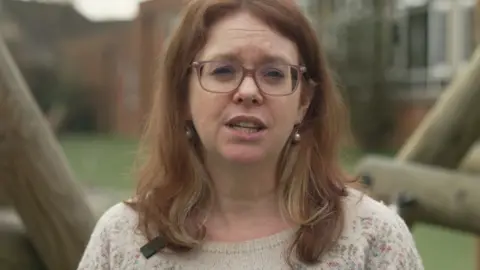
While she welcomes the idea of more support in mainstream schools, she is worried the government's proposed SEND reforms could weaken legal protections currently provided through EHCPs.
She said: "Children at the heart of this are going to lose that protection. They currently have an entitlement to this help and support and if it's not provided, there's legal mechanisms.
"I just feel like children like my son are in real danger of falling out the bottom of that system."
Q: Will my son lose his specialist support?
"The first thing I'd say is it shouldn't have to be such a fight, that support should just be available and our reforms will address that," said Gould.
"But for those parents have an EHCP in the existing system, I think there are a number of really important reassurances that I can give.
"The first is if their child is at a special school, they can remain in a special school throughout their education from primary to secondary."
She added that no child would be transitioned until 2030.
Some will go on to an EHCP, and others to an Individual Support Plan (ISP).
"The really important thing to say is that there will still be comprehensive support that their child needs. There will be a legal duty on schools to develop these plans."
Jaspreet: Teachers' mental health and workload
Some fear the reforms could place even greater demands on teachers.
Jaspreet Gami is a specialist teacher at the resource base for children with additional needs at Coston Primary School in Ealing, west London.
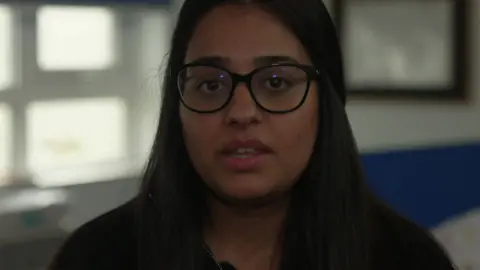
She has been upskilled to help her pupils children overcome barriers to learning particularly around communication and emotional regulation.
"I think the changes would be good because all teachers are going to be equipped with what I have," she said.
"It's just whether they're actually recognising what they need to be equipped with... and are they considering the teacher's workload and mental health in all of this as well?"
Q: These reforms expect too much of mainstream teachers - how will they cope?
Gould said there would be mandatory training, "backed by £200m of support".
The MP added there would be "experts at hand" such as speech and language therapists "who will be wrapping around mainstream schools".
Teachers would be able to use this specialist support.
"Those professionals will also be able to look at the school environment, look at the way the class is structured to make sure that it's really delivering for all children, but particularly for children with special educational needs and disabilities.
"So that is all new resource - £1.6bn - that's going into the directly to schools and £1.8bn to the experts at hand."
Kate: Funding concerns
Teaching unions and school leaders also question whether the funding promised for the reforms will be enough.
Coston Primary's headteacher Kate Moyse says integration is the ethos of her school.

"It's great that the government have recognised that there is a need for this type of provision, said Moyse.
"And they're talking about some fairly significant investment which shows a commitment. However, I'm not sure that the numbers stack up and the devil will be in the detail.
Q: Is £4bn enough? My specialist unit costs £800k a year - these numbers don't add up
"When we're talking about inclusion bases, we're talking about two kinds of bases," said Gould.
"One is a support base that a school might develop where the children might have kind of interventions, some of the things we talked about already, speech and language support and so on, or spend some time, you know, where they need a space for re-regulation.
"And that, you know, we expect to come out of some of the money we're investing, that £1.6bn.
"But when we're talking about a specialist base, that would be commissioned by the local authority and come out of the high needs budget, which is not included in that £4bn.
"So the high needs budget, we've already increased by £1bn.
"We've already set out that it will continue to increase over the course of this Parliament.
"So we do still expect there to be extra money that's going into those specialist bases.
"The £4bn is the extra money that's going into improving the mainstream school experience but there is £3.7bn of capital that's going in to build these bases, and then money from the high needs block that we put aside for children with special educational needs and disabilities at councils that will be going directly into schools.
"So it's part of a bigger kind of package that we're going to be investing."
What happens next?
The proposals are now out for consultation, meaning families and schools still have time to shape the future of the SEND system.
The consultation closes on 18 May 2026.
Listen to the best of BBC Radio London on Sounds and follow BBC London on Facebook, X and Instagram. Send your story ideas to hello.bbclondon@bbc.co.uk
