SEND changes are a 'fundamental misunderstanding'

 Family handout
The mother of a non-speaking autistic child says proposed changes to the special educational needs and disabilities (SEND) system show the government has "a fundamental misunderstanding about our lives".
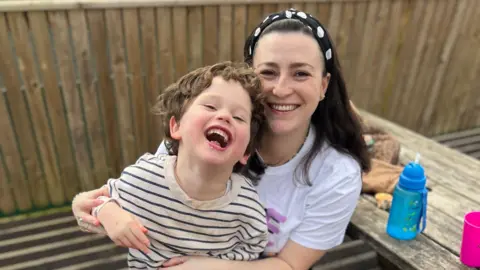
Laura's six-year-old son Ethan attends a special school in Taunton, Somerset, and she said reading the government documents outlining the proposed changes had left her with "many concerns".
Education Secretary Bridget Phillipson said the changes would "take children with SEND from sidelined and excluded to seen, heard and included".
A Somerset head teacher said the idea of the investment in SEND was "great" but that some of the white paper needed to be "unpicked".
Laura believes the language used by Phillipson showed a fundamental misunderstanding about what children with complex conditions needed.
Phillipson talked about keeping children with SEND in local schools with friends, but this is not a priority for Laura's family. She said her son does not understand conventional friendships and her main concerns are his safety, being understood, and staying regulated.
By 2035, education, health and care plans (EHCPs) - which are legal documents that set out the help children are entitled to - will be reserved for only the most complex cases.
The government's new vision is that pupils with SEND, including those who don't have EHCPs, will have new individual support plans.
These documents will set out a child's needs, what support they should receive and what it hopes to achieve.
The government described them as "flexible" plans that set out what the child needs day to day - as opposed to an EHCP, which is the framework giving them legal entitlement to support.
On revealing the planned changes, Phillipson said: "Every child will get the brilliant support they deserve, when they need it, as routine and without a fight."
Laura said her concerns also included a lack of definitions of phrases such as "complex needs" and "effective support".
"It seems to be a money-saving exercise designed not to stop SEND children being failed, but to stop spending so much money on them.
"Teachers are having to become SEND experts with what looks to be very minimal training," Laura said.

For head teacher of 22 years, Brian Walton improvements to SEND provision is "an issue that has been pushed down the line time and time again".
"So to have a government that's saying it's going to try and tackle what's a very, very complex issue is fantastic," he said.
Walton also wants to see changes to school standards, for example around attendance and punctuality for SEND children.
"I don't think mainstream schools have ever been rewarded for being inclusive," he said.
On the government's white paper, Walton said it was "good-intentioned but there are a lot of oxymorons in there at the moment which don't make sense and need to be unpicked".

Claire Naylor runs the Den coffee house and SEND support service in Taunton and has two autistic children.
"What they're writing down on paper sounds amazing - but it's the reality of it," she said.
"If legal protections are reduced, families will just be fighting another system.
"Without significant funding and training, mainstream schools will not be more inclusive," Naylor said.
Follow BBC Somerset on Facebook and X. Send your story ideas to us on email or via WhatsApp on 0800 313 4630.
