Parents 'frightened' over changes to SEND support

 BBC
BBCParents say they are "frightened and exhausted" at the prospect of a £4bn overhaul to special educational needs and disabilities (SEND) provision.
By 2035, ministers want education, health and care plans (EHCPs) - which set out what help children can receive - to be reserved for only the most complex needs.
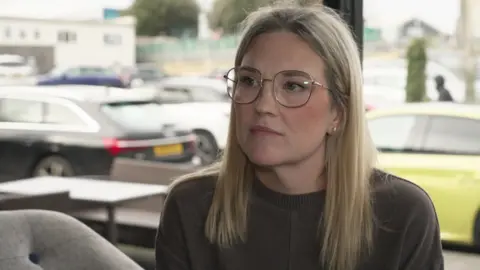
Amy Arnell, from Gloucestershire, who has two children with additional needs, says the measures are "not inclusive" and risk putting more children out of school.
Education Secretary Bridget Phillipson said the plans would make mainstream schools more inclusive and "deliver better life chances for children".
What has changed?
Currently, just over 480,000 of the 1.7 million SEND pupils in England have EHCPs, which provide legal rights to extra support.
But under the new reform, EHCPs will be reserved for only the most complex cases.
The government says every child with SEND will instead be allocated an Individual Support Plan (ISP) to guarantee support, even if they do not meet the threshold for an EHCP.
From September 2029, children with an EHCP will also be reassessed as they transfer from primary to secondary school - risking a potential change to support.
However, the government says transitional protections will be put in place to prevent children losing help abruptly.
Parents will still be able to apply for EHCPs - delivered by local authorities - and challenge the decisions made about what support their child can get at tribunal.
Arnell said two primary schools had already failed to meet the needs of her 11-year-old daughter, and the secondary school being offered was not suitable.
"If she didn't have an EHCP, we wouldn't be able to appeal it and she would have been forced into that school," she explained.
"She would never cope with a mainstream school. They're trying to put everyone in one box and it's never going to work."
She added it took her son a year to receive an EHCP, and "it was a battle at every stage". She fears the reassessment clause could soon put her back to square one.
"It's absolutely exhausting, and that's what they don't realise," she said.
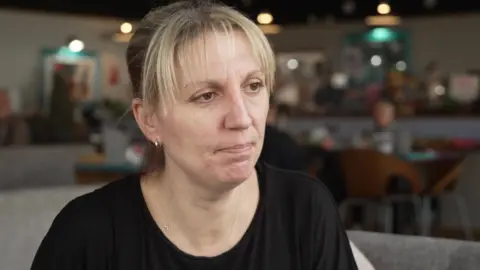
SEND campaigner Jo Roberts, from Gloucestershire, fears the plans are merely a "cost-cutting exercise".
"People are worried, they are frightened," she said. "The families I work with are broken.
"They have spent the majority of their children's lives fighting for the right support and the right education.
"My own child is out of school and we followed all the processes. We ticked all the boxes."
"I think we're going to see more and more children unable to attend school if we are trying to create this 'one size fits all' approach," she added.
 PA
PAThe government says schools will receive major funding, training, and access to on‑demand specialists to provide support before an EHCP is needed.
Councillor Bill Revans, the SEND spokesperson for the county councils network, argues there is a lot to welcome in the new plans.
"Whilst the devil will be in the detail, the proposals represent a potential radical overhaul of the system whereby mainstream schools are resourced to support more pupils with SEND needs.
"Whilst further clarity on some elements may be needed, overall local authorities are set to continue to play an important role within any new system, overseeing support and the commissioning of services and specialist staff," he added.
Follow BBC Gloucestershire on Facebook, X and Instagram. Send your story ideas to us on email or via WhatsApp on 0800 313 4630.
