Can fake rock pools and elk revive this seaside town?

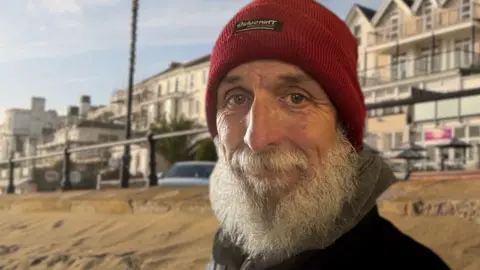 BBC
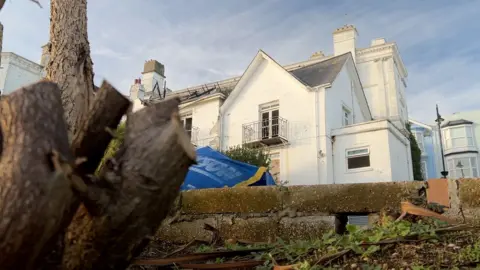
BBCIn a quiet town on the seaside, an imposing white building stands as the centrepiece of the promenade.
It's one of several large derelict hotels lining the beachfront, something residents and workers say is a symbol of the challenges facing Sandown on the Isle of Wight.
But new ideas that aim to ramp up scientific interest, such as introducing elk and fake rock pools for students to research, are beginning to gain momentum.
So, could the bay's natural assets - and the special interest they hold to researchers - help kickstart regeneration?
Ian Boyd works out of a small, single-storey building near Yaverland, just north of Sandown.
The town councillor has also been running The Common Space - a non-profit company with an environmental and community slant - for the past decade.
"Universities visit Sandown because of the interesting work that's going on here," said Boyd.
"We've seen that interest grow - visiting students coming to Sandown to do long-term research projects."
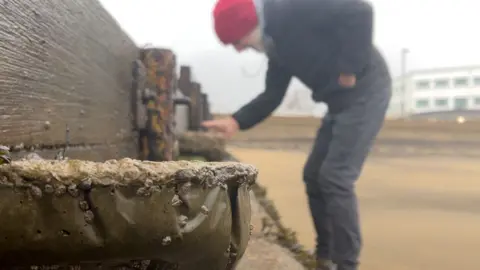
An offshoot brand of Boyd's company called Artecology - run by his colleague Nigel George - creates artificial rock pools which they fasten to structures on the coast.
The idea is to see if they can boost the amount and variety of wildlife on man-made structures like sea defences which are typically more devoid of it.
Researchers from Bournemouth University have found evidence they can attract sea creatures which thrive in their crevices but aren't found elsewhere on the seawall.
The Isle of Wight was granted UNESCO Biosphere status in 2019 - one of only seven sites in the UK - meaning it's recognised for its mix of ecological and cultural diversity.
It also designates the area as a test bed for new ideas in conservation and sustainable development.
UNESCO also calls the island one of the most important coastal wildlife sites in the UK, and one of the most important locations for dinosaur discovery in Europe.
And Boyd thinks the island needs to do more to capitalise on those accolades.
"Educational tourism is a colossal market - short courses, special interest holidays, he said.
"The Isle of Wight is one of the only counties that doesn't have a city and doesn't have a university - those are both really important sources of investment.
"By working with our nearby cities, we can begin to build those sources of investment."
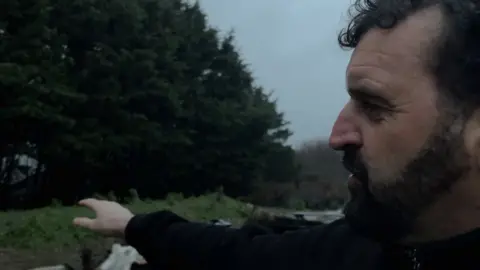
Next door, Lawrence Bates the CEO of Wildheart Animal Sanctuary, has been proposing an ambitious project to draw more students and researchers to the bay.
He wants to create an International School of Rewilding, where students could study regenerative farming, marine biology and palaeontology.
"I think it's really important that we do something like this to jolt Sandown out of the malaise that it's in," he said.
"And by developing a campus like this, which is full of exciting opportunities, we drive young people to the island."
The vision for the campus is a 140-hectare site, including an open area where European elk, with their browsing and trampling, would restore natural wetlands.
Bates said that it's one example of rewilding, which typically involves reducing human management of land and letting nature take the lead in restoring it.
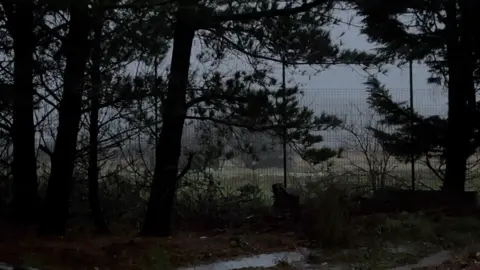
The site as envisioned would also include a marine laboratory and lecture halls.
It's all still in the very early stages - but it has the backing of the local town council.
"There's no opportunity at the moment after you leave college for routes into industry in the environmental sciences...you have to leave the island," said Bates.
"We end up with this brain drain of people flying to the mainland...there's a mass exodus of our young intelligence and energy."
Back in a small workshop, Boyd echoes those comments.
"All of my children grew up and went to school here," he said.
"They've all left the island - they won't be coming back."
But he said he's hopeful that the town will be able to keep building momentum and create something real.
"It matters enormously to me...I desperately want the island to succeed, I want it to be the success that we all know it can be," he said.
"Show that something can happen here, and then use that as evidence to attract other investment and interest into Sandown."
