3,000 BC find takes archaeologists by surprise

 BBC
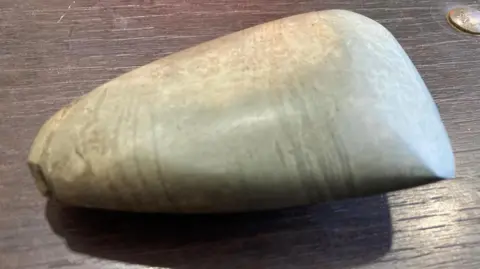
BBCA 5,000-year-old axe head and the remains of Roman buildings are among the finds that have been unearthed near Lincoln.
Archaeologists working along the route of the planned North Hykeham Relief Road said they had found evidence of a previously undiscovered Roman dwelling near Bracebridge Heath.
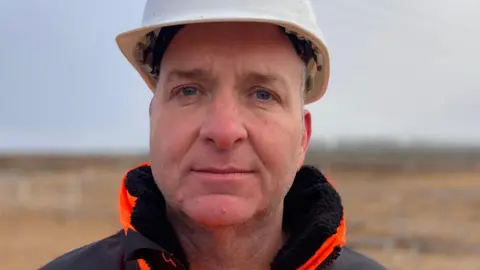
Chris Clay, of Allen Archaeologist Ltd, which is carrying out the work, said: "We expected this to be a Roman site, and that's what we've got, but we've also got hints of much earlier activity going back to about 3,000 BC."
The dig, which began in October 2025 and is due to finish in early 2026, is in an area which will be built over to create the new £208m bypass.
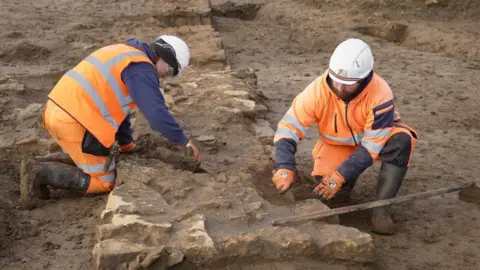
Roman walls and a piece of a Roman column have also been found in several pits in a farmer's field off the A607.
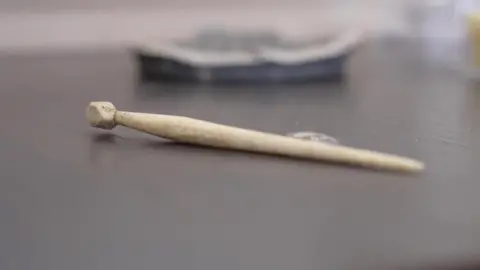
Mr Clay said they had also unearthed thousands of pieces of Roman pottery and dozens of personal items, such as brooches, bracelets and hair pins, from the period.
He said the evidence suggested there were Roman homes outside the city "just like the big houses we have in prosperous suburbs today".
"We're only a mile or two outside of Lincoln, which was one of the most important towns in Roman Britain, and there's also amazing views looking out over the Witham Valley, so this could be a nice country residence for a wealthy, high-status Roman family," he said.
One of the most surprising finds at the site, he said, was a highly polished Neolithic stone axe head, still with its razor-sharp edge, dating to about 3,000 years before Roman Britain began.
"This is a high-status item and wouldn't have been used to chop down trees, it was much too valuable," he said.
"Perhaps this site was a meeting point for communities to come together at a special event.
"It's very likely that the axe head was exchanged or traded as a commodity."
Ian George, from Lincolnshire County Council, said the Roman remains were helping historians understand life outside of the town.
"We know a lot about Roman Lincoln but we know very little about the landscape around it and how people used that landscape, so this is putting together something of that picture," he said.
He said it was "remarkable" that the axe head had survived, adding: "We understand so little about Neolithic Lincolnshire."
Construction of the road is expected to start in early 2026.
The artefacts would be handed to Lincoln Museum and the building remains covered by the new road once the new evidence had been recorded, the council said.
Listen to highlights fromLincolnshire on BBC Sounds, watch thelatest episode of Look Northor tell us about a story you think we should be covering here.
Download the BBC News app from the App Store for iPhone and iPad or Google Play for Android devices
