Unqualified earwax removal providers 'a danger'

 Getty Images
A registered ear care nurse has warned of the dangers of unregulated earwax removal services, saying patients are being put at risk as unqualified private providers step in to fill gaps left by NHS cutbacks.
The Yorkshire nurse, who did not wish to be named, said a growing number of people with little or no medical training were now offering earwax removal after the NHS reduced free provision.
Claire Benton, president of the British Academy of Audiology (BAA), said efforts were under way to regulate the service.
An NHS England spokesperson said integrated care board commissioning teams should make information about ear wax removal services available locally to signpost patients to services.
In the UK, healthcare professionals, like nurses, must register with the Care Quality Commission (CQC), while audiologists are registered with the Health and Care Professions Council or the Academy for Health Care Science.
Regulation around ear wax removal services remains limited and anyone who completes a course can offer these services without requiring CQC registration.
Injuries 'common'
"An awful lot of beauticians are doing ear care after a one-day course," the nurse said.
"Sometimes they are causing damage to the ear canal not doing the procedure in the correct way and don't actually manage to clear the wax either."
She argued that either all providers should be registered or none, noting that current rules were unfair and inconsistent.
The nurse said patients being injured by unqualified providers was a "common" issue, adding: "We get that all the time."
 BAA
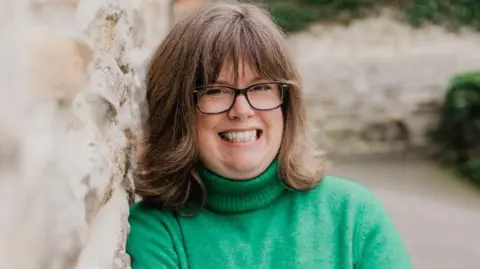
BAAMs Benton, a Skipton-based audiologist, said while training courses could teach earwax removal, the real risk lay in providers lacking the medical knowledge to identify underlying issues.
Before the NHS scaled back free provision, patients were able to access earwax removal services usually through their local GP.
Ms Benton said waiting lists had since increased drastically.
"I see patients that are distraught because their ears are blocked or they can't go and have a hearing test because the hospital won't see them until they've had the wax taken out or their hearing aids keep blocking," she said.
"One of my patients came to see me, saying that their GP had told them that they refused to do it because it was a cosmetic issue - it's not a cosmetic issue at all."
She said growing concerns around patient safety had led to the formation of the National Aural Care Strategy Group, which aims to introduce fair and consistent regulation for professionals and set minimum training standards to ensure safe practice.
 RNID
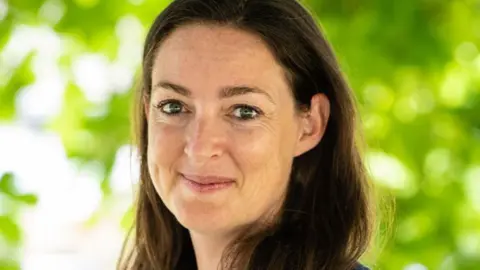
RNIDCrystal Rolfe, from the Royal National Institute for Deaf People (RNID), said a lack of access to free care meant some patients attempted self-removals or were forced to go private, which many struggled to afford.
"Don't put anything in your ear smaller than your elbow," she said.
"When you put a cotton bud into your ear, you're actually pushing down the wax and compacting it."
According to the RNID, more than eight million people in England currently lack access to free NHS earwax removal services.
She said that while this might seem "minor", it was essential as blockages could be painful, interfere with hearing aids, and contribute to social isolation.
'Postcode lottery'
"In West Yorkshire, we know that earwax removal services are commissioned in line with public health guidelines, so that's good news if you live there," she said.
"If you're in the Humber, North Yorkshire and South Yorkshire, they're only partially meeting the guidelines, so they might offer earwax removal in some areas but not others or [under] restrictive criteria."
Ms Rolfe said access should not be a "postcode lottery".
An NHS England spokesperson said: "The NHS has information available online at nhs.uk regarding ear wax safety and people can go to their local pharmacy for advice over the counter.
"Integrated care board commissioning teams should ensure that information about ear wax removal services is made available locally so that patients can be signposted or referred to the most appropriate NHS services where symptoms persist following self-care methods."
Listen to highlights from South Yorkshire on BBC Sounds, catch up with the latest episode of Look North
