Abuse protection order 'helped me rebuild my life'

 Getty Images
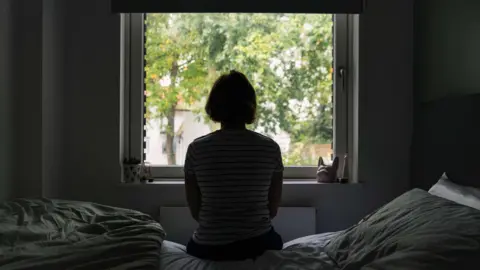
"I used to be physically pulled back in the house, have his arm around my neck, pinned to the floor, hand over my mouth telling me to shut up so the neighbours didn't hear."
This was the frightening, abusive situation Jane escaped from with the help of a domestic abuse prevention order (DAPO).
Her ex-partner had "brainwashed" her into thinking if she contacted the police her children would be taken away from her, she said.
It was Jane's neighbour who made the call to Cleveland Police having witnessed enough to help secure a DAPO in a scheme being trialled by five police forces giving victims indefinite protection with breaches potentially leading to jail.
A six-month order, followed by a six-month extension, was granted by the court to protect Jane, who said it made her feel safer and helped her rebuild her life.
Jane, whose name we have changed to protect her identity, said she was so grateful to her neighbour because she "was never going to make the call" but would leave windows open hoping someone would hear and intervene.
"I am so grateful that she freed me basically out of a life that wasn't worth living, it was horrific," she said.
"The DAPO has helped me to think for myself again, to be able to get my mind and my strength back up."
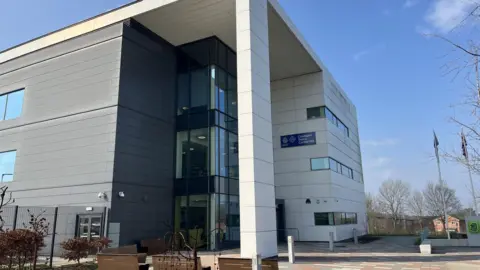
After the initial call to police Jane was assigned a key worker, supported by her children's school and domestic abuse charity Harbour.
The process of securing the DAPO was taken care of by police and Harbour.
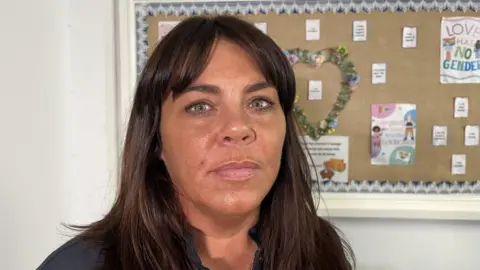
The charity's Tees Valley support services manager, Danielle Chadwick, said the "beauty" of the new order was taking the pressure off victims to make decisions.
"Sometimes due to fear it can be a really hard decision to make to go down the criminal justice system and to report," she said.
"Us and the police and partner agencies can take the lead with this order and put things in place to protect families."
Jane said she was glad she did not have to take an active role in the process of getting a DAPO "because you've got that much going on, in your own head and are trying to deal with a lot of emotion".
"You're literally on an emotional rollercoaster, you're like a lost puppy, you don't know what you're meant to be doing or where you're going," she said.
"Not having to then deal with going through probably court proceedings and dealing with requesting a DAPO takes a lot of stress off that person."
Jane encouraged other abuse victims to "speak out because there are people there who are going to support and help you".
Since the scheme began the force has issued 478 DAPOs, four of which were indefinite orders.
In total, 430 breaches were acted upon and offenders received community orders, including rehabilitation programmes, court fines and custodial sentences - the longest being 52 weeks.
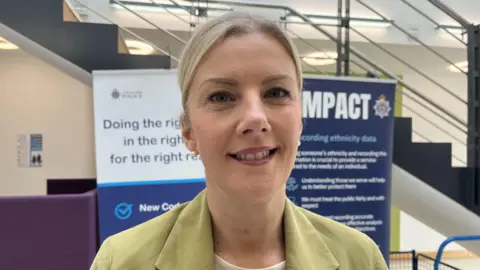
The force's head of safeguarding and prevention, Det Ch Supt Caroline McGlade, said it put itself forwards for the pilot because of the high levels of domestic abuse in the area.
"We rank in the top three in the country in terms of the volume of domestic abuse incidents," she said.
McGlade said DAPOs make perpetrators comply with positive requirements like attending support groups as well as stopping them from contacting victims and barring them from specific locations.
Another positive for the new orders, is that they are not just issued after an incident of domestic abuse like the previous ones.
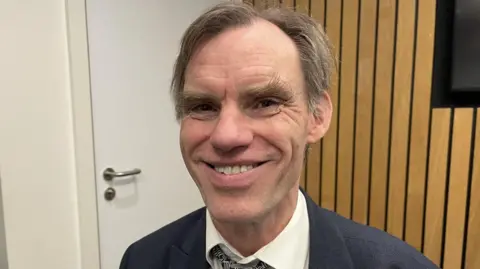
Cleveland Police operational lawyer Paul Clarke said the pilot had been "very successful" with 90% of applications granted.
He said previous domestic abuse orders had a maximum of 28 days which only provided "breathing room" and not a real opportunity for rehabilitation.
"It's the first time really that the courts and police have had the opportunity of putting long term orders in place to both protect vulnerable people and support the perpetrators," he said.
"These are bespoke orders, indefinite orders are only applied for when it is absolutely necessary."
Additional reporting by Claudia Robinson.
