BBC spends the day in A&E as winter pressures rise

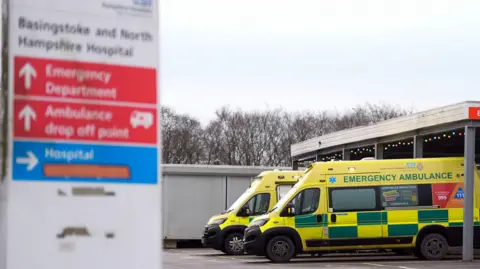 PA Media
It's 9am and I'm in Basingstoke Hospital's Emergency Department.
It's been a bad night. Over the previous 24 hours they've seen record numbers attend A&E.
I've come here to witness that pressure for myself over the next eight hours.
This department was busy when it saw ten new arrivals an hour, that has recently peaked at 30 an hour. It means that for some, the target of being seen within four hours is being missed and waits for care can take a very long time.
At the start of the shift the average wait to be seen was just under two hours, which is not bad. I was warned it would be a different story by late afternoon – and they were right.
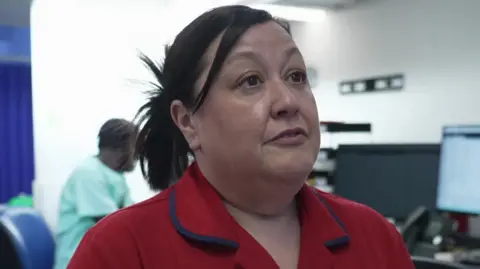
Louise Fox - head of unscheduled care at the hospital, said: "Last night we were inundated with patients, we had long waits to be seen and obviously the patients that take priority are the ones that come in, who are acutely unwell who really need to be prioritised to be seen by the medical staff."
"What that does is puts pressure on our teams, and its a long day for them, lots of hard work."
"With the waits you get people who get upset or disgruntled about the wait and that adds more pressure because you're trying to keep people calm."
"Hopefully people appreciate the position that the staff are in".
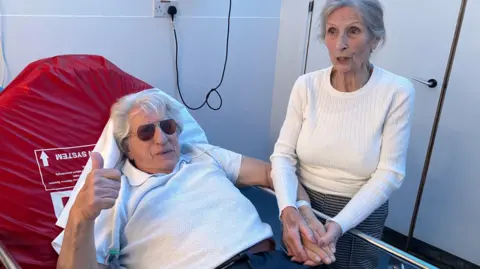
A&E is the right place for patients like Brian Jones, he's 85 and has chest pains and difficulty breathing. He goes to the top of the list and is seen quickly, waiting with his wife for just an hour.
"They think there's a drop of water on the lungs…. You couldn't wish for better care its one of the best hospitals in the country….don't get old whatever you do!"
What worries teams is that if the department fills up with patients who could be seen elsewhere such as in an urgent treatment centre, GP practice or pharmacy patients like Brian could have to wait longer this winter.
Of the recent big hike in patients, it's mostly respiratory illnesses which means wearing face masks is essential.
One of the big stories here this winter is flu. The season has come earlier than expected and the strain of flu is said to be worse than in recent years. The team here say it's rising fastest among young people.
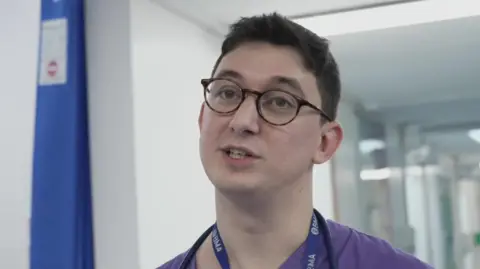
This morning Resident doctor Ewan Evans has seen two young people suffering with flu.
Among the big concern here is that if staff catch the virus, nurses off sick will add to the pressure.
"Flu we don't tend to admit people for so both of the patients i've seen today we won't be keeping in hospital, so that's a couple of hours of my time that could have been spent on those that need to be admitted, we don't mind seeing them, but they don't need to come to hospital" said Dr Evans.
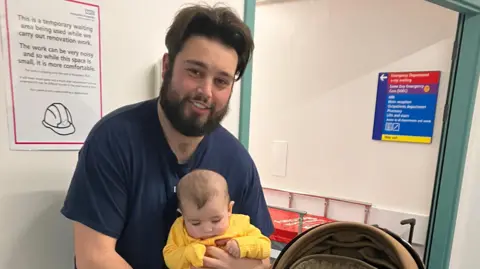
Later that day I meet Brett Shakran who is with his wife and two children both under two years of age – when I met them they'd been waiting three and a half hours.
"This is the NHS under extreme circumstances and it's not good for anyone...every time we come in, if it's the kids or ourselves, we're waiting 3-4 hours. Seems to be not enough doctors on the wards" he said.
Louise Fox tells me: "This is a typical evening in the winter and it will get worse before it gets better".
I ask her how many people could be seen in a different healthcare setting such as an Urgent Treatment Centre, Minor Injuries Unit, GP practice or Pharmacy,
"It's really difficult to say but probably about 30 or 40%....it would make a huge difference to patients who need to be here"
By the end of the shift at 6pm the number of patients in the department had doubled from 40 to 80.
Staff had warned me this would happen - they see this every day.
The wait to be seen was up from two hours to over five and was rising.
In the 8 hours I was here, I witnessed an emergency department coping well but getting busier by the hour and there was real concern among staff for the weeks ahead.
NHS bosses say an unprecedented flu season could push departments to breaking point and there is no peak of this wave in sight.
You can follow BBC Hampshire & Isle of Wight on Facebook, X (Twitter), or Instagram.
