Woman detoxed alone in B&B after failing to access local treatment

 BBC
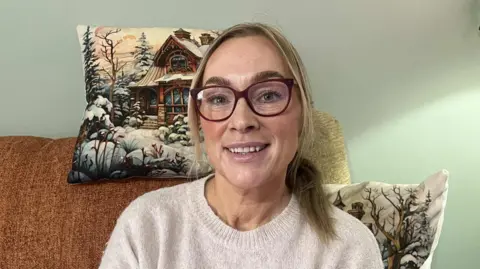
BBCA woman in addiction recovery has said she had to go through withdrawal alone in a B&B after being unable to access inpatient support within her local health trust.
Katrina McGibbon, 46, from Lurgan in County Armagh, developed alcohol and drug problems in her 30s, but felt her recovery was impeded by the lack of a local, health-service run rehabilitation unit.
The Southern Trust is the only trust in Northern Ireland without an inpatient addiction rehabilitation facility, which campaigners have said has created a "postcode lottery".
The trust said patients could be referred to units in other areas, adding they would continue to develop community-based services and work with voluntary partners.
'I was violently ill'
McGibbon said after disclosing her drug use to health professionals in 2020 she was referred to a community addiction team who "gave me a worksheet and sent me home", prompting her to seek her own inpatient support services.
A friend told her about Cuan Mhuire, a charity that runs residential addiction treatment programmes in Newry, but she needed to detox from all substances before she could attend.
"I booked into a B&B. The only thing around me was fields and cows and the loveliest woman running this B&B," she said.
"I was violently ill. I was sweating. I was cold. I was shaking. I was vomiting for about four or five days."
McGibbon said a GP warned her of the dangers of detoxing alone, but she felt it was her only option.
She then spent 12 weeks at Cuan Mhuire.
The Southern Trust said they could not comment on individual cases, but were committed to ensuring people receive appropriate support.
They added that their service had continued to evolve over recent years to improve pathways and support.
What is inpatient rehab?
The Southern Trust, which covers areas in counties Armagh, Down and Tyrone, said people who need inpatient addiction rehabilitation are first assessed by its community addiction team.
If hospital treatment is required, the trust arranges admission to one of three regional inpatient units at other health care trusts.
They said there was "equal access to inpatient hospital beds for all individuals no matter their home trust".
Inpatient rehabilitation provides 24-hour care for people experiencing significant alcohol or drug dependence.
Treatment can include detoxification, psychological support, therapeutic programmes, and relapse-prevention planning.
In Northern Ireland, inpatient rehab and detox services are delivered across a number of facilities:
- Belfast Health and Social Care Trust: Six beds commissioned at Carlisle House with approximately three-month waiting list
- Western Health and Social Care Trust: Eight beds commissioned at Asha Treatment Unit with an eight-week waiting list
- Northern Health and Social Care Trust: Nine beds commissioned at Carrick 1 in-patient addiction unit with a 4-6 week waiting list
- South Eastern Health and Social Care Trust: Twelve beds commissioned at Shimna House with no current waiting list
'We won't give up'
 Emma Metcalfe
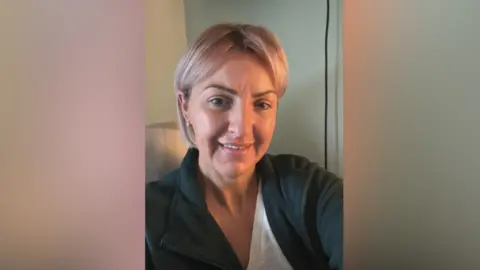
Campaigner Emma Metcalfe said the situation in County Armagh and the surrounding areas had created "a postcode lottery" because people have to rely on capacity at other trusts or fund their own placements.
Metcalfe, who described her own recovery from addiction as a "living hell", set up a support service called Hand of Hope in May.
She said she had taken hundreds of calls from families at "breaking point".
It is run by volunteers and provides peer support, hosting events for those struggling with addiction or offering advice to their families. She stressed it was not a substitute for NHS-run facilities.
"We won't give up until there's somewhere in Armagh for people to turn to and get well," she said.
"Many people, especially young ones, are lost without a clear route to help. You see the awareness, but the one thing that isn't there is somewhere people can walk in and say they need help."
Metcalfe said there was "an ongoing crisis in the Armagh area" and called on public officials to finally fill the gap in services.
The Southern Trust said they recognised addiction was a "significant issue across our communities" and they would continue to develop community-based services "to ensure timely assessment, harm reduction and psychological support".
"We remain committed to working with partners to improve access and capacity across the system," they added.
What is Cuan Mhuire?
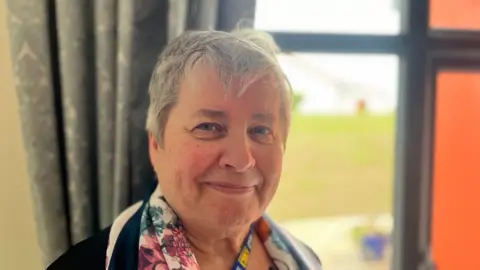
McGibbon told BBC News NI it would be "amazing" to see inpatient facilities open in the Southern Trust after her experience.
She has been in recovery for four and a half years and said she is "doing great" with a home, car and stability to look after her children.
She has benefited from the services of Narcotics Anonymous, but she said it was her time at Cuan Mhuire that was crucial to her recovery.
It is Ireland's largest provider of residential rehabilitation treatment for drugs, alcohol and gambling addiction. It said 40% of its residents come from the Southern Trust due to proximity; its addiction service reported 425 admissions in 2024.
Cuan Mhuire said any detox needed to be supervised by a medical practitioner.
Manager Sheila Cronin said a rise in youth addiction was becoming a particular issue, which she said reflected how drug access had become easier with dealers becoming more creative in reaching young people.
She added: "Addiction is kind of the Cinderella service now.
"It doesn't get the attention or funding it needs."
If the issues raised in this article affect you details of help and support are available at the BBC Action Line.
