Is Dry January a modern temperance movement?

 Getty Images
Millions of people trying to cut out alcohol for Dry January may not realise they are following in the footsteps of a 19th Century social movement that began in the mills of West Yorkshire.
Starting in Bradford in about 1830, the temperance movement sought to combat alcohol's devastating effects in England.
The campaign led to changes to the face of the UK's high streets that can be seen to this day.
A new book from Historic England by author Andrew Davison says while the idea of temperance was imported from America, where there were already people campaigning against alcohol, it first took hold in the UK among Yorkshire's mill communities.
"Henry Forbes owned a mill in Bradford and he was in contact with other mill owners both locally in Bradford but also in Scotland," he explains.
"Mill owners were very supportive of the temperance movement because obviously they didn't like their operatives taking days off because they were so hungover.
"It grew quite rapidly once it had arrived. It spread across the Pennines and across the country - mainly it was strongest in industrialised areas because those were where people were crammed into houses in poor living conditions."
 Historic England
At first, the movement preached moderation, urging people to avoid wine or spirits but allowing beer in small quantities.
The temperance pledge was then created in Preston in 1832 and asked followers to promise never to drink alcohol again.
This led to a "parallel existence" for those who followed the temperance movement, Davison says.
Hotels, halls and institutes were created where non-drinkers could attend classes, borrow from libraries, go to reading rooms and subscribe to newspapers.
"The temperance movement promoted pubs without beer, which sold soft drinks, tea and coffee and cocoa, they sold food, which a lot of ordinary pubs around the country didn't do in the mid-19th Century," says Davison.
"It arrived at a time when people were quite receptive to the increasing realisation that alcohol was harmful.
"It was causing damage in society. It's very hard for us today to understand just how all pervasive alcohol was in the in the early to mid-19th Century.
"Housing, particularly for the working classes, was incredibly poor quality. And drink was all pervasive.
"You read all the time, if you look at newspaper reports and so on, people just lying drunk in the streets."
 Google
Temperance groups raised money for these buildings, many of which still stand on our high streets.
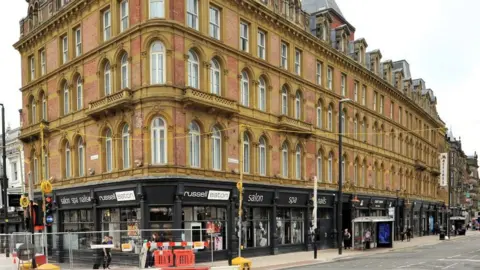
The Trevelyan Hotel on Boar Lane in Leeds is one of them.
"The owner, John Barran, commissioned a leading local architect to design it and when it opened it was described as one of the largest and most well-appointed temperance hotels in the entire country," says Davison.
"Temperance hotels were very much like their licensed counterparts but they wouldn't have had a bar selling alcohol.
"They might have had coffee rooms rather than a bar. But otherwise, the sort of facilities that you would get in any in any other hotel were available to you.
"In the 1830s and 1840s, hotels didn't really exist. There were mainly inns and one of their purposes was to sell alcohol. That made people who didn't want to drink pretty uncomfortable."
Temperance halls, like the Temperance Institute at Thorne in South Yorkshire, were places for people to meet.
"There weren't many public halls. Most of the halls that were available were rooms attached to inns," Davison says.
"You didn't want to be meeting to talk about temperance in a place that sold alcohol. So people started building their own premises in which to meet.
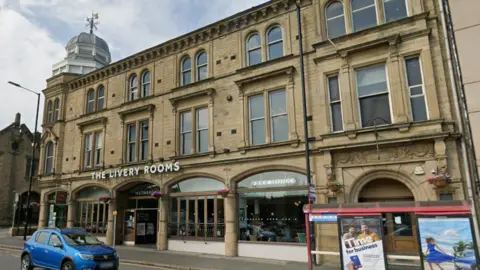
"It was developed at the end of the 19th Century when there was quite an explosion in the number of such institutes.
"There's a very fine one in Keighley, although rather ironically it's now a Wetherspoons."
 Historic England
The movement was also responsible for the creation of public water fountains.
In the 1850s, Charles Melly, a Liverpool-based textile merchant, fought for the creation of fountains in the docks where thousands of people were passing through, and "every second house was a pub", says Davison.
"So he was concerned about the dock workers and the people who were queuing to catch ships and he got permission to put up a couple of standpipes. Those proved very successful.
"He then got permission to put up actual drinking fountains around the docks and throughout Liverpool.
"Then through his business connections and his religious connections he sent out drinking fountains to a lot of friends and business contacts across the country and the idea took off."
He says it meant providing clean drinking water as an alternative to going to the pub became "something that people queued up to sponsor".
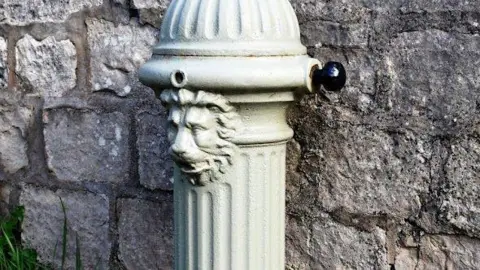
The Burton Leonard Fountain in Harrogate was made by an iron manufacturer in Scotland to serve the people of the spa town.
And in Bradford's Peel Park, a fountain was created in memorial to the first chairman of the Bradford Temperance Society.
"There's a lot of drinking fountains that commemorate, for example, the marriage of the Prince of Wales, later Edward VII, in 1863. A pretty magnificent one in the marketplace at Heckmondwike commemorates that marriage," says Davison.
Temperance today
With 17.5 million people planning a dry January in 2026, according to charity Alcohol Change UK, could a seasonal preference for mocktails lead to another architectural revolution?
It is very unlikely, says Davison.
"The temperance movement was concerned with something which at the time was seen [as], and probably was, a huge social evil," he says.
"The drink question and what to do about it was a recurring theme in British politics during the second half of the 19th Century and right up until the First World War.
"The Dry January movement is quite a long way removed from that. It's because alcohol is no longer really the great social problem that it was in the 19th Century.
"People still recognise that it can be harmful and so on, and there are people who are addicted to it, but it's nothing like the problem that it was in the 19th Century.
"Dry January is rather more of a sort of lifestyle and health choice."
Listen to highlights from West Yorkshire on BBC Sounds, catch up with the latest episode of Look North.
