Police officer earned more than £50k in overtime

 PA Media
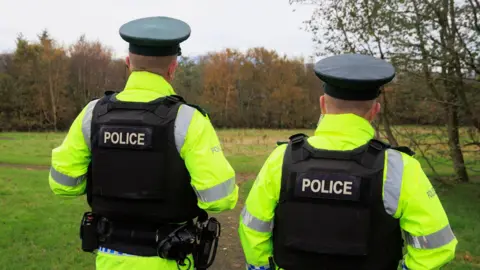
Some police officers in Northern Ireland worked more than 2,000 hours of overtime, according to data obtained by BBC News NI through a Freedom of Information (FOI) request.
The data, which covers the 2024-25 financial year, shows that one sergeant worked 2,177 hours of overtime, earning more than £51,000.
Another officer, a constable, worked 2,214 hours of overtime on top of the normal 48 hours worked by officers over a 17-week period.
The Police Service of Northern Ireland (PSNI) has said that "with increasing demand and complexity of calls for service, overtime is necessary to ensure resources are deployed to meet prevailing demand".
The figures were obtained by BBC Radio Ulster's The Nolan Show.
The FOI revealed the top 10 earning police officers for 24-25 financial year were:
- A sergeant earned £51,731.08 from 2,177 hours of overtime
- A constable earned £47,844.85 from 2,214.50 hours of overtime.
- A constable earned £45,612.97 from 1,920.50 hours of overtime.
- A sergeant earned £43,463.91 from 1,760 hours of overtime.
- A sergeant earned £42,522.42 from 1,685.75 hours of overtime.
- A constable earned £40,522.42 from 1,992.75 hours of overtime.
- A sergeant earned £40,586.94 from 1,722.00 hours of overtime.
- A constable earned £40,586.75 from 2,100.00 hours of overtime.
- A constable earned £39,316.54 from 1,932.25 hours of overtime.
- A constable earned £39,027.86 from 1,892.50 hours of overtime.
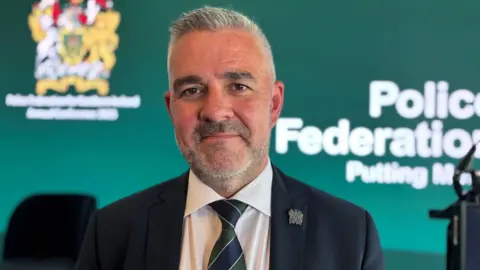
The chair of the Police Federation for Northern Ireland, Liam Kelly, said the overtime was a "direct consequence of not having enough people".
Speaking to The Nolan Show on Monday, Mr Kelly said officers do not want to work the overtime, but the organisation required them to do so.
"I have a real concern around the welfare and wellbeing of officers who are working those amount of hours and that is something I have raised with the PSNI," Mr kelly said.
"There are so many gaps in the service now, that there are pressures being exerted on officers and requirements put on officers that they have to work additional hours, but the numbers cited are excessive.
"We are seeing people being broken because they are working too many hours, broken to the extent that they are not coming back to work at all, they are being ill-health retired and leaving the service and we just can't maintain that."
Democratic Unionist Party (DUP) assembly member Trevor Clarke, who sits on the policing board, said he was "convinced and content that the money will be delivered before the end of the financial year, that said the chief constable is continuing to recruit on the basis that there is a commitment for the money".
"It makes no difference now as far as the chief constable is concerned, he has now lifted the foot of the brake and he is bringing officers into the college, we just need to get them through the college at a faster pace, get them onto the streets and support the other officers."
Last month, the UK Treasury rejected a request from the Stormont Executive to help with the cost of paying hundreds of millions of pounds in compensation to police officers affected by a major data breach in 2023.
The PSNI is also seeking £200m for a recovery plan to boost officer numbers, which the Northern Ireland Executive has said it cannot presently afford.
PSNI policies and provisions
In a statement, the PSNI said that under the Working Time Regulations (Northern Ireland) 2016 (WTR), the standard maximum working week is 48 hours, averaged over a 17-week period
It said that PSNI officers can voluntarily sign a waiver meaning that the limit does not apply, but that other protections - such as breaks, rest periods and annual leave were not affected.
"The WTR does not prohibit the requirement for overtime therefore officers can be lawfully directed to perform additional duties in response to operational demand," it added.
The PSNI also said it "has implemented a range of policies, welfare provisions, and management practices designed to safeguard officers from physical and psychological burnout".
The PSNI's chief operating officer Pamela McCreedy said the organisation was "committed to making the best use of resources".
"It is well documented that our officer numbers are at their lowest ever," Ms McCreedy said.
"With increasing demand and complexity of calls for service, overtime is necessary to ensure resources are deployed to meet prevailing demand.
"As an organisation, we seek to manage this in a way that both meets this demand and prioritises the welfare of our people."
