Drones help council clamp down on fly-tipping

 Phil Harrison/BBC
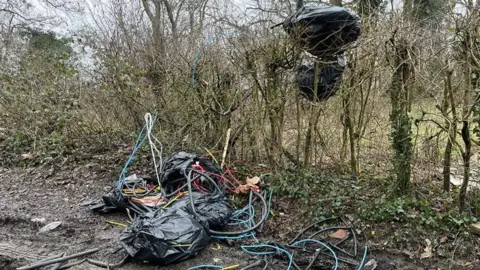
Drones are being used to "fight against criminals who are fly-tipping", often in hard-to-reach places, a council has said.
Maidstone Borough Council (MBC) is deploying drones in a bid to deter the illegal activity in the area, which was the subject of a joint operation with Kent Police last November.
Alongside locating deposits and clearing fly-tips more efficiently, the aim of using drones is to catch and sanction more offenders.
Carl McIvor, waste crime manager at MBC, said: "By having a drone in the sky, we can assess the scale of a fly-tipped area, collect video evidence for prosecution and get our clean up teams to sites quicker."
According to council figures, a total of 1,687 fly-tipping reports were made between April and September last year.
The council said that 1,104 of those reports were cleared away within four days thanks to faster detection, with 146 of these offences resulting in fines or court action.
McIvor said drones were crucial to these efforts, emphasising that the use of thermal imaging allowed the council to detect if waste was "still being burnt".
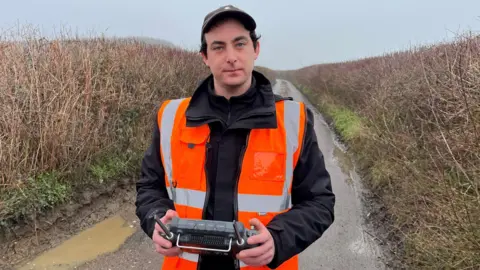
Sam De Wit Chaney, a street scene officer working for the council, said a key perk of the technology was being able to fly into "areas that would otherwise be inaccessible".
"By deploying the drone, we can get a nice aerial shot of the fly-tip itself and then we can also investigate further down the lane or the road, whatever's blocked," he said.
De Wit Chaney added that he had encountered "some pretty horrid stuff" while flying the drone, including items "used for illegal activities".
 Phil Harrison/BBC
Those caught fly-tipping face a £600 fine, reduced to £520 if paid within 14 days, and a £1,000 fine if multiple items or hazardous waste are dumped.
McIvor added: "That's a lot of money just for not checking if your waste has been disposed of correctly."
Follow BBC Kent on Facebook, on X, and on Instagram. Send your story ideas to southeasttoday@bbc.co.uk or WhatsApp us on 08081 002250.
