'We're not speed freaks' - what next for Wales' 20mph speed limit?

 BBC
BBCMore than half of people in Wales oppose the default 20mph speed limit, a BBC-commissioned poll suggests.
It is also among the top issues raised with BBC Your Voice ahead of May's Senedd election.
The online survey of 2,086 people, conducted by Savanta, found 54% oppose the limit while 30% support it. Opposition falls to 49% for 16 to 34-year-olds.
A Welsh government spokesperson said the policy aimed to "save lives and reduce casualties", with a report showing an 11.8% fall in road casualties in the 18 months after it was brought in.
The policy drew an immediate backlash when it was introduced in 2023, with almost half a million people signing a Senedd petition to scrap it.
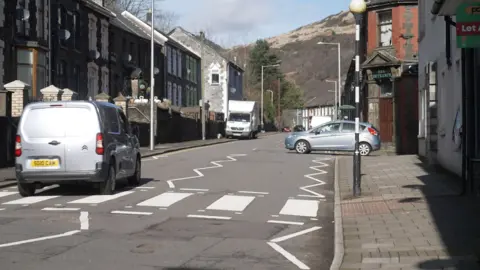
Several councils have now opted to return some roads back to 30mph, following revised guidance from the Welsh government.
Some 22 roads are to be changed back to 30mph in Rhondda Cynnon Taf, after a successful consultation.
But many busy roads in the area remain at the lower speed limit.
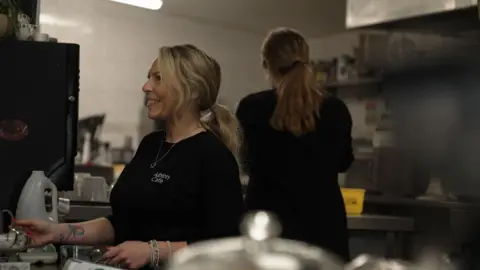
Cilfynydd Road, which runs past the Albion Café in Cilfynydd, is one that will stay 20mph, and the limit is a frequent topic of conversation among customers.
"We get loads of customers complaining – especially when they've just done a mile over the speed limit and they've had fines," said manager Kim Birkby.
Many of those we spoke to between cups of tea and cooked breakfasts were keen to stress their support for 20mph zones outside schools and hospitals.
But they said it had gone "too far" elsewhere.
Carl Benjamin, from Ynysybwl, said while the limit "has its pros and cons", the widespread rollout had made driving more difficult and — in his view — less safe.
"You're looking at the speedometer rather than your surroundings," he said.
"The variation of the speed limit changes every mile to a mile and a half.
"You don't know if you're abiding by the law or breaking it."
He has recently switched to riding a motorbike and believes maintaining 20mph can be "quite hard work".
"We're not speed freaks," he added.
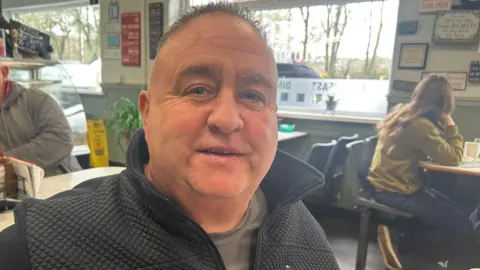
Mechanic Kevin Miles, 51, from Penyrheol, claims he sees the impact of the limit every day in his garage.
"I'm in the motor trade myself so I can see the damage 20mph is causing to cars, with blocked DPFs (Diesel Particulate Filters) and ignition problems and things," he added.
"It hasn't worked to be honest with you. I think they should have really thought it through before they done it."
He believes if people are only doing short journeys at 20mph, exhausts are not being cleared properly, causing DPF issues.
At another table, van driver Angelo Mazoni, 64, was more blunt, saying: "I've had three fines this year over it.
"Should go back to the 30mph, if not 40."
Former coalminer Robert England thinks the policy has done "massive" damage to the Labour party's standing in valleys communities, and could have political consequences.
"I honestly believe that," he added.
"Come the Senedd elections, they'll have a massive job to recover themselves."

Psychology professor Ian Walker believes public reaction to the policy reflects what he and colleagues describe as "motonormativity".
This is the tendency for society to overlook the harms associated with driving because cars have become embedded in daily life.
"People tend to assume that what's good for driving is good for everybody," said Walker, from Swansea University.
"But more than 20% of households don't have access to a car. Faster driving through towns is of no benefit to them at all."
He argues that many people struggle to recognise the harm caused by car use — from collisions to air pollution — because it has become normalised.
In Wales, more than 80 people died in road collisions in 2024, yet Walker says the public tends to see this as an unfortunate but unavoidable consequence of modern life.
"We don't question risks from driving in the way we would in any other context," he said.
"And that makes it harder for people to accept changes like 20mph unless they first recognise there's a problem to solve."
Walker describes 20mph as "a useful and bold step", saying it balances personal convenience with public safety.
He added: "We have a situation at the moment in Wales where people are driving more than two billion miles a year in built up areas — all of which creates air pollution, creates risk, takes over public space, makes it harder to walk.
"There's a cost to every journey.
"Driving a little slower rarely changes the time, but it can reduce risk in a meaningful way."
Cabinet Secretary for Transport Ken Skates said between July and September 2025, the number of collisions on 20mph and 30mph roads was 33% lower than in the same period in 2023.
"In line with guidance, careful consideration has been taken when reviewing 20mph and 30mph trunk road speed limits on both local and trunk roads," he added.
"We continue to build on the consensus that, where 20mph is the right speed, it works well."
What do the other parties say?
"Labour introduced blanket 20mph speed limits with Plaid's support. The Tories voted for it when it first came before the Senedd. Reform are the only party that can be trusted to scrap blanket 20mph speed limits and end the war on motorists," said Reform Wales leader Dan Thomas.
A spokesperson for Plaid Cymru said: "Introducing 20mph zones into Wales' communities has saved lives, but the implementation of the limits under Labour was a mess. Plaid Cymru pushed for a review into how 20mph into introduced, and we're glad to see that review now underway."
Welsh Conservative shadow cabinet secretary for transport Sam Rowlands said it came as "no surprise that so many are against the policy", adding the roll-out had been "inconsistent and costly" and that the party was committed to scrapping it.
"Lower speed limits make sense outside schools, hospitals and in high-risk areas, but Labour and Plaid's one-size-fits-all approach doesn't work," he added.
A spokesperson for the Green Party said: "20mph speed limits have saved lives and prevented life changing injuries since being introduced.
"It's also right that councils are able to decide on how the national default is applied locally. When Greens have spoken to residents, we always find the lower limit is popular on the streets where people live."
A Welsh Liberal Democrat Spokesperson called the rollout "a public relations disaster".
They added: "The evidence is clear, most people support lower speed limits in residential areas and around sensitive areas such as schools and hospitals.
"The Liberal Democrats will continue to support local councils and police forces to improve road safety in areas they know best."
