Lifeboat plea for south of Scotland bays

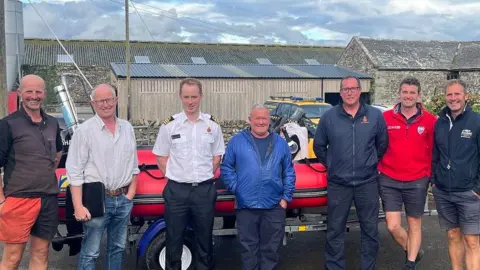 Fleet Bay Inshore Rescue Service
An area of south-west Scotland has been left without a dedicated lifeboat service due to the introduction of new rules about rescue boats.
The Fleet Bay Inshore Rescue service has attended hundreds of emergencies since it was founded in 1974, but has been unable to attend 999 call-outs since 2024.
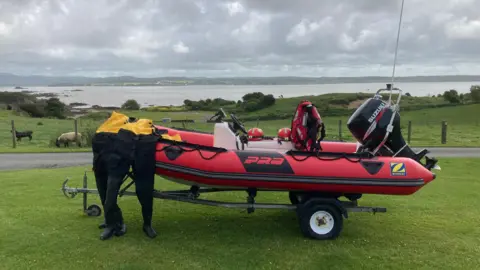
The small voluntary-led service does not comply with the latest HM Coastguard regulations, which would require a £140,000 investment in a new self-righting boat, equipment, safety wear and an upgraded station.
Trustees of the charity says lives are being put at risk and they are hoping the public can help raise the £61,000 required to get back them back in the water.
The Maritime and Coastguard Agency said it was supporting the group to bring a lifeboat into service.
 Fleet Bay Inshore Rescue Service
At present, if someone dials 999 regarding an incident in Fleet or Wigtown bay, the Fleet Inshore service will not be tasked with the rescue.
Instead, an RNLI rescue boat will be deployed from Kirkcudbright, with an average travel time of between 45 and 90 minutes, depending on conditions.
Duncan McConchie, one of the trustees, said the speed of deploying crews, alongside vital local knowledge of the waterways, can be the difference between life and death.
''Because our boat and service doesn't comply with the rescue boat code, the coastguard will no longer task us even if there's somebody in trouble drowning just 100m (328ft) away from our lifeboat station.
''Just in the last eight months we've lost two people in the bay here in front of us alone and there's been a real uprising from holidaymakers and locals when they realised that our boat was no longer being tasked by the coastguard.''
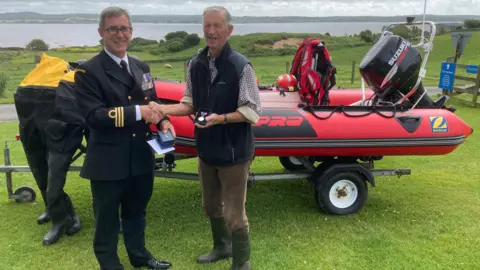
The charity has already secured almost £80,000 in funding to comply with the new standards.
The families of the people who died in 2025 contributed to the Getting Back On The Water 2026 fundraising campaign, which hopes to secure the outstanding finances needed to meet the HM Coastguard's requirements.
 Fleet Bay Inshore Rescue Service
McConchie said: ''Unfortunately nowadays, 40 or 50 years of experience in local waters doesn't count.
"It's certificates that count so that liability doesn't fall at the feet of the people who call us out to attend rescues.
''We know the waters here very well and we are just really keen to get back in the water in 2026 and carry on doing what we've been doing for over 50 years.''
A Maritime and Coastgaurd Agency Spokesperson said: "Fleet Bay Inshore is currently not an HM Coastguard declared asset available for search and rescue.
''HM Coastguard is in contact with the organisation and is supporting it to meet operational requirements to bring the lifeboat into service."
