'Students should eat venison to help environment'

 Leanne Rinne/BBC
Conservation campaigners in Sussex say more people, including students, should be buying and eating locally shot venison to help keep the rising deer population under control.
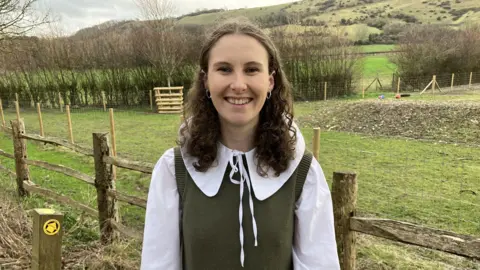
Georgina Cockett co-ordinates the Sussex Grazed Meatbox Project, which aims to make wild venison, culled by local deer stalkers, easily available to residents.
She said the project, which is part of the Brighton & Hove Food Partnership, hoped to "break down barriers and myths" about venison and educate young people about the benefits of eating it.
Young people and students were "exactly the people" who should be eating wild venison she said, because it was "affordable, high protein, lean and low fat".
 Leanne Rinne/BBC
"If we market wild venison correctly and tell the story about how it is a sustainable meat, it could be rolled out across more catering outlets, butchers and student canteens," Cockett said.
She added that "appropriate management" was needed in Sussex, where she said deer numbers were "completely out of balance".
A recent drone survey conducted by the Ashdown Forest showed there were approximately 15 fallow deer per sq km, which managers say is three times higher than it should be to maintain a healthy woodland.
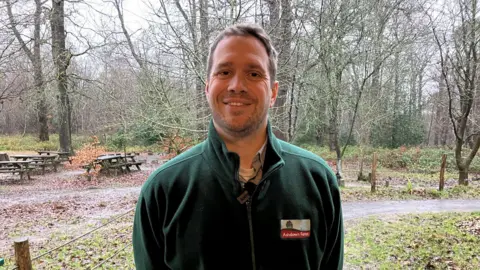
Ash Walmsley, head of countryside at the Ashdown Forest, said they were having a "massive impact" on woodland ecology.
"In high deer populations they do a high level of browsing which removes an understory of bramble, honeysuckle and young trees," he said.
This was having a "huge impact" on species like dormice and white admiral butterflies and affecting a variety of bird species, Walmsley added.
 Leanne Rinne/BBC
Deer stalkers are currently used by many Sussex landowners to cull the animals and help keep the numbers down.
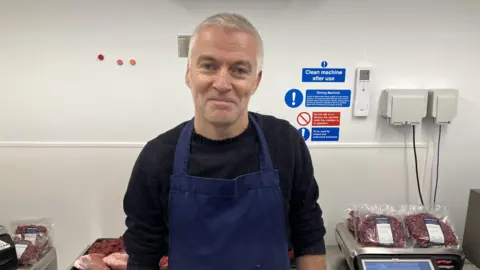
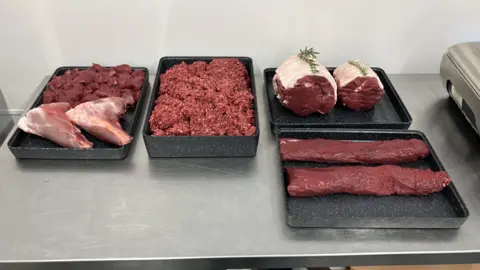
Paul Martin owns Garlic Wood Farm Butchery in Cowden, which sells local, wild venison shot by stalkers in Sussex and Kent.
He said: "Probably the biggest barrier to people buying venison is persuading people that it is a meat for everyone, you can easily access it and it is not difficult to cook."
Martin said there was a misconception that venison was a "posh" and "expensive" meat, but it was often cheaper than beef and lamb.
 Leanne Rinne/BBC
At Plumpton College, butcher apprentices are now being taught how to prepare local wild venison.
The college received funding from Natural England to take part in a research project to raise awareness of the benefits of eating wild venison as an alternative to traditional farmed red meats.
For a week, locally shot venison was prepared by butcher apprentices on campus and served up to students in the college canteen.
A follow-up survey revealed 97% of students who ate it said they would eat wild venison again.
 Leanne Rinne/BBC
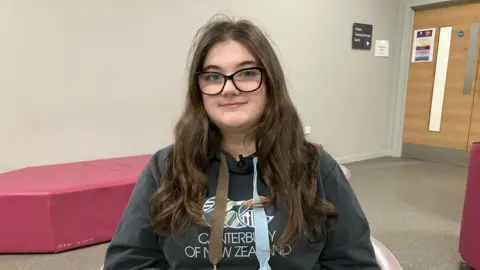
Lilly Laurenson, aged 19, is a third year student and took part in the research.
She said: "I think most of us liked it because it was very different to what we would normally see on the menu, usually beef and lamb.
"I liked that the venison was a mix between both, the tenderness of the lamb and then the dark meat like the beef."
She said she thought it would be a good addition to the menu because it was a "more sustainable meat" and "better for the environment".
But critics of culling deer say it is "cruel" and "ineffective" as a means of protecting the environment.
Jennifer White, from People for the Ethical Treatment of Animals (PETA), said while numbers would temporarily decline after a cull, they would then rebound due to "an accelerated breeding period" among the survivors, usually due to an increased food supply.
PETA argues sterilising deer would be a humane way to keep numbers down, alongside fencing areas of countryside that needs to be protected.
Follow BBC Sussex on Facebook, on X, and on Instagram. Send your story ideas to southeasttoday@bbc.co.uk or WhatsApp us on 08081 002250.
