Girl, 14, among victims of 'predatory' police behaviour

 BBC
BBCA 14-year-old girl was among the victims of "predatory" behaviour by police officers who have been accused of abuse of position for sexual purposes (APSP).
More than 60 APSP cases have been reported to the Police Ombudsman of Northern Ireland (PONI) since 2018, with each alleged victim classed as being a "vulnerable" individual.
They included victims of domestic abuse and crime.
PSNI Chief Constable Jon Boutcher said any abuse of position for sexual purposes was "wholly unacceptable".
"It represents a serious breach of trust and a violation of the standards rightly expected of police officers," Boutcher continued.
The PONI has published a report on the issue of APSP.
Specific details of the cases are not provided but the report states that the youngest victim was 14 when the abuse took place.
The report adds: "In three cases, the officer had sexual contact with the victim on the same day they met in the course of his duties."
Ombudsman investigations
The PONI report states that between 2018 and 2024, six officers have been sacked or convicted for abusing their role, following investigation.
Its analysis identified that the officers were all male and mostly constables aged between 30 and 50.
The majority worked in local policing teams.
The report identifies two types of offenders - "sharks", younger officers who tended to make "rapid" contact, and "fishermen", those who were more "tentative" in their approach.
PONI said APSP is considered "one of the most serious types of police corruption" which poses a "real threat" to confidence in policing.
APSP complaints made up almost 30% (nine) of all serious Category A cases (30) investigated by PONI in 2024.
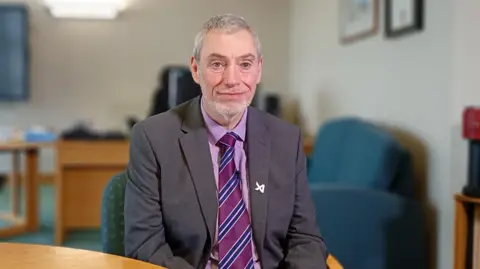
Commenting on the current position, PONI chief executive, Hugh Hume, said his office was investigating allegations against 20 serving officers and two former officers.
A total of 39 alleged victims are involved.
He said the majority of cases are being referred to PONI by the PSNI.
"This is welcome and shows a very clear willingness at the most senior level to identify and eradicate this kind of behaviour," Hume added.
"Although this is a small number of officers relative to the size of the PSNI, the abuse of their position for their own sexual gain inflicts significant and long-lasting damage on their victims.
"Such is the power imbalance that many women do not report the offending directly for fear of reprisal and others can be so vulnerable that they do not recognise that the officer is abusing them and instead see him as a 'knight in shining armour' figure.
"Others do not see themselves as victims at all."
'We will act decisively'
The PSNI said this type of misconduct was "completely unacceptable".
Boutcher added: "The vast majority of our officers and staff serve with integrity and dedication.
"Where standards fall short, we will act decisively."
Expressing concern, the chair of the Policing Board, Mukesh Sharma, said the issue will be raised at a meeting with Boutcher on Thursday.
Liam Kelly, chair of the police federation for Northern Ireland, said the report "makes disturbing reading".
"Targeting victims who need help not exploitation is totally reprehensible and has to end," he said.
He added that "the number of cases involving APSP by the few reflects badly on the vast number of officers who do exceptional work".
"We cannot afford to see trust in policing damaged by the actions of a few."
Kelly said that it "appears some 86% of cases investigated by the Police Ombudsman did not seemingly meet the evidential threshold to substantiate either criminal or misconduct proceedings".
However, he said that there was no place in the PSNI for officers who engage in predatory behaviour and the six officers who were dismissed or convicted were "six too many".
Joanne Barnes, the chief executive of Nexus NI, which manages the Domestic and Sexual Abuse Helpline, said the findings were "alarming".
She said victims deserved a policing system that was "safe, accountable and structured in a way that makes exploitation far less likely to occur in the first place".
