'End of an era' as last tin ore from mill smelted

 BBC
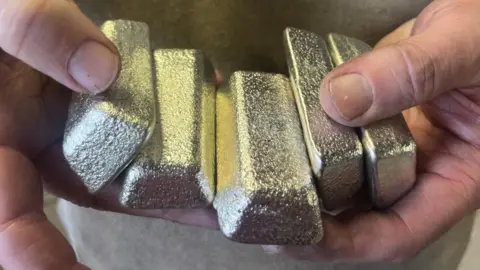
BBCAs he pours pure tin into specially designed ingot moulds, Clifford Rice fears a Cornish tradition is coming to an end.
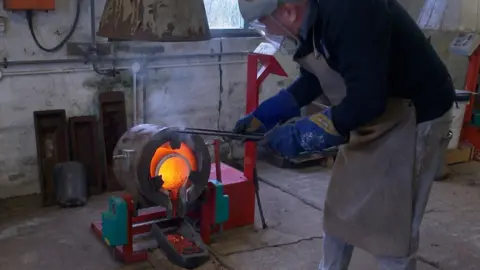
He has been smelting Cornish tin for 45 years, most recently in a shed at the Wheal Jane Laboratory site. But on a grey February day, Rice fired up the furnace for the final time as he used the last of a batch of tin-rich ore from Tolgus Mill, near Redruth.
"This is special," the laboratory director said.
"For the time being, as far as I'm aware, there is nothing left to smelt now, so it is the end of an era."
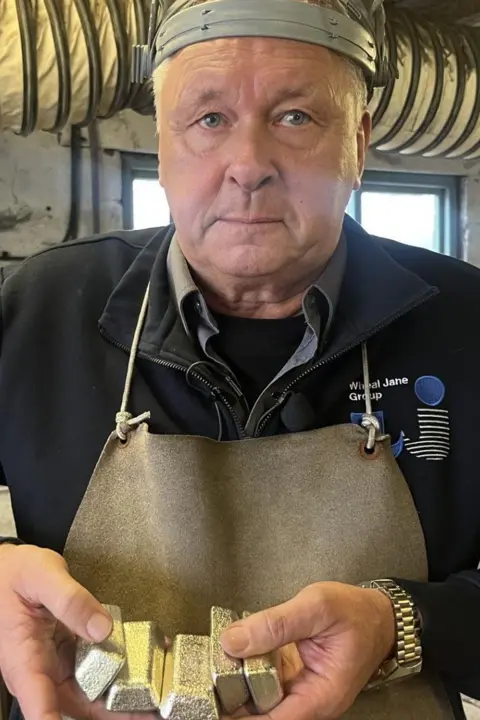
Smelting uses concentrated heat and is the step between mining raw ore and creating a usable metal.
Smelting tin in Cornwall is a method that has been used for centuries. But the Wheal Jane laboratory furnace is being decommissioned and the shed will become a bat house.
In 1870, Cornwall was the premier tin mining field in the world and the county once boasted 2,000 tin mines.
Clifford said: "It's highly unlikely that smelting will be done commercially in this county again."
The final batch of Cornwall Gold's Tolgus tin came from concentrate produced in 2014 and it was used in jewellery after smelting.
A percentage of the sale price from the jewellery will be used to fund restoration work at the mill.
Mike Taylor, managing director of Cornwall Gold and Tolgus Tin, said it was "a great example of how Cornish mining business are still working together".
"But we haven't actually processed tin here for about 15 years now," he said.
However, he said he was confident it would happen again in the future, "probably in the medium term - the next 10 to 15 years".
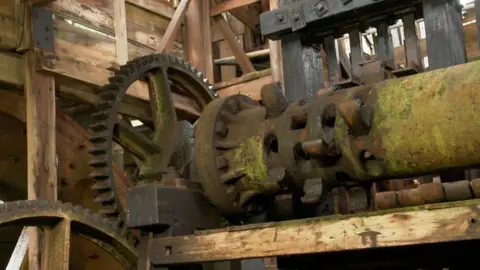
He said the mill was now in need of restoration work and a percentage of the sale price of the jewellery made from the final batch of tin would be used to fund it.
Back at Wheal Jane, Clifford Rice said that, if the mill did produce tin again, the furnace would be long gone, but he would gladly rekindle his skills.
"It is sad," he said.
"Tin has always been part of my life."
Follow BBC Cornwall on X, Facebook and Instagram. Send your story ideas to spotlight@bbc.co.uk.
