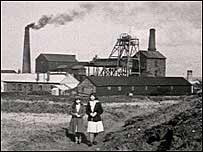
At one time Cornwall boasted 2,000 tin mines and it was a world leader in tin production. Foreign competition was to change all that. Competitors overseas were producing ores far more cheaply than Cornwall.
 | |
Cornish tin miners faced increasing competition from alluvial mines abroad |
Prices for tin plummeted and dropped below the cost of production. In the past, Cornwall had survived increasing competition from the Dutch in 1816, largely thanks to the abolition of the 7% duty charged on smelted tin, known as coinage dues. But in 1872, tin was discovered in Queensland, New South Wales and Tasmania. Tin fever swept Australia.
Renewed competition from Malaya and Bolivia was the final nail in the coffin and between 1871 and 1881 it is estimated that a third of Cornwall's mining population emigrated in the face of unbearable hardship at home. A long way down Within half a century of the tin boom of 1870-72, the industry was almost dead in the face of foreign competition. Only the demand for tin in the two World Wars postponed the slow decline. 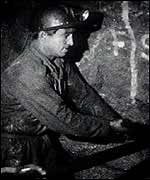 | |
Working underground |
A handful of mines survived, largely through amalgamation - South Crofty in Camborne, was one of them. During the 20th Century, the tin mining industry careered from boom to bust, with boom experienced during the war years, firmly countered by the bust of the 1930s. Bitter disputes and strikes ensued during the depression and in South Crofty mine, this came to a head in 1939. A row of differential pay rates resulted in a strike which pitched miner against miner, family against family and only ended with the start of the Second World War and subsequent greater demand for tin. By 1960 South Crofty had control of nearly six square miles. Demand was high, wages were good, but there was a shortage of men prepared to work underground. Yet again, the changing fortunes of the industry were short lived and miners found themselves facing redundancy once more. Although various ores became briefly profitable during the 20th Century, they were unsustainable and on March 6, 1998 the pumps at South Crofty, the UK's last tin mine, were finally turned off for good. Ray of hope  | |
End of the line for tin |
It spelt the end not only of a 4,000 year old regional industry, responsible for most of the world's tin in the last century, but also the last tin mine in Europe. Tin mining in Cornwall may be over but this it not necessarily the end of the story for the industry steeped in thousand of years of history. A bid is being made to have Cornwall's tin mining areas designated a World Heritage Site. If the bid is successful, the region's industrial remains would rank alongside world treasures such as Venice and Stonehenge and ensure that one of Britain's oldest industries doesn't vanish into the annals of history. |