Rare glimpse of historic bridge thanks to low tide

 Marcus Fouracres
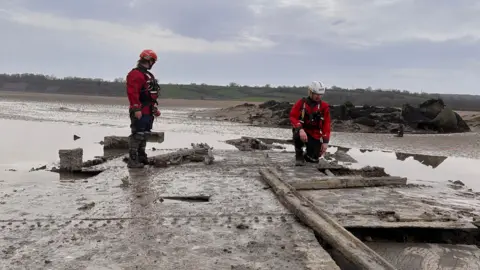
Dramatic rain and low tides have uncovered parts of a railway bridge that was demolished after a disaster in which five men died.
The Severn Railway Bridge, which spanned the river between Sharpness and Lydney, was torn down after two barges disastrously struck the bridge in 1960.
While parts of the structure are always visible at low tide, heavy rain during exceptionally low tides have washed away sediment – allowing Sharpness Lifeboat Station volunteers to explore the bridge during a rescue training session.
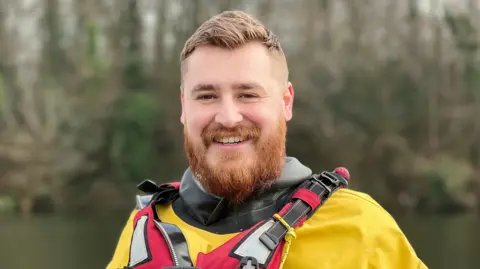
Crew member Luke Grinstead said it was "just fantastic" to have the opportunity to visit the remains of the bridge, which was built in the 1870s.
"To actually have the opportunity to go out there, to stand on it, to touch it, and actually be in the environment that the workers were in when they built and demolished it was a privilege," he said.
The structure was partially destroyed in the Severn Railway Bridge disaster on 25 October, 1960, when two tankers carrying petrol and heating oil were caught in dense fog and driven upriver.
They collided and, unable to separate, span together towards the bridge, hitting one of its piers – just minutes after the last train of the day had crossed.
Flames then spread across the Severn when the petrol and oil cargo caught alight.
The two captains managed to swim to shore and an engineer was saved by men searching for the crew in a rowboat.
However, the five remaining crew members did not survive.
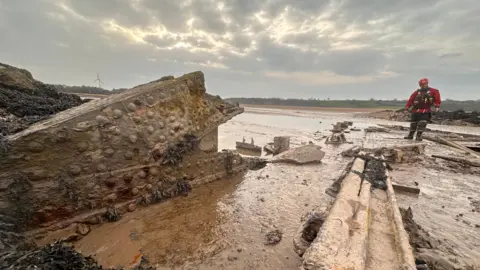
The bridge was demolished after the incident but remnants of the structure were left behind.
Rob Burrows, a volunteer at Sharpness Lifeboat Station, said he and other crew members made the most of a rare window of opportunity "to get out there".
He said the bridge could have been quickly covered up again due to the equinox spring tides – which bring exceptionally high and low water levels.
Surges of water upriver caused by the Severn's strong tidal bore also tend to "reset things a bit", Burrows said.
"Stuff gets exposed and it's very fragile – you see it once and then it's gone," he added.
 Marcus Fouracres
Grinstead said it was "an exciting" and "challenging" trip overall.
"I think it's just fantastic," he said.
However, he warned any would-be explorers not to venture out to the remains due to the dangerous conditions.
Follow BBC Gloucestershire on Facebook, X and Instagram. Send your story ideas to us on email or via WhatsApp on 0800 313 4630.
