Rivers campaign aims to cut pollution at source

 Yorkshire Wildlife Trust
A four-year campaign has been launched to protect Yorkshire's rivers, estuaries and coastal reefs.
Rivers to Reef, launched in Keighley by the Yorkshire Wildlife Trust, is targeted at rivers from their source areas in the hills and moorlands down to the North Sea.
The primary focus is on the rivers Aire in West Yorkshire and Derwent in North Yorkshire with the Aire Rivers Trust, the Yorkshire Derwent Catchment Partnership and Yorkshire Water all involved.
The groups are seeking to reduce harm caused by sewage, agricultural run-off, chemicals, litter and microplastics.
Marine project manager Ana Cowie said: "These pollutants threaten freshwater invertebrates, like mayflies and caddisflies.
"But also migratory fish like salmon and sea trout as well as shellfish, including mussels and oysters, and marine mammals such seals and porpoises.
"Traditional conservation efforts have often treated rivers and seas separately.
"This has resulted in missed opportunities and both freshwater and marine wildlife being vulnerable to pollution from inland."
The York-based wildlife trust, which is a charitable non-governmental organisation, is launching its campaign at East Riddlesden Hall in Keighley.
 Yorkshire Wildlife Trust
Cowie said: "This is a four-year pilot project bringing together science, policy and people power to tackle pollution from source to sea.
"Our ambition is that this becomes a longer-term, Yorkshire-wide movement.
"East Riddlesden Hall is a great venue with good access to the River Aire. This pilot is a very, very important first step."
Yorkshire's rivers drain one fifth of England's landmass into the Humber Estuary, the largest freshwater contributor to the North Sea and a site of international conservation importance.
But the estuary's ecological condition has been classified as "unfavourable" for more than a decade, with vital habitats like saltmarsh, seagrass and shellfish beds in decline.
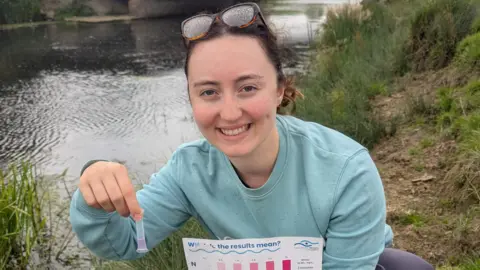
Rivers to Reef aims to introduce standardised water-quality monitoring to track pollutants and identify hotspots.
The trust will organise bi-annual water quality "blitzes" in collaboration with Earthwatch.
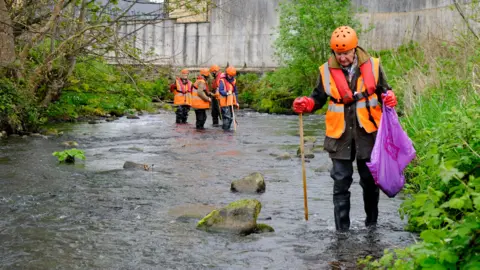
Local clean-ups will be used to stop plastics entering rivers, and check wastewater from homes and businesses is correctly connected to the wastewater drainage system.
The public will be encouraged to help by scraping and binning cooking fats and oils, instead of pouring them down the drain, and correctly dispose of wet wipes.
Rachel Forsyth, chief executive at Aire Rivers Trust, said: "We all rely on our rivers and seas, yet pollution from everyday life is quietly harming them.
"Rivers to Reef is a chance for people across Yorkshire to see the impact they can have, from the stream in their village to the reefs off our coast.
"By working together, we can restore life to our waterways and leave a legacy of clean, thriving waters for generations to come."
Listen to highlights from West Yorkshire on BBC Sounds, catch up with the latest episode of Look North.
