'It's like I'm still living in a Covid lockdown'

 BBC
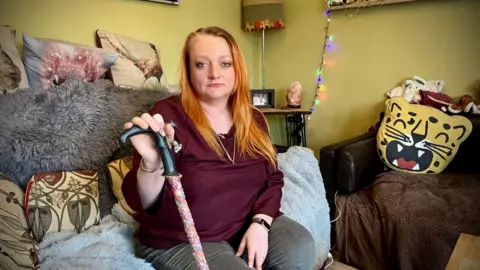
BBCWhen Gabby Rudge-Cox caught Covid more than five years ago she never imagined it would leave her with a long list of debilitating symptoms which turned daily life into a daily struggle.
Speaking as the UK marks the sixth anniversary of the first Covid lockdown, Gabby, 42, said developing long Covid had stopped her life "dead in its tracks" and left her a "shell of her former self".
Long Covid, according to the NHS, is when symptoms of the virus, such as fatigue, brain fog, and pain, last longer than 12 weeks.
Gabby, from from Appleton Roebuck, near York, said she has come to the realisation that she "probably won't get better" but is trying to ignore the fact she is "gradually getting worse".
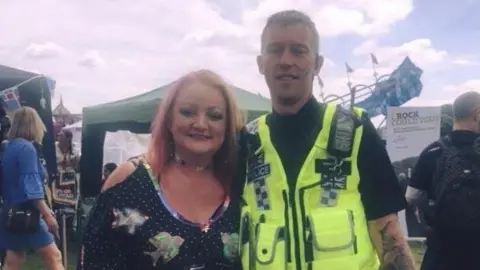
Gabby first caught Covid on New Year's Day in 2021 at the same time as her husband, Darren, who at the time was a serving police officer in North Yorkshire.
She said they were infected soon after Darren arrested a suspect who was displaying symptoms of the virus.
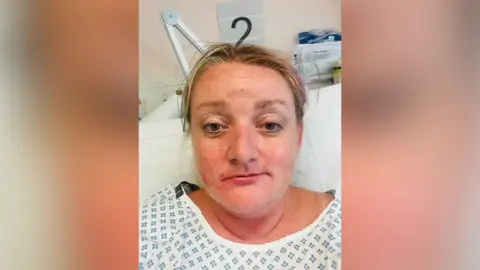
While Darren developed scarring on his lungs and eventually left his job in the police, Gabby became increasingly poorly and was diagnosed with long Covid.
 Gabby Rudge-Cox
"We've lost so much of what our lives were and could have been, and that is soul destroying," she said.
"That one little moment in time has completely changed our opportunities."
Since being diagnosed, Gabby has also been told she has several other chronic conditions, including fibromyalgia, which causes pain and fatigue, ME, also known as chronic fatigue syndrome, and postural tachycardia syndrome (PoTS), a condition that affects heart rate and blood pressure.
Gabby, who can now only work part time in her job as a call handler for North Yorkshire Police, said there was "a lot of stigma" about long Covid and finds it frustrating when people assume you can "just push through".
"Having a shower or getting up and getting changed can be the big parts of your day," she said.
"That might be one of the main things you can do in a day and nothing else."
 Gabby Rudge-Cox
It is difficult to know exactly how many people are living with long Covid in the UK, because official figures are no longer routinely published and fewer people are testing for the disease.
A 2024 study by the Office for National Statistics and Health Security Agency suggested around two million people in England and Scotland were experiencing self-reported long Covid symptoms four weeks after initial infection.
Prof Stephen Griffin, a virologist from the University of Leeds, said Covid is "still a public health concern" and that vaccines offer the "best protection".
"You've probably got about a 1-in-50 chance if you were to contract Covid again of developing long Covid symptoms, which can last anything from a few months to effectively almost permanent," he said.
"So, there is a risk, and it doesn't matter how severe your illness is, you can still develop long Covid symptoms.
"So, there is that chance you will develop it and that risk accumulates the more infections you have."
 Gabby Rudge-Cox
A government spokesperson said: "We recognise the very real impact long Covid continues to have on people and their families.
"Long Covid services, commissioned by local NHS organisations, should be offered to support people, and we are funding research into this condition to improve diagnosis, support and unlock new treatments.
"Where local services are not available, patients with long Covid symptoms should visit their GP, who can then refer them to alternative services based on clinical need."
Gabby said she now lives day by day and tries to stay positive by not thinking too much about the future, though admits it is hard to look forward.
"Obviously, the world came out of lockdowns, but for me it feels like I'm still in a lockdown," she said.
"I'm existing and not living."
Listen to highlights from North Yorkshire on BBC Sounds, catch up with the latest episode of Look North.
