Ambulance call handlers face 'increased' pressure over flu

 BBC
BBCEmergency service workers are expecting your call.
Many anticipate increased demand for help with the flu and various incidents over the festive period, but workers are also bracing themselves for abuse over the phone.
Ambulance staff are seeing a "real increase" in the number of people dialling 999 with seasonal flu following the recent surge in cases, according to London Ambulance Service (LAS).
Its call handlers are reporting that the rise is impacting their ability to respond to other life-threatening problems.
Some LAS staff say they have also experienced racial abuse, while others claim callers are contacting them under the influence of alcohol.
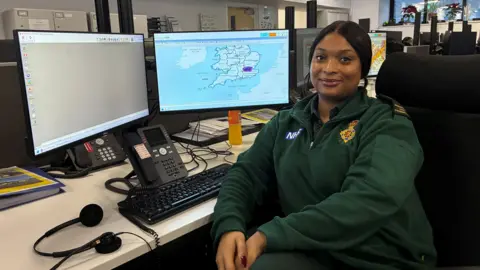
"I feel like it's important for people to understand that it's an emergency line," LAS call handler Ugbad Yousuf tells BBC Newsbeat.
"It's for life-saving interventions."
The 23-year-old is a qualified nurse and regularly speaks to 999 callers with flu symptoms.
"People can call us, but at the end of the call, it will just lead to a 111 referral," she says.
She's referring to an NHS service available in England, Scotland and Wales for non-life threatening medical help, which is free and reachable 24 hours a day.
It often directs callers to out-of-hours GPs, pharmacies and urgent treatment when necessary.
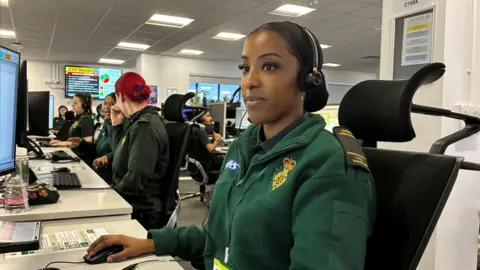
Ugbad learned her job is vital the hard way, when she had to help a caller deliver a baby over the phone.
It was her first month in the job.
"The head was out at the start of the call," she says.
"Straight away, I began to give instructions to deliver the baby, who was delivered safely and is happy."
It was one of about 5,500 calls LAS says it receives a day, on average.
This year, staff received 192,600 calls in November, which it says is an increase of 13,000 compared to the same month in 2024.
One police force tells Newsbeat they often see a steep increase in calls over the Christmas period.
"A lot of the time, it's because people are at home together for a long time," says Elliot Barton, who answers calls for Durham Constabulary.
"There's a lot more alcohol involved and it does tend to turn into a lot more police calls."
The 23-year-old says the pressure of the job has been "increasing" over the last 18 months.
"It is non-stop, every day we do 12-hour shifts," he says.
"The longest you'll get without taking a call is about 10 minutes.
"And that's if you're lucky."
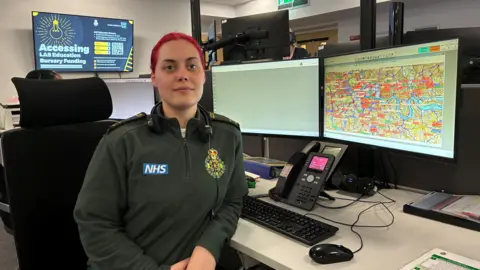
Another LAS call handler, Monet Lobman-Edghill, says they give callers three warnings when they're being abusive before hanging up.
"At that point we can't ring an ambulance for them, so if they really do need an ambulance they are missing out on that help," she says.
The 28-year-old says she has even had a caller say a "racial slur" to her.
Despite the challenges they face, the emergency services workers all recognise the public genuinely needs help.
It's something Rose Carbon, another LAS call handler, tells Newsbeat she's keen for people to hear.
"We do acknowledge that some flu-like symptoms can be really serious," she says.
"They can turn nasty."
And it's those "nasty" cases that the NHS has warned it's having to work even harder than usual to try and control.
The Department of Health and Social Care has previously said it was "under no illusions this is going to be a tough winter for our NHS" and urged everyone eligible to get their flu vaccine.
The NHS's national medical director for England, Prof Meghana Pandit, also warned earlier in the month that several factors, including an "unprecedented wave of super flu", was leaving the NHS is a "worst-case scenario" for December.
While the NHS remains on alert over flu, the UK Health Security Agency says there are signs that the amount of flu circulating has started to fall.

