Conservation budgets hit by increased fly-tipping

 BBC
BBCClearing up fly-tipping is so expensive that it means less money can be spent on conservation, Forestry England has said.
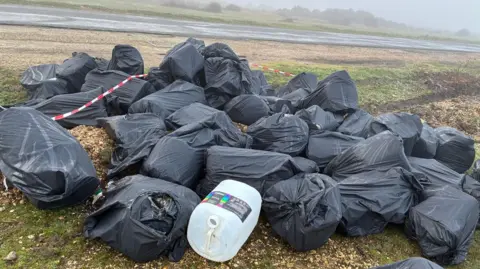
There were 266 incidents of fly-tipping in the New Forest National Park last year.
The illegally dumped waste included 566 skip loads of litter, as well as the rubbish collected from official bins and litter picks carried out by rangers and volunteers.
Figures collected by the BBC also showed a rise in fly-tipping incidents across the south region.
They include a 10% increase across Hampshire, Dorset and the Isle of Wight, with a rise of nearly 2,700 incidents in the year to 2025, higher than a 9% national average.
In all there were 24,547 incidents in 2023 to 2024, compared to 27,243 from 2024 to 2025.
Government figures showed incidents in Berkshire rose from 7,674 to 10,392, and in Oxfordshire from 8,513 to 8,582.
In November, a newly-emerged 150m-long waste mound near Kidlington, Oxfordshire, was described by Prime Minister Sir Keir Starmer as "utterly appalling".
Councils in England dealt with 1.26 million fly-tipping incidents in total.
Tim Bamford, Country Land and Business Association region director, said: "It's not just litter blotting the landscape, but tonnes of household and commercial waste which can often be hazardous – even including asbestos and chemicals – endangering wildlife, livestock, crops and the environment.
"Farmers are victims yet have to pay clean up costs themselves."
 Forestry England
A Forestry England spokesperson told the BBC: "Clearing up is high cost and takes our limited funds away from conservation work and looking after this special place.
"This is money that can no longer be spent on planting trees, repairing trails and car parks, or supporting wildlife.
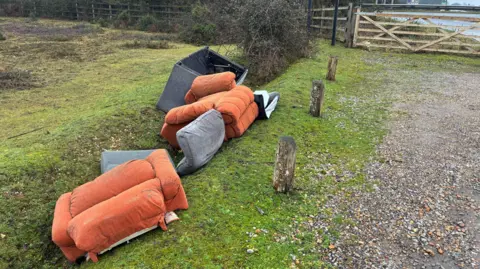
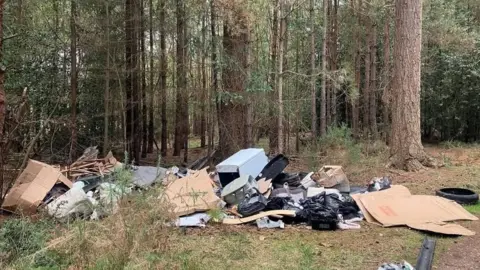
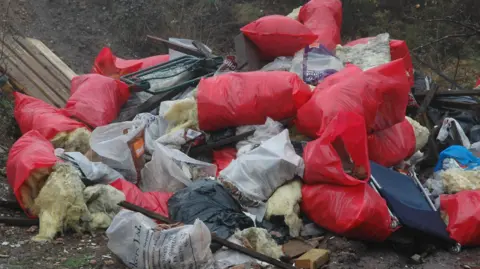
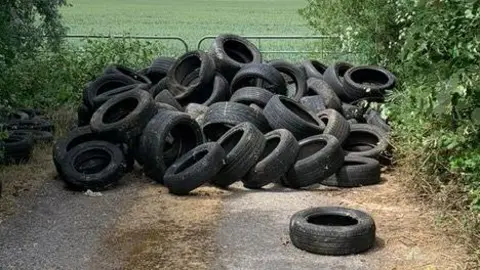
"Fly-tip items collected over the last year include large white goods, furniture, building rubbish, tyres, and hazardous waste including asbestos and burnt-out vehicles.
"Clearing up fly-tips also diverts our staff from essential work. We estimate that last year they spent over 100 hours dealing with fly-tips".
 CLA
CLA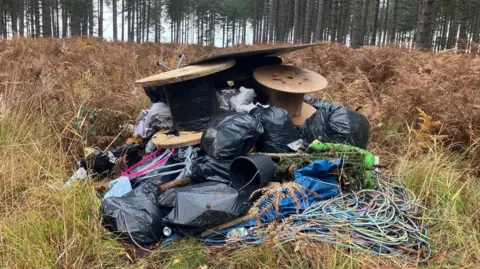 Forestry England
Councillor Nick Adams-King, leader of Hampshire County Council, said fly-tipping was a scourge for local authorities.
"Quite often people are either too lazy or more likely have been paid money, and are therefore in a commercial vehicle and don't want to have to pay the fees that they need to dispose of waste if they're doing so on a commercial basis, so that's the problem," he said.
He called for a "much more joined up approach" and for Forestry England to work closely with other stakeholders to identify offenders.
 Forestry England
 Frogmore Farm
Anna Garner, from Chilworth Woodland Retreat outside Southampton, said rubbish was constantly dumped on her land.
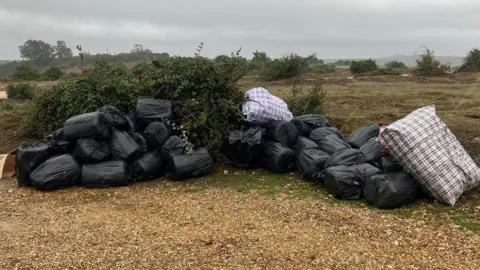
"We've had mattresses, rubble, an old sofa, and then the last one was just a lot of bin bags," she said.
"I just feel that they're avoiding paying for it. They're probably offering a service somewhere and taking the money and not disposing of it correctly."
She said she almost caught fly-tippers in the act on one occasion.
"I let one of them out once and waved to them very kindly, then realised afterwards when I got here that they were probably the ones that dumped the rubbish," she added.
William Westacott, of Frogmore Farm in the Royal Borough of Windsor and Maidenhead, told the BBC fly-tipping on his land had been "steadily increasing" for years.
"Not only does it cost me money with skip hire, but lots of my time and farm workers' time to clear up," he said.
In January, a BBC investigation revealed there were more than 500 illegal tips across England, including at least 11 so-called "super sites" bigger than 20,000 tonnes.
You can follow BBC Hampshire & Isle of Wight on Facebook, X, or Instagram.
