'I've been denied cervical screening four times'

 BBC
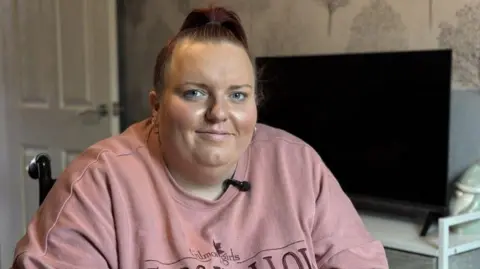
BBCA woman who uses a wheelchair said she had "given up" trying to have a cervical screening after turning up for an appointment to find she could not get inside a treatment room.
Emily Salter, who is unable to walk after falling from a 9m (30ft) cliff seven years ago, said she had tried to arrange for the screening, known as a smear test, four times but appointments had been cancelled due to accessibility issues.
The 33-year-old, from Preston, Lancashire, said: "I thought the NHS would be a safe place for me to go without having to worry or panic beforehand."
An NHS England spokesperson said screening services are "expected to make reasonable adjustments" to support women with disabilities.
This includes "ensuring suitable facilities and access to specialist equipment where needed", the NHS spokesperson added.
A survey by the Spinal Injuries Association found two-thirds of women with physical disabilities had not been able to attend a smear test appointment.
Just under half of those cited accessibility issues as the top reason for this.
"When I'm on the phone I always say I'm in a wheelchair, I can't stand up, just to make them aware" said Salter.
"You turn up and the building has steps to go inside. The next one, the room was that small that the wheelchair wouldn't fit next to the bed.
"And then the fourth one, they actually rang me to cancel because they said it wasn't accessible."
'Entirely preventable'
Dharshana Sridhar, campaigns manager at the Spinal Injuries Association, said: "The system is not made for women's health to start with and then it's even worse for women with disabilities.
"And then some of the barriers are actually entirely preventable, like inadequate equipment, like a lack of height adjustable examination beds, but none of this has been happening for decades."
Local screening teams can "offer practical support such as longer appointments at accessible sites and alternative clinic options" to help women with physical disabilities, the NHS spokesperson said.
But Salter said she had "given up", adding: "I don't know what more I can do to access these services."
"I just think it's very sad that we're put in a position where we feel bad about ourselves because we can't access the healthcare," she said.
"I'm grateful for what the NHS has done for me. They've showed me I can live again.
"Life doesn't end when you have a spinal cord injury but I want my life to continue and if I can't have these checks for cancer then they're not going to be able to catch it quick enough."
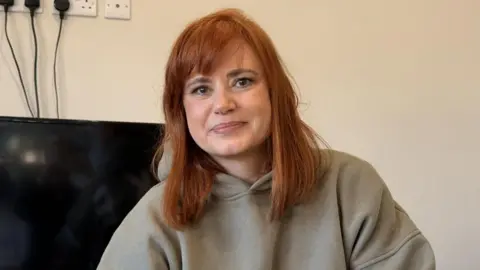
Sally Jones, from Ellesmere Port, Cheshire, was left paralysed from the waist down after a motorbike crash in January 2020.
The 45-year-old has a history of abnormal cells in the family so she said she had been left feeling worried that she had not been able to have the test.
"I try to put it at the back of my mind," she said.
"I think given the family history as well, I'm probably one of the people that should be going for regular tests.
Sally said she had also been left humiliated after she was given no option but to have her coronavirus vaccination outside due to a lack of access at the site.
"It's a battle," she said.
You've got to be proactive and you've got to row your own boat and you've got to keep on nagging to be heard."
Read more stories from Cheshire, Lancashire, Greater Manchester and Merseyside on the BBC, watch BBC North West Tonight on BBC iPlayer and follow BBC North West on X.
