Burning a Quran is disorderly, High Court told

 PA Media
Burning a religious text "is in itself disorderly" and should have led to a man's conviction being upheld after he set a Quran alight, the High Court has heard.
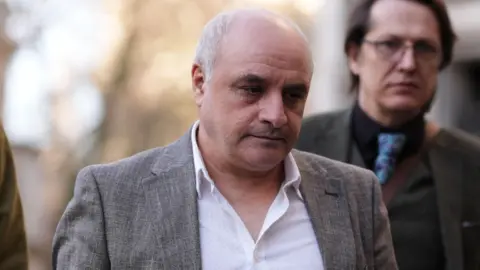
Hamit Coskun was convicted last June of a religiously aggravated public order offence after he held a flaming copy of the Islamic text aloft outside the Turkish consulate on 13 February 2025.
The 51-year-old successfully appealed against his conviction and it was overturned by Mr Justice Bennathan at Southwark Crown Court in October.
The Crown Prosecution Service (CPS) has launched an appeal against that decision. Its barristers told a hearing on Tuesday that the judge was wrong to find that Coskun's behaviour was not "disorderly".
David Perry KC, for the CPS, told the court: "Burning a book in a residential or commercial part of central London, between Knightsbridge and Hyde Park, is in itself disorderly and even more so when the book is a holy text, whatever the religion."
In written submissions, Perry added that Coskun's actions "did not involve an exercise of legitimate freedom of expression" and instead "crossed the border into criminal conduct".
The CPS asked the High Court to send the case back to the crown court for reconsideration.
'Effectively provoked'
Coskun, an atheist, also shouted "Islam is religion of terrorism" and "Quran is burning" during his protest in Rutland Gardens, London.
During his demonstration, a man emerged from a nearby building and slashed at him with a large knife, later telling police he was protecting his religion.
The attacker was given a suspended jail sentence in September.
Perry told the court that this attack was "effectively provoked" by Coskun's actions.
In June 2025 Coskin was convicted of a religiously aggravated public order offence of using disorderly behaviour "within the hearing or sight of a person likely to be caused harassment, alarm or distress", motivated by "hostility towards members of a religious group, namely followers of Islam", contrary to the Crime and Disorder Act 1998 and section five of the Public Order Act 1986.
Coskun was provided accommodation by the Home Office after his protest outside the consulate because of threats made to him.
He is resisting the legal challenge and attended the hearing before Lord Justice Warby and Ms Justice Obi, which concluded on Tuesday.
A judgment is due at a later date.
Listen to the best of BBC Radio London on Sounds and follow BBC London on Facebook, X and Instagram. Send your story ideas to hello.bbclondon@bbc.co.uk
