Dogs, tea, snacks: an alternative mental health A&E

 BBC
BBCEmotional support animals, hot drinks, and a lounge to relax in: this is what greets you if you walk into a specialist emergency mental health unit in west London.
The centre in Ladbroke Grove is designed to be a calmer, more suitable alternative to A&E departments.
It can also provide support more quickly: patients are seen "within 15 minutes".
Karalyn, a patient with complex mental health needs, says she prefers the centre because there's more certainty, whereas "it's a waiting game in A&E".
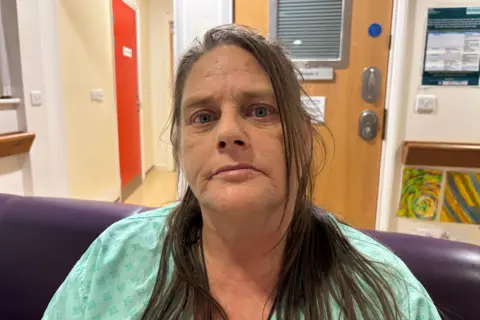
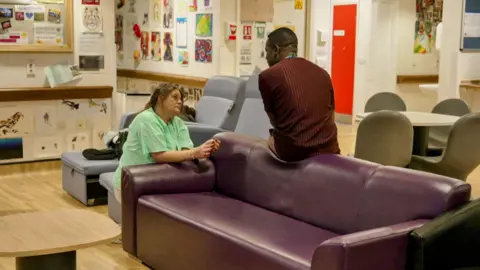
The centre is quiet, with sofas, bedrooms, and a kitchen.
"People can sit down, watch TV in the lounge, and have something to eat," said service manager Toti Freysson, adding: "The idea is it's more therapeutic than an A&E environment."
There are also regular visits from emotional support animals, including dogs and chickens.
"Any of us who've been to A&E recently will know it's busy, noisy, with beeps going off, and bright lights all day long," said Claire Murdoch, chief executive of the Central and NW London NHS Foundation Trust.
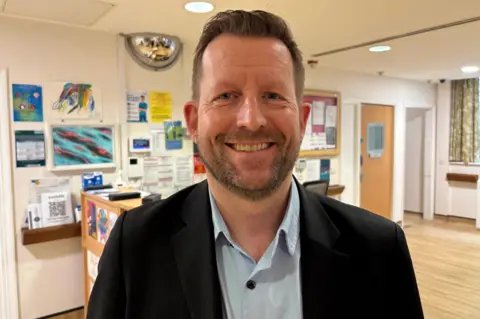
"Whereas if you come to this centre with a mental health crisis, not only is there expertise but there's also a place to relax or sleep, while we do the best assessment we possibly can."
She added: "We can take as long as necessary to understand what's caused your emergency and what treatment you need."
As a patient, Karalyn has found that waiting times are shorter and more predictable.
"When you come here you know how long you're going to be here for.
"But in A&E you're stuck there until there's a bed. Last week, I had to wait 24 hours in A&E."
Her experience is not unusual. According to the NHS, there are approximately 20,000 attendances at A&E a month in England for mental health reasons.
A recent study of emergency care in England found that the number of people waiting 12 hours or more in A&E after a decision to admit to a ward was the highest since modern records began.
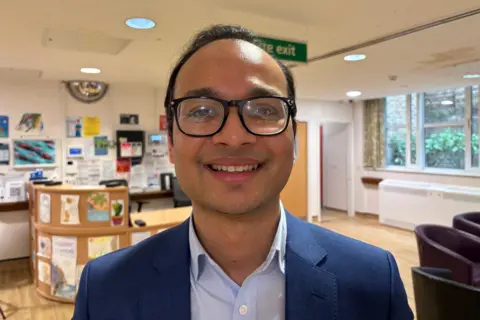
"At this centre, within the first 15 minutes you get seen by a specialist who does the gatekeeping," said consultant psychiatrist Dr Mehtab Rahman.
"Within the first 30 minutes you see a physical health worker, and within the first hour you get a full assessment for your mental health, and a care plan is in peace for you."
Specialist support staff provide treatment and can prescribe medication. It is open around the clock and takes referrals as well as walk-in patients.
The centre, based at St Charles Hospital in Ladbroke Grove, run by Central and North West NHS Foundation Trust, was among the first of its kind in the country.
Now there are around a dozen such emergency mental health centres across England.
"Our mental health A&E attendances and admissions to beds have fallen," said Claire Murdoch.
"Ninety percent of the patients that we see here in crisis do not get admitted, and we've seen more than 2,000 patients here, so that gives you a sense of the numbers."
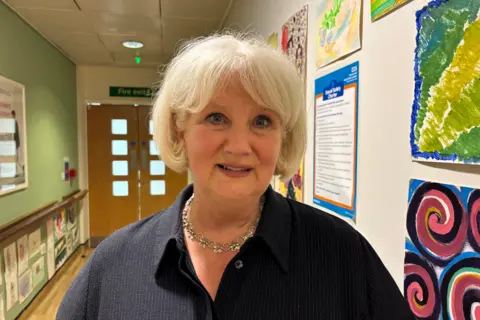
She acknowledges it is not cheap to run such a service: it costs £3.2m of public money a year, but she says it saves around the same amount by easing pressure on A&E and other emergency services.
"Care has been better and we've spent the money better," she said.
"When this unit opened, within a matter of weeks, we were able to admit fewer people to hospital, to stop paying the private sector for overspill care and treatment, and to reinvest that money back into more local services."
Minister for Mental Health, Baroness Merron, said: "Too often, people experiencing a mental health crisis are not getting the support or care they deserve, and so it is vital that we continue to provide a range of services like this one."
She said the government was "transforming" services - with £26m invested in new crisis centres, hiring more staff, more talking therapies, and getting waiting lists down.
"On top of this, through our proposed reforms to the Mental Health Act, we will ensure people with the most severe mental health conditions get better, more personalised care."
Listen to the best of BBC Radio London on Sounds and follow BBC London on Facebook, X and Instagram. Send your story ideas to hello.bbclondon@bbc.co.uk
