Parents want to ban smartphones in schools, but there's one reason they're worried

 Ann Gannon / BBC
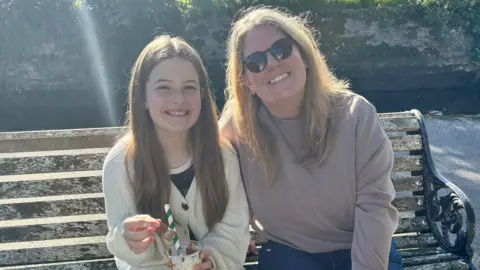
Sam Marlow had always planned to give her 12-year-old daughter Rubie a smartphone when she started secondary school.
That all changed in September, when the school decided to ban smartphones from the grounds for all new starters and only allow "brick" or "dumb" phones, which can be used to call or text but have very limited internet access.
"It essentially meant that we didn't have to be the bad guys," Sam says. "Rubie was a bit disappointed, but she knew it would be [the same for] all her classmates."
The main downside, says Sam, who lives in rural Hampshire, is not being able to use the phone to track her daughter to and from school.
"Having said that, I'm an 80s kid, and we didn't have our location tracked," she says.
She has, though, purchased a separate bluetooth tracker for Rubie to take with her, for a little extra peace of mind.
Sam says she's "over the moon" with the school's new ban, having seen her older daughter, who's now 15, get added to group chats with hundreds of other students when she got her first smartphone in Year 7.
On Tuesday, the House of Lords will debate an amendment to the Children's Wellbeing and Schools Bill, which would introduce a legal ban on smartphones in schools.
Peers voted in favour of a similar amendment earlier this month to ban social media for under-16s. The government says it will try to overturn that vote in the Commons after announcing a consultation on the issue.
At the moment, government guidelines say schools should be "mobile phone-free environments by default".
Head teachers across England received a letter from the education secretary this week, urging them to ensure children were prevented from using their phones throughout the school day.
Almost all schools already have some sort of phone ban in place - but policies vary from school to school.
 Sam Marlow
As students file out of their GCSE English lesson at Lostock High School in Manchester, I ask where they keep their smartphones.
"In here," they all say, tapping and pointing to their blazer pockets.
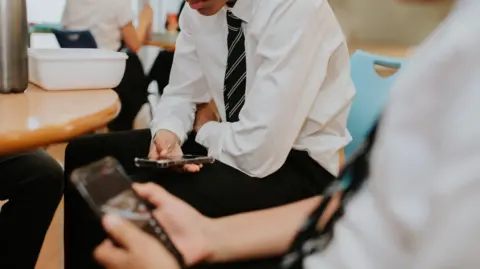
The phones are on silent or switched off, and if they are heard or seen they are confiscated.
Most schools in England have a similar "no see, no hear" policy, although some are investing in lockable pouches which the students keep, or lockers where you can drop your phone on arrival.
But Lostock High's assistant head teacher, Samantha Tsang, says making a school phone-free is "near impossible" without a legal ban and the resources to implement it.
"We do find that we are catching students trying to use their phones in social times, and we can't see every corner of the school at all times", Tsang says. "We need statutory guidance. If every school is doing the same thing, then it's fair and we'd be more likely to get the buy-in from the parents and the families that we need."
The school can't afford pouches or lockers, and they have noticed some students hand in a second "burner phone" or a broken phone if caught.
Research by the University of the West of England showed that the common "off and in bags" approach does not prevent pupils from using phones during the school day, and parents underestimate the harmful content children can access.
 Ann Gannon / BBC
Despite saying they were tempted to check their phones from time to time, the GCSE students I spoke to say they stick to the school rules, but like having their phone nearby.
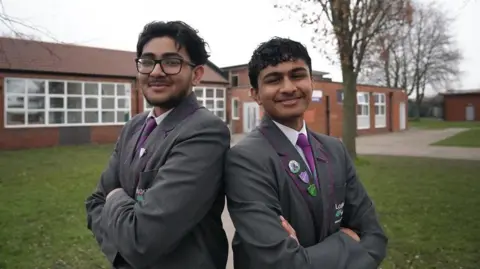
Abdullah, 15, says he would prefer to have his phone on him just in case there is an emergency at home.
His friend Bakhtiar points out that even their bus tickets are on their phones.
"Everything's becoming digitalised", he adds.
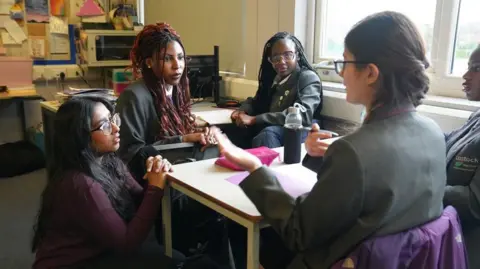
"I don't know what I would do without my phone to be honest," says Imaan, sitting beside her friend Umara. "We both have revision apps and we talk to each other about our exam work after school".
Asked if they would be happy with a "brick" or "dumb" phone option, they all shake their heads.
"We prefer to video call", Umara says.
Nearly a quarter of five-to-seven-year-olds now have their own smartphone, and nine out of 10 students own a mobile phone by the time they reach secondary school, according to Ofcom.
 Ann Gannon / BBC
Parents who give their children smartphones normally do so to contact them and track their location, the charity Parentkind says.
Chief executive Frank Young says parents are caught between handing a device to their child which they know is likely to be harmful, or excluding them from their peers.
Donna Corker, from Stretford, has daughters aged 12 and 16 who both have smartphones, but says phones should not be used in schools unless reasonable adjustments are necessary for medical conditions or special educational needs.
"Once they are on school premises they don't need a phone, because if there's an emergency there is a reception that I can be contacted from," she says.
Donna believes part of a parent's role is to teach their kids how to use their phones safely.
"I am the one who sets the rules in the household about phone use, and if for whatever reason I don't think they're using it appropriately, then they'll lose it."
 Getty Images
The Conservatives have said they would back a ban of smartphones in schools.
The Association of School and College Leaders says there will be some exceptions when pupils need their phones at school, and that phones have become a feature of daily life.
The union has said schools would need investment and support to help implement a wholesale ban.
Back at Sam's daughter Rubie's school in Hampshire, the complete ban on smartphones for new starters has made a "huge difference" already, with many parents holding off buying them.
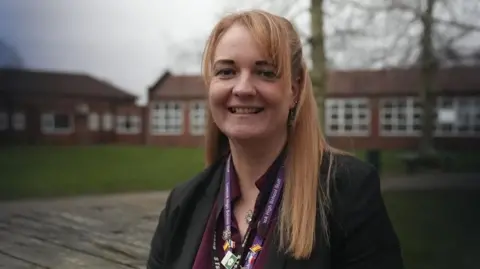
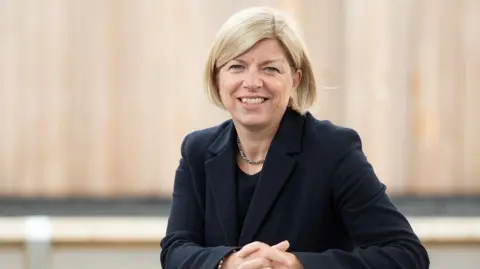
"We've had a 'no see, no hear' policy for about 10 years and we decided, rather than change the whole school, that we would try from the bottom up", head teacher Leanne Symonds says.
But getting parent buy-in has taken a lot of work - with many used to tracking their children or having family chat groups to keep in touch.
And she says there's still questions to be answered on how to protect children outside the school gates.
"On the school bus is the absolute classic example of children being shown content that they don't want to see, or children viewing content that's being pushed to them via an algorithm, and there's no adult around to support them or protect them," Symonds says.
 Ringwood School
Sam is not anti-smartphones and says she does plan on getting Rubie one in the next few years, but adds "you have to be one step ahead".
"You can be completely in control of what they can and can't access," she says.
"We've had more of a phased, gradual allowance of certain things with my eldest's smartphone."
The Department for Education says phones "have no place in the classroom", and that Ofsted will be judging the implementation of schools' phone policies going forward.
While there is support for a legal ban from many parents and teachers, lots are still concerned about what children are exposed to outside of school.
What nearly all of them agree on is that something needs to be done - that is what remains at the centre of this debate.
