I left my toxic mums' group because I'd had enough of being judged

 FatCamera/GettyImages
Martina loved the idea of a baby signing class. As well as teaching her baby to communicate with simple hand gestures, she'd be able to meet other mothers in her area.
But after the third session, Martina scooped up her newborn and walked out. She'd had enough of being judged.
She says the other mothers scoffed at her parenting choices - she bottle-feeds her son - and seemed to disapprove of her choosing to deliver her baby bycaesarean section. She got the impression they saw her as a lazy mum.
"It felt like it didn't matter how much I tried," says Martina, who lives in Wales. "These women just weren't going to warm up to me."
Martina, who is in her 30s, says it seemed as though mothers at the group were competing with each other, like teenage girls at school, and weren't actually interested in getting to know her.
American singer and actress Ashley Tisdale recently wrote about a "toxic mom group" she was in. She recalls a pattern of some members, including her, being excluded from events.
It was a reversal from Tisdale's previous reflections - having written about the benefits of being in a group of other mums following the birth of her first child in 2021.
New motherhood is "one of the most profound identity shifts" a woman can experience, says Dr Noëlle Santorelli, a clinical psychologist who has written about what she calls "mean girl moms".
 SolStock/GettyImages
"Motherhood can activate insecurity, comparison, and fear of exclusion in ways that feel almost primal."
The conflict is often subtle, she explains, and as well as exclusion can include gossip and passive-aggressive comments. She says many mothers aren't sure why they're being frozen out, which can lead to "shame, confusion, and self-blame".
For Martina, she says the judgement started before her son, now aged one, was even born.
She had downloaded a social networking app for new and expectant mothers, and began messaging a woman who lived nearby. She thought they were getting on well but, after Martina said she was having an elective C-section, the woman stopped responding to her messages.
"This is why I get so nervous about joining baby groups," Martina tells the BBC. "Because people are so judgemental."
But she understands why the mutual support is so valuable, particularly for new mothers like her who have felt socially isolated or suffered postnatal depression.
That isolation is what convinced Rachel, then in her late 20s, to seek out a mums' group in her area of Virginia, USA.
It came as social invitations she'd usually receive from friends began drying up after she had her first child.
'Small misunderstandings escalated'
To begin with the group was supportive - the children played together, celebrated birthdays, and went on holiday.
But over the years, people began to argue. Small misunderstandings would escalate and sometimes their kids wouldn't get along, Rachel says.
And people would be ostracised by the group. There was "always someone on the outside" who would be mocked or no longer invited to events, she explains.
Eventually, it was Rachel's turn to be frozen out. She says invites to some get togethers started drying up and she tried to address the issue when she and the other mums were at a rooftop drinks party.
"The queen bee gave me a blank stare and said: 'You've ruined my night.'"
Rachel was subsequently cut off altogether.
"It was very upsetting," she says. "I would wake up in the middle of the night replaying everything I had said and done."
 SementsovaLesia/GettyImages
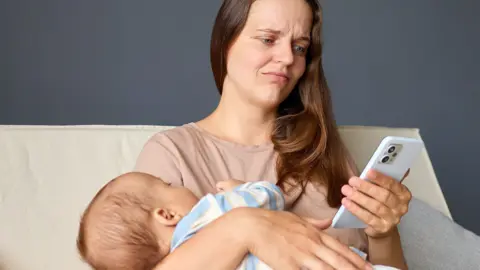
Santorelli is often asked by mothers if they should let themselves be slowly cut off by mums' groups or whether they should directly address the situation with other members - something that might risk the friendships between their children.
"Confrontation is often framed as the 'healthy' choice, but in these dynamics it can sometimes escalate harm," she says. "Especially when there's a power imbalance or when children's relationships are involved."
Santorelli advises mothers not to lash out in the heat of the moment.
"In many cases, a gradual pulling back can be the most self-protective option, especially if these are relationships that you can't fully avoid," such as those in schools, neighbourhoods and youth sports teams.
But Michelle Elman, author of Bad Friend, a book about friendship break-ups, takes a different view.
"If you don't bring it up, there's only one road - it's the demise of the friendship," Elman says. "If you bring it up, you give people the opportunity to change."
'I was bullied out of the group'
Another option is to give up on mums' groups altogether.
When Kelly was in her early 30s, she joined her local group in London.
She felt the others had different values and financial circumstances to her, as many had finance jobs in the city.
"I was essentially bullied out of the group by this one woman who was very dominant," says Kelly.
She thinks the woman "wanted to be the one who was outgoing" and might not have been too happy about Kelly's habit of making the other women laugh.
After Kelly moved back to her hometown and had two more children, she didn't bother joining any new groups. She's not part of any school WhatsApp groups either.
But she did take her youngest child to baby sensory classes and, without intending to, quickly ended up becoming friends with another mum.
"We're really close and we're there for each other. I think we've both got a very similar, non-judgemental approach to raising children and it's just been really nice."
 PeopleImages/Getty Images
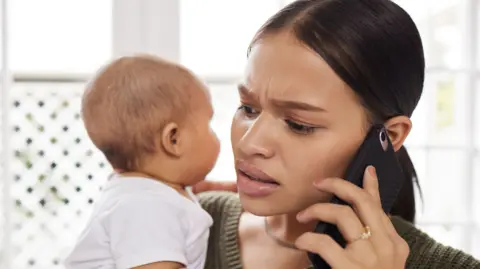
Reflecting on the mums' group she used to be part of, Rachel, now in her early 20s, admits contributing to its toxic dynamic at times. It's something she now regrets. She says it was fuelled by a "herd mentality".
There was one mum who was always late to Pilates and Rachel says she would join the others in mocking her behind her back.
"Why on earth were we so cruel to her about being late for Pilates?" she says. "That is so dumb. But when it's fun and gossipy and entertaining - and when you're at the centre of the group - you participate fully and don't feel bad.
"Of course, I feel terrible now."
And when Martina thinks back, she realises she has also caught herself judging other parents - particularly those who have shouted at their children. She acknowledges the irony.
She's looking for a new mums' group to join, but dreads the thought of going - not only because she fears being judged herself, but also because of the parental behaviour she might expose her child to.
"You can't win," Martina says. "When you've got a lot of friends who aren't mothers, it feels like they can't fully understand how difficult it can be. And then it's even worse when you try and find mothers who do understand - they still judge you."
All names have been changed.
