Care home closure meant my brother had to move away to die

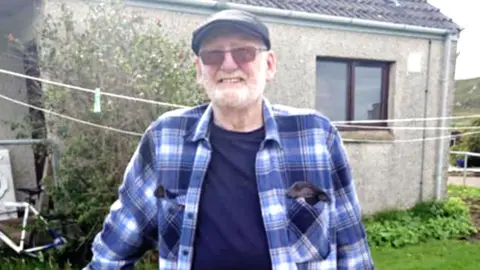 Margaret Mackay
George Mackay wanted to be able to die in the remote crofting village in the far north of Scotland where he was born.
But that was not an option.
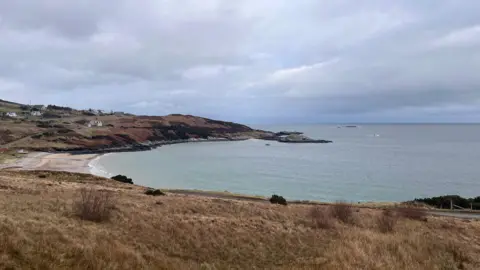
In 2023, the care home in Melness closed after almost 50 years of providing end-of-life care to people living around Tongue Bay, off what is now the North Coast 500 tourist route.
The following year, George was diagnosed with terminal cancer.
As his condition worsened, he had to move to a hospital in Wick – more than 90 minutes away by car.
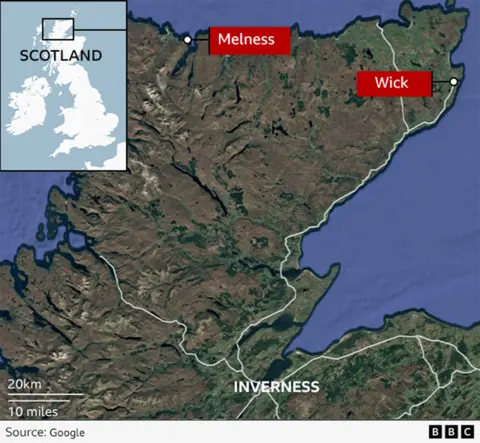
The Caladh Sona care home had been on the doorstep of George's house in Melness.
His sister Margaret believes that if it had stayed open he might have been cared for there until he died in January 2025 at the age of 72.
George, who served in the army and also spent time living in Canada, had four surviving siblings and two children.
"We could just nip in and see him. He would know the people there, and family could be there all the time with him," she said.
"But that was not to be. His wishes were to die in his own home in Melness with his family around him, and that was taken from him.
"He wasn't happy about it, but there was no choice for him but to go away from home, which was just so sad."
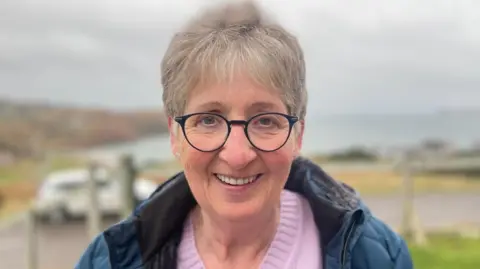
Margaret says what happened to George has affected her views on assisted dying legislation, which faces its final vote at Holyrood in the coming weeks.
The decision by MSPs is on a knife edge and the debate has been fierce.
But in this remote community, the discussion around assisted death is a practical one.
If it became legal, would people be more likely to opt for it because of a lack of palliative care where they live?
Margaret fears that people in her brother's situation could be encouraged to choose a medically assisted death over the prospect of dying far from home.
"It does worry me that that would be your limited choice, and maybe that would have encouraged him to take that choice," she said.
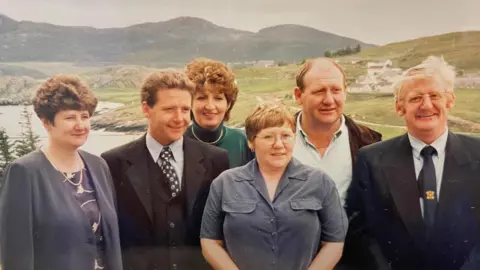 Margaret Mackay
George's experience was in stark contrast with the care Steph Bruntlett is receiving in Highland Hospice, two-and-a-half hours south of Melness in Inverness.
Aged 66, she is dying of a rare liver cancer.
Steph has access to around-the-clock care when she needs it, just a short drive from her home in Tornagrain.
She says this also gives respite for her husband Les, who cares for her "beautifully and without complaint" at home.
"We're both really appreciating the care that I'm having here," she says.
"It's not just about giving me my medications when I need them, it's about when you come in and you sit and chat.
"It's knowing that somebody's there when you need them. It's just such an important part of what this place does."
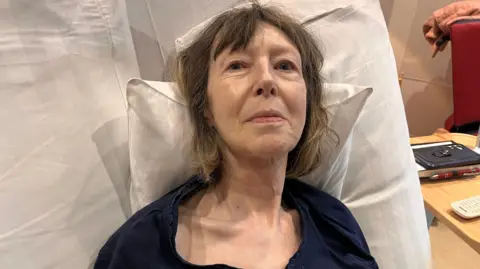
Steph is a strong supporter of assisted dying and said she considered it herself.
"I reached out to Dignitas and got their leaflets and information, but in the end it proved too late for me. I'm not able to travel now," she says.
She says she is getting excellent palliative care, but it's now out of her control what kind of death she will have, and she just has to let it "run its course".
Karen Watson, 62, from Inverness, is also a patient at the hospice. She visits to attend a ladies' discussion group and for massage therapy.
She was first diagnosed with breast cancer 29 years ago but it's now widespread throughout her body.
Her beliefs have helped her throughout that time.
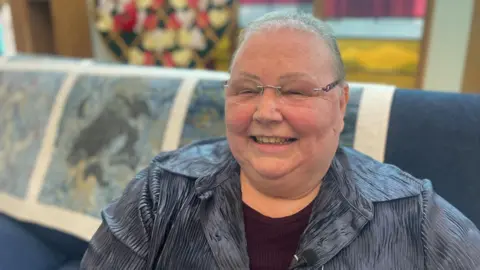
"Chemo is keeping me alive, basically. I'm on palliative care and I will have treatment now until I die.
"I've been told at least three times that I wouldn't survive the night, and I did. I believe it was my faith, my faith brought me through and God brought me through."
She says that having seen how others have been looked after, she would want to be at the hospice for end-of-life care.
"Assisted dying is not for me personally, because I have a strong faith, and so it just doesn't sit with my faith," she says.
But she says she would never judge anyone who had a different view.
And she adds: "I think it's so isolating if you don't have a hospice or somewhere that you can go to get that help."
The charity which runs Highland Hospice is neutral on the subject of the assisted dying bill.
Chief executive Kenny Steele said it was for society to decide on the principle, but that the charity was in favour of supporting people with whatever care they wanted to receive.
"The scenario that really concerns me is in rural Highland, that people may choose an assisted death against the alternative of only being able to be cared for 100 miles away from their community, their friends and their family.
"It would be a travesty if that situation were to occur. Irrespective of assisted dying, I think we should be honouring people's choices towards the end of life."
End-of-life charity Marie Curie has estimated that the need for palliative care in Scotland will rise by almost 20% by 2050, with almost 11,000 more people requiring care each year than in 2025.
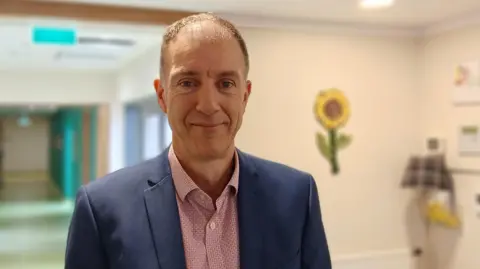
The Scottish government has promised to spend £6.5m on hospices next year.
However, industry body Hospice UK says this is not enough to address "severe and unsustainable" pressure on palliative care - particularly in the most rural parts of Scotland, which are often many miles from hospice provision.
Kenny Steele says the Scottish government is "stepping up" with additional funding to help hospices maintain their current services, but that there is a huge need to expand the palliative care available.
He says his organisation would like to expand its Hospice at Home service, which provides "rapid response" care to people in their own homes, helping to avoid unnecessary hospital stays.
The Scottish government says there are long-standing social care challenges in the Highlands, but it is working with local partners to explore the creation of a taskforce to develop sustainable solutions.
It says it has given local authorities "record funding" of almost £15.7bn and is committed to developing a health and social care system that ensures people get the right care, at the right time, in the right place.
Ministers also say UK government policies have increased pressure by making it more difficult to recruit international care workers and increasing National Insurance contributions for employers.
NHS Highland said it was working on proposals to create a new care facility and GP surgery in the Sutherland area, which would provide "much-needed capacity to serve the community".
A spokesperson said its care at home service had made a number of improvements in the last year.
NHS Highland added that the recruitment of adult social care staff was "very challenging", particularly in remote and rural areas.
"We have put fast-track recruitment campaigns in place to accelerate any opportunities for staff appointments," it said.
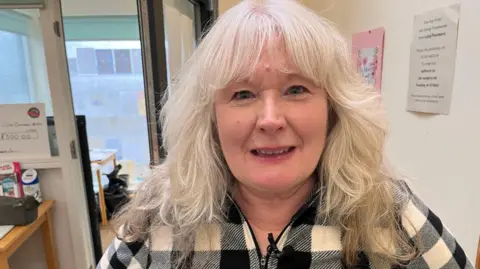
Back in Tongue, just a few miles along the coast from Melness, locals are waiting for the new care home to be built to replace Caladh Sona.
Andrea Madden used to run the NHS care at home service in the area and now volunteers with North Coast Connections, a community outreach project.
She says the area has lost other key services and has become a social care desert.
"I think before we start talking about assisted dying in this community, we have to get assisted living right," she says.
"Everyone's entitled to their own beliefs, but if you're going to make that decision, you have to be making it because all options are open to you - and at the moment we don't have it.
"We do not have the care and support so that people can feel confident and safe to die in the community in which they were born."
