Why Scotland's assisted dying bill is on a knife edge

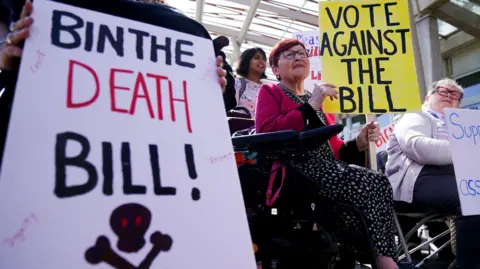 PA Media
There are just a couple of months to go before Holyrood shuts up shop ahead of May's election.
But before MSPs depart for either the campaign trail or life outside politics, they have an important choice to make.
They will be asked to vote on whether or not to legalise assisted dying in Scotland.
It is a decision many view as one of the most significant ever faced by the Scottish Parliament - literally, a matter of life or death.
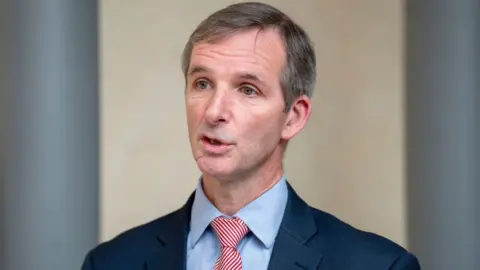
The Assisted Dying for Terminally Ill Adults (Scotland) Bill, introduced by Liberal Democrat MSP Liam McArthur, will be put to a final vote sometime in March.
The proposals would allow terminally ill, mentally competent adults to seek medical help to end their lives.
The bill has travelled much further on the parliamentary journey than previous efforts to legislate in this area.
In May last year, Holyrood backed the general principles of the bill by 70 votes to 56, with MSPs deciding individually as a matter of conscience, rather than voting along party lines.
It was a more comfortable result than some on McArthur's own team had been expecting, but with several of those MSPs voting in favour doing so despite reservations, it remains far from certain that assisted dying will become law.
In fact, the bill's future is on a knife edge - just a handful of MSPs changing their position could see it fall.
And several members who voted it through at its first stage are now wavering.
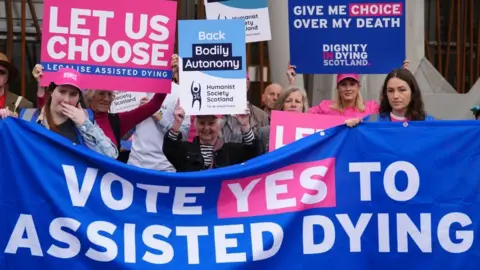 PA Media
Dozens of changes were made during the committee stage which reached its conclusion towards the end of last year, including raising the eligibility age, and ensuring there is no duty on doctors to participate. But for some, key concerns remain.
Earlier this month, the SNP MSP Audrey Nicoll wrote to fellow parliamentarians setting out why she has withdrawn her backing.
She said, like many others, she had supported the legislation in the initial vote to "allow the fullest debate to take place", but had been left disappointed that "a significant number of reasonable amendments" had been rejected - thought to include measures such as specialist training on coercion.
In her letter seen by BBC Scotland News, Nicoll, a former police officer, told MSPs her biggest concern is around coercion, writing "the reality is that some individuals will be subject to coercion and pressure, whether directly or indirectly and in ways which may be subtle or difficult to enunciate".
She added: "My perspective on this has, to a great extent, been shaped by my policing career, and my exposure in public service to those most vulnerable in our communities."
Nicoll called for a focus on improving existing palliative care provision, and questioned whether there would be adequate levels of post-legislative scrutiny if the bill was to pass.
Another MSP, who did not want to be named, also voted for the legislation last year in order to allow the parliamentary process to continue.
While Nicoll was not convinced, they told BBC Scotland News that key changes, including raising the age limit from 16 to 18, meant they would vote for assisted dying to become law.
Others are yet to make a final decision.
Conservative MSP Brian Whittle also supported the proposals at stage one, but at the time told MSPs he had "significant concerns about the practicalities of the bill, and it will, at the very least, need amended".
He says he is yet to commit, but believes significant further changes are still required.
Miles Briggs says he too is undecided, having backed the bill in the initial vote with the intention of seeing how it progresses.
The Tory MSP told BBC Scotland News that ensuring the right protections are in place for healthcare professionals would be an important factor.
 PA Media
The SNP MSP Michelle Thomson also voted in favour at stage one, but is still undecided over the final stage three vote in March. She says she will wait to see the final shape of the legislation.
She pointed out there is an opportunity to perhaps bring back previously defeated amendments - albeit in a different form - during the third and final stage of the bill's process.
A further three MSPs who voted in favour of the bill last year have also told BBC Scotland News they are yet to make a decision, and will wait to see what last-minute changes are made.
While there are strongly-held views on both sides of the assisted dying debate, Liam McArthur's approach has been praised across the chamber.
He says further amendments will be brought forward at the bill's final stage which he believes will "help strengthen and clarify" the legislation.
He expressed disappointment that Nicoll had come to a view prior to those changes being debated.
Looking at the parliamentary arithmetic, the handful of undecided MSPs could make or break McArthur's bill in what will be one of the last - and perhaps most meaningful - votes cast in this parliament.
