Liver disease support group set up in mum's memory

 BBC
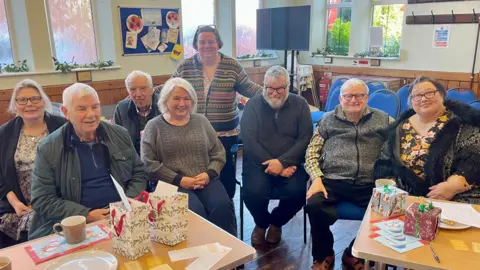
BBCAfter Lizzie Adcock lost two of her loved ones to liver disease, she set up a support group to help others.
Mrs Adcock cared for her mum in the final stages of her life and lost her brother-in-law three weeks after a failed liver transplant.
She could not find a community support group for either family member, so established the Liver Lantern Hub in Ripley, Derbyshire, in their memory.
"There's plenty of support, at GP level and at the hospital, but there's a big wide gap and a void for people in our community to come together, specific for liver disease," she said.
"My mum closed herself off from society. She only went out if she had an appointment. People with the symptoms are sometimes very scared of going out," she added.
"Come and have a cup of tea, have a chat, because there's so much we can learn from each other."
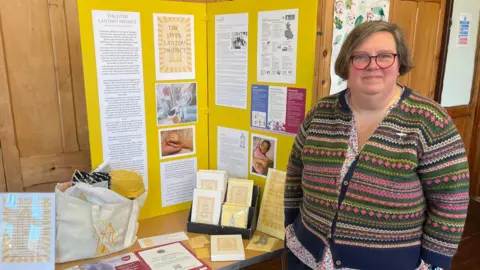
Mrs Adcock's mum suffered from non-alcoholic steatohepatitis (NASH) and was not diagnosed until she was decompensated - the very end stage of the disease.
"At that time, in the hospitals, you weren't given any information at all," said Mrs Adcock about the NHS liver care the family received in 2017. "It was left to us as patients to search the internet."
She cared for her mother until her passing in 2022, then lost her 60-year-old brother-in-law the following year after a failed liver transplant.
"I thought, 'it can't just be us going through this', there's got to be so many people out there that really could do with having more help themselves," she said.
There are more than 11,000 deaths due to liver disease each year in the UK and there has been a four-fold increase over the last 50 years, according to the British Liver Trust.
A 'family atmosphere'
Inspired to help people with the disease, Mrs Adcock started making comfort bags for liver patients discharged from Royal Derby Hospital for end-of-life care.
The comfort bags included items she had found useful when caring for her mother, such as a blanket, drinking beaker, disposable bed mats and information leaflets.
But Mrs Adcock wanted to extend this to an in-person support group, creating a "family atmosphere" for anyone affected by liver disease.
In September, Mrs Adcock launched group meetings at the Marehay Methodist Church in Ripley and these have continued on the first Tuesday of every month.
"There's so much we can learn from each other. Everybody's got a story to tell," she said.
Mrs Adcock's next ambition is to encourage more Derbyshire GPs to signpost people with liver problems to their group to expand their supportive "family."
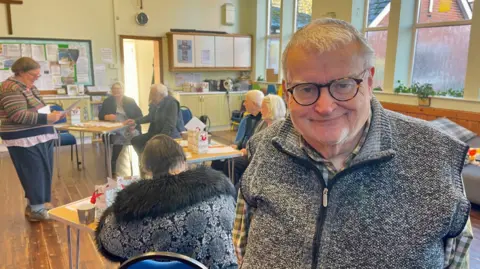
Intensive care nurse Suzie Parsons attends the group with her husband Kev, who was diagnosed with non-alcoholic steatohepatitis (NASH) in 2023.
"It's good for him to know that other people are going through the same thing as him," she said. "I probably get the same amount out of the group, if not a bit more.
"It's been great to go and be honest and know that people actually want to listen to you," she added, praising the openness of the group.
Paul Barras was a senior occupational therapist and is now a supporter and fundraiser for the Liver Lantern Hub.
He said community support groups were vital to informing, advising and tackling the social isolation of patients, carers and their families.
"A lot of people say 'society is coming apart'. Groups like this are the invisible stitching that holds it together," he smiled.
"Any group that brings people together, increases support, increases engagement, this is the type of thing that should be being done."
Follow BBC Derby on Facebook, on X, or on Instagram. Send your story ideas to eastmidsnews@bbc.co.uk or via WhatsApp on 0808 100 2210.
