Ancient Roman burial site could hold more secrets

 Oxford Archaeology
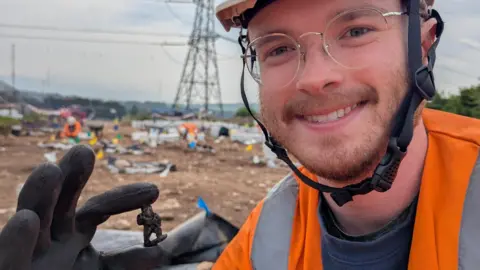
The excavation of one of the largest Roman cemeteries in the UK could unearth more hidden secrets of ancient funeral traditions, archaeologists have said.
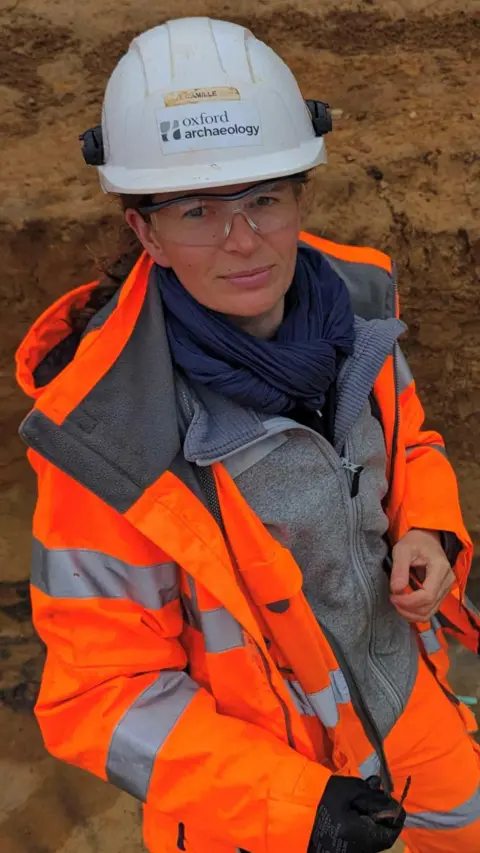
Camille Guezennec, 41, site supervisor at Oxford Archaeology, said there was "still a lot" of digging to be done along the A66 between Penrith and Scotch Corner.
Archaeologists started work on the site near Penrith last year ahead of plans to widen the road, the first time academics had been able to dig there so extensively.
Guezennec said they would usually find "little shards" of Roman glass but, "incredibly" they had now found "fully complete vessels".
She said the cemetery was "really rich" in artefacts buried in graves or placed next to funeral pyres.
Guezennec said the team had found pottery from urns in which human remains would have been placed, and pottery, glass or metal vessels that would have accompanied the dead.
"There's also a lot of objects, such as jewellery items or even some weapons, that would have been placed on the pyre and burnt with the deceased," she said.
 Oxford Archaeology
Guezennec said it was "always really exciting" to find something new and the A66 site was "special" because of how well the items were preserved.
She said it was "really important" for local people to be connected with the history of where they live.
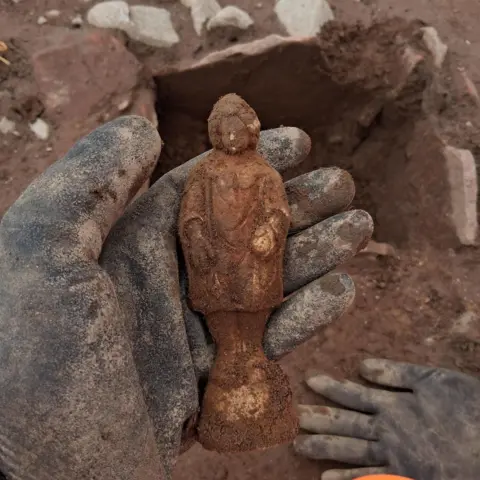
One of the items found in a grave was a Cupid figurine, which was likely to have been buried with cremated ashes.
 Oxford Archaeology
Guezennec said: "It's so rare and it's the best preserved example we've had."
She said it was "slightly mysterious" and "really interesting" trying to work out who the figurine was and it's significance of being placed in a grave.
She said the items would be fully analysed and she hoped people would eventually be able to see them in a museum.
