The 'fascinating' finds of a Yorkshire bottle digger

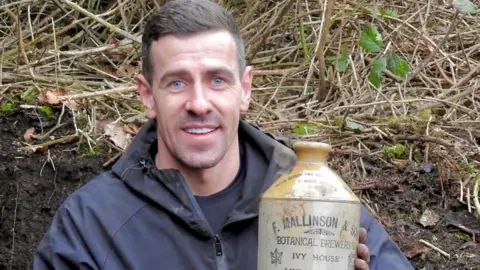 Eddie Goodall
"Each one's a memory to me. I've got hundreds of bottles, but I can look at a certain one and it takes me back to the time and place where I dug it," says Eddie Goodall.
Eddie, who lives near Hebden Bridge, has been metal detecting for more than 20 years - but an accidental discovery turned his attention to bottle digging.
The treasure hunter was out detecting at a disused quarry when he noticed rabbits had kicked up ash and bits of pottery, and asked the landowner for permission to delve deeper.
He says: "I was hooked ever since. I started digging and got a load of local bottles out, like flagons and ginger beers."
Before modern waste sites, people burned coal at home and threw away bottles, jars and other items with the ash, Eddie says.
The waste was taken away and dumped in old quarries or hollows in the landscape.
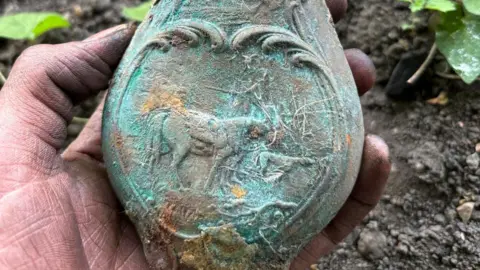
Diggers seek out these old tips and dig down through the layers to find intact bottles - many bearing the names of long-closed breweries, chemists or dairies.
The 35-year-old says: "You never really know what you're going to find. It's fascinating what was thrown away back then."
 Eddie Goodall
But not everyone shares Eddie's enthusiasm.
In one part of West Yorkshire, there are concerns the pastime is becoming dangerous.
A Calderdale Council safety report warns digging on former landfill sites and natural areas can pose a "serious risk" to safety.
It says some holes left behind have been large and unstable, and have had to be made safe.
"Bottle digging is a national issue which involves people excavating old landfill sites, or natural areas to search for antique bottles," the report says.
"This is a dangerous practice, and unauthorised digging can lead to serious risks to public safety and the environment."
A spokesperson for the authority says: "The council is pursuing enforcement action against perpetrators, as well as monitoring and responding reactively to reports of digging locally."
 Eddie Goodall
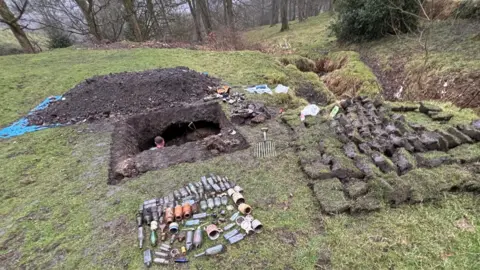
Eddie mainly digs in old quarries on farmland.
But he says he always takes precautions - and asks for permission.
"It can be a dangerous hobby definitely, you could be digging into hazardous materials like asbestos or other chemicals if you don't really know what to look out for," Eddie says.
"It's always important to get permission because somebody always owns the land, so they might not want you on there for various reasons.
"Most diggers I know try to leave sites tidy, they really clean up.
"They even spread wildflower seeds or they'll put grass seeds back down and stuff and level it all out.
"But unfortunately there is a small minority of people who do ruin it for the good ones."
 Andy Matthews
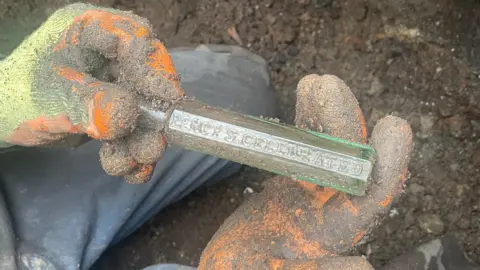
Andy Matthews, who runs the Cornish Bottle Archive which keeps records of finds, says: "Bottle diggers are often vilified and the problem is that if you get one person doing something that they shouldn't, we all get tarnished with the same brush."
Andy says the appeal of the hobby is that it uncovers stories that are connected to local families.
"The knowledge that bottle diggers have is unbelievable," he says.
"They can dig something up, take one glance at it, not only will they know what kind of patent it is, they'll know the age of it, and that's incredible, so that's what really should be celebrated."
 Eddie Goodall
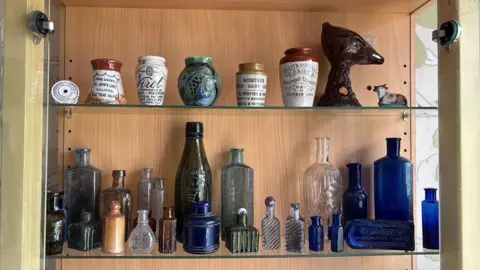
Back in Hebden Bridge, Eddie keeps his finds on display.
"For me it's the local towns and names and the breweries that are on them," he says.
"These bottles are usually around 100 years old or older and wouldn't be seen or known about if we didn't have this hobby."
Listen to highlights from West Yorkshire on BBC Sounds, catch up with the latest episode of Look North.