Mystery over boat found in beach house solved after nine years

 Kari Christensen
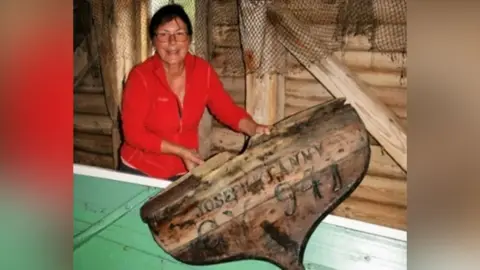
How did the remains of a Victorian fishing boat from Grimsby end up inside a house on the coast of Norway? It is a question Kari Christensen has been trying to answer for the past decade – and now she has an answer.
In 2017, Kari contacted BBC Radio Humberside to explain how she had found the wooden stern of the boat in a beach-side "sea house" she was renovating.
She knew that a man called George Middleton sold the vessel to a Norwegian buyer in the late 19th Century.
"I hope somebody in Grimsby maybe knows about his company," she told listeners at the time.
But it seemed no-one did have any information – until nine years later when Chris Middleton found out about her appeal via a social media post.
 The Print Collector/Getty Images
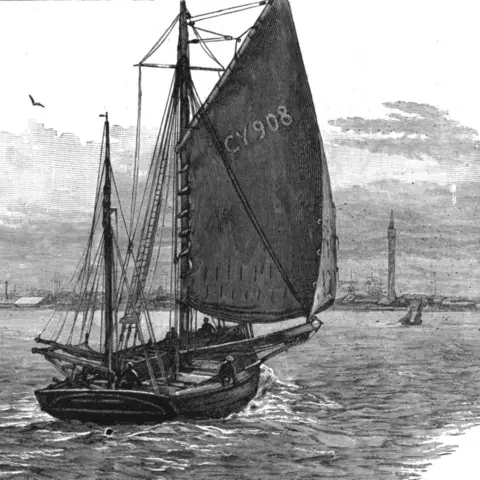
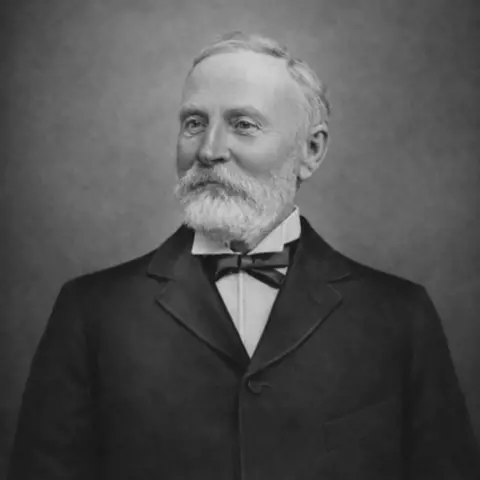
Chris is a direct descendant of George, the original owner, as he has been telling the Secret Lincolnshire podcast.
"Through the course of doing my family history research, I was looking into the numbers of the vessel," he says.
"I went further down the line of this one in particular and then the post showed up online. So that's remarkable."
The stern found by Kari in 2017 includes the registration number of the boat, GY-941, and its name, Joseph & Fanny.
"That caught my eye," she recalls. "I thought it was a little romantic."
Kari started searching for boats using the letters GY and discovered it was probably from Grimsby.
 Chris Middleton
Chris knew nothing about the story until he came across it while researching his family history.
"It is the first time I've seen anything which would have been part of his life and something which obviously he would have been sailing," he says. "So that is amazing."
Finding the stern led Kari to carry out her own research into the boat and its adventures in the waters between Britain and Norway.
"I got some stories, some articles from newspapers connected to the boat," she says.
"[There's] one happy story about Joseph & Fanny rescuing a Dutch schooner in 1875.
"But there are also some sad stories about young lads, apprentices, being washed overboard in bad weather.
"That led me to the history of the Grimsby fisher lads, about young apprentices going on board fishing boats without any schooling."
Kari adds: "You can say a small object has led me to a lot of interesting history about fishing, [and] about Norwegian and English men. They were fishing on the same areas in the Dogger Bank and other places."
So how did the boat end up in Norway?
Chris found out his great-great-great-grandfather sold Joseph & Fanny to a Norwegian buyer on 17 April 1891.
It was a time when Britain was stepping up the transition from traditional sailing boats to steam power.
"That's a very common trade of the time," Chris explains.
"The transition from sailboats to steamboats – that sort of peak empire point for Britain – the secondary market is almost entirely Scandinavian for sailboats.
"These were very good boats, but obviously in Britain there's high competition on the waters.
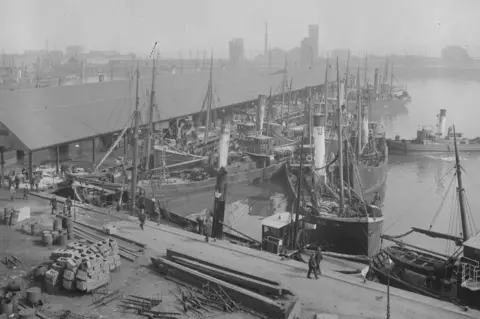
"Grimsby was the largest fishing port in the world, so there can be no-one languishing behind in a sailboat.
"Steam's the next thing, so everyone's now refinancing for larger vessels... because they're capable of bringing in more fish."
 Topical Press/Getty Images
Although Chris and George are separated by a century, Chris remembers having conversations with his grandfather, Peter Robert Middleton, about the fishing industry.
"There are a lot of family stories about that time, because George's son Robert was very prominent on the docks and you can still see some of the buildings today which he occupied," he says.
He finds it remarkable that an object his great-great-great-grandfather would have touched and worked on is now preserved hundreds of miles away across the North Sea.
"Like a lot of handmade or industrial items that have been spared scrapping, it does tend to outlive many of us.
"Something like that will, I'm sure, go on for a very, very long time. It's nice to know it's out there somewhere."
Listen to highlights fromLincolnshire on BBC Sounds, watch thelatest episode of Look Northor tell us about a story you think we should be covering here.
Download the BBC News app from the App Storefor iPhone and iPad orGoogle Play for Android devices
