Former River Tweed bosses credited with keeping salmon numbers healthy

 Ronald Richardson
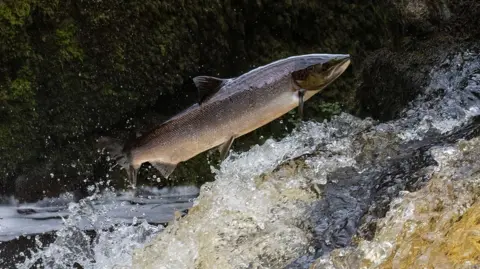
River bosses in the Borders believe their predecessors are due credit for current salmon numbers bucking the global trend.
It was feared that last season's droughts, high water temperatures and extensive spread of harmful algae would have had a major impact on rod catches along the River Tweed and its tributaries.
However, figures just released show that 6,957 fish were caught and released last year - just above the five and 10-year averages.
Coming at a time when nearly every other river is reporting steady declines, Tweed managers are delighted with the numbers.
Jamie Stewart, clerk to the Tweed Commission, paid tribute to the people who filled his waders in previous decades.
He said: "We need to give great credit to those who came before us for opening up the waterways by removing barriers and taking us from being a Tweed mill industry to a Tweed fishing industry."

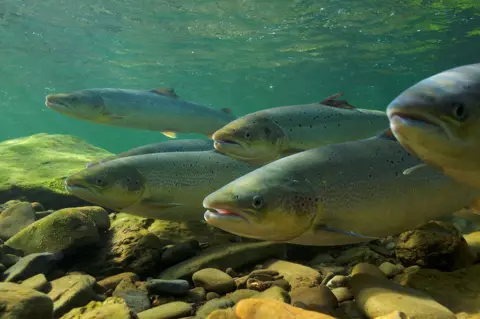
Since the mid 1970s, worldwide Atlantic salmon numbers have dropped from an estimated 10 million to currently less than three million.
Scientists believe the decline is down mainly to changing water conditions and habitats, as well as a reduction in food availability.
With fewer fish arriving at Berwick harbour each year to migrate back up the Tweed to their spawning grounds, it has become increasingly important to make the final journey less difficult.
Current managers believe the removal of dozens of weirs from rivers and burns across the catchment over the past 50 years has aided breeding.
Mr Stewart added: "Because of the work done to remove the barriers, we now have 13 recognised sub-catchments in the River Tweed.
"This gives us genetic diversity and a bit of an assurance that if one under performs others will perform, allowing us to maintain that stability.
"Opening up the catchment was the best thing the Tweed Commissioners ever did."
 Reuters
Although the 2025 rod catch of 6,957 is down on the previous year's 9,947, the figure is the third highest over the past nine years.
A catch-and-release policy along with improvements to water quality and habitats have also helped stabilise salmon numbers along the 97-mile (160km) Tweed and its tributaries.
The Tweed Commission has also recently established a scientific advisory panel to provide independent advice on emerging evidence, marine survival trends and conservation priorities.
Jonathan Reddin, chief commissioner of the Tweed Commission, is delighted with the 2025 catches, and hopes science will keep the river in a prime position for salmon returning each year.
He said: "To hold our five-year average in a year of exceptional environmental pressure demonstrates the underlying resilience of the Tweed.
"However, stability should not be mistaken for long-term security.
"Atlantic salmon face significant pressures both in freshwater and at sea, and we must remain vigilant and science-led in our response."
