Confidence high as salmon season opens on the River Tweed

 Phil Wilkinson
Managers of one of the country's most famous salmon rivers believe they are bucking the worldwide decline in the wild fish.
Dozens of anglers from across Europe were in Kelso for the official opening day of the Tweed's salmon fishing season.
Despite a continued global decline in wild numbers of the iconic fish, the mood was buoyant ahead of the first cast being made on the Junction Pool beat.
Jamie Stewart, chief executive of the River Tweed Commission, said: "As we see Atlantic Salmon declining right from North America to southern Spain, the Tweed has held its numbers well."

 Phil Wilkinson
The salmon industry generates around £25m each year for the Borders economy and supports an estimated 500 full-time equivalent jobs.
But continuing to attract anglers from near and far requires concerted efforts to maintain fish numbers.
As well as adopting a catch-and-release policy at times during the season, river bosses manage habitats and breeding grounds, enhance water quality and tackle illegal fishing to preserve stock levels.
Stewart added: "We did suffer a significant drop in 2015 - courtesy of Storm Desmond and the floods it brought - but it has been quietly building back up since then.
"We now have sustainable numbers of salmon on the Tweed and we are optimistic for the season ahead."
Environment agencies around the world have reported a steady decline in Atlantic salmon numbers over the past 50 years, mainly due to changing water conditions and habitats, as well as a reduction in food availability.
Accepted estimates suggest numbers have dropped from almost 10 million to less than three million.
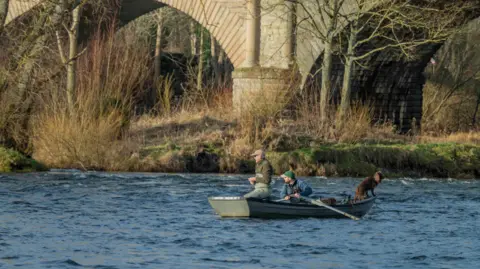

Although the Tweed's official angling numbers for 2025 have still to be published, the previous year's rod catches along the 97-mile (160km) river were just short of 10,000 - the highest since 2013 and more than 3,000 up on the five-year average.
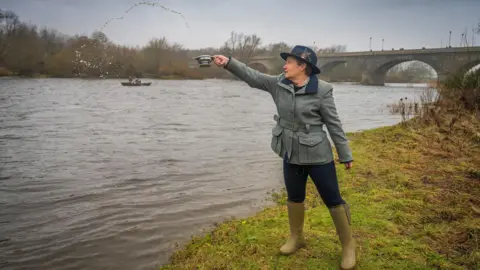
Sarah-Jane Laing, chief executive of Scottish Land & Estates, officially opened the 2026 season with the traditional blessing of the river with a quaich of whisky.
She said: "The success of restoring salmon numbers is down to the hard work of the Tweed commissioners and others - not just in the rivers but along the banks and in the fields.
"The whole catchment is managed as an ecosystem in order to maximize the chances the salmon have - it's a tough journey for them and we want to make things as easy as we can."

Dozens of businesses across the Borders rely heavily on the visitors that salmon fishing brings to the Tweed and its tributaries.
Kelso, which has a museum dedicated to fishing on the river, is one of several towns that benefits from the industry.

Kelso's honorary provost Gavin Horsburgh said: "Kelso is to salmon fishing what St Andrews is to golf - we have the Junction Pool where the Teviot meets the Tweed, and is regarded by most to be one of the best places in the world to fish for salmon.
"From the start of the season right through to September, our hotels, guest houses and other accommodation providers have people staying that are here for the fishing."
