Octopus boom wipes £500k off shellfish landings

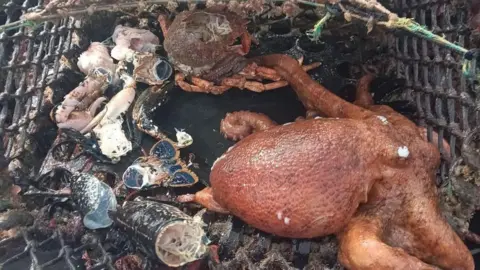 South Devon and Channel Shellfisherman
A boom in the population of common octopus in Guernsey waters has wiped more than £500,000 off the value of local shellfish landings in a year, according to a new report.
The study by the UK Marine Biological Association (MBA) found the number of octopus landed by commercial fisheries in the region last year was almost 65 times higher than recent annual averages.
Dr Bryce Stewart from the MBA said the rise in octopus in Channel Island and UK waters, was due to warmer sea temperatures and mild winters.
The report explored the impact of octopus predating on shellfish as reported by fishers, and Stewart said they could suffer "economic hardship and a very uncertain future".
Damage to catches
The report broke down the change in weight and value of landings of shell fish such as crab, lobster and scallop in ports around south-west England and Guernsey.
It showed that the value of crab landings in the island were down more than 95% in 2025, with just under £250k wiped off compared with 2024.
Landings of lobster had dropped 94%, and scallops over 70%.
Stewart said the study, which was funded by the UK Government and local authorities in the South West, followed concern among ministers and counsellors.
"Around April and May last year the issue was really coming to a head, at that stage fisherman were mostly seeing damage to their catches and weren't catching many octopus themselves," he said.
"Nothing like this has been seen for 75 years, so there is no living fisherman who'd probably seen it before. So this was such a weird thing for people to see, it seemed unnatural."
Stewart said he had not spoken to Channel Island governments during his research, but the issue needed to be taken "seriously".
"You're looking at fishermen really suffering economic hardship and a very uncertain future," he said.
"We recommend further research into the actual economic and social effects because one fishing boat at sea actually support a number of jobs on the shore as well.
"And also, fishing has such a strong tie to communities, to history, to culture."
Follow BBC Guernsey on X and Facebook and Instagram. Send your story ideas to channel.islands@bbc.co.uk.
