Plans to power London landmarks with Thames heat

 AFP via Getty Images
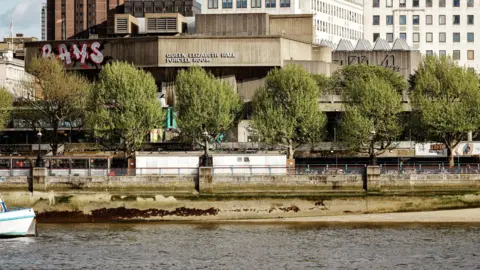
A new £72.7million communal heat network could provide low-carbon heating for the National Theatre and other London landmarks near Waterloo and the South Bank in central London.
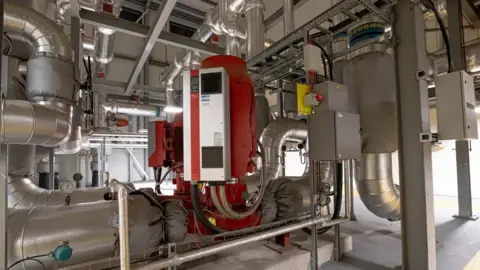
Under the plans, a water source heat pump will take heat from the River Thames and transport it through a network of underground pipes around the area, giving buildings the chance to switch to low-carbon heating without affecting their external appearance.
The developer - Hemiko - says the Waterloo and South Bank Heat Network will be locally operated, helping to cut bills and reducing reliance on imported energy and supply chains.
The government has awarded a £15.6m grant to kickstart the project.
This type of area-wide approach is considered to be a cheaper and better way to decarbonise heating than providing individual pumps.
According to Hemiko, the new network has the potential to reduce the amount of nitrogen oxides being emitted from buildings by 72% over time.
 PA Media
It is not yet known which buildings will connect to the heat network but organisations exploring the opportunity include the National Theatre, King's College London, BFI Southbank and the Southbank Centre, Hemiko said.
Toby Heysham, the firm's chief executive, said: "There are few things that say 'London' quite like the River Thames does, so knowing that water from the Thames could soon heat some of the capital's iconic buildings is such a wonderful, quintessentially London story.
"Our strategy is to develop heat networks in the most heat-dense area, where the customers want and need to link together and get access to the locally available waste heat."
The developer said it would start by building the core infrastructure - which will include the river-source heat pump, underground pipework and the connection of an initial cluster of buildings.
It will then expand the network to serve additional buildings, including new-build and existing homes, the firm said.
The announcement came on the same day that the previously unregulated industry was brought under Ofgem oversight, meaning that heat network customers should be protected from unfair energy price hikes.
The government hopes to double the amount of heat demand met by heat networks in the next decade.
Listen to the best of BBC Radio London on Sounds and follow BBC London on Facebook, X and Instagram. Send your story ideas to hello.bbclondon@bbc.co.uk
