Cleaner Thames celebrated in latest health check

 Getty
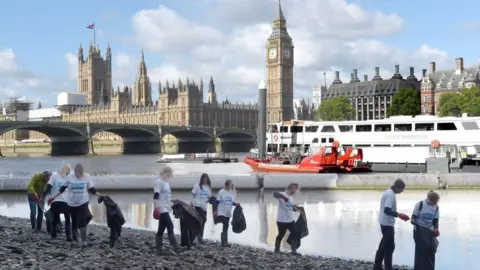
GettyDecades of dedication have contributed to the River Thames enjoying a new lease of life, a report from London Zoological Society (ZSL) has found.
In the 1950s, the Thames was declared "biologically dead" due to industries disposing of chemicals, heavy metals, oils and dyes into the water.
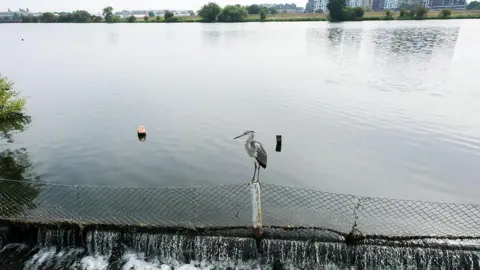
Since then, continued action and policy have seen the return of beloved species such as harbour porpoises and wading birds.
However, experts warned the hard-earned resurrection was being threatened by climate change and pollution.
 Fox Photos
The updated State of the River Thames health check report collated the most up-to-date monitoring data available from 21 different indicators used to assess the health of the Thames.
It found lower concentrations of toxic metals, more "breathable" water for the river's underwater wildlife, and new habitats along the riverside walkways.
The report also shows how rapidly regulation can bring benefits. Plastic cotton bud sticks, once one of the most commonly found litter items in the Thames, have all but disappeared from its shores following the UK's ban on sales in 2022.
ZSL's conservationists hope the same will be achieved for plastic wet wipes, another form of pollution found along the Thames, which are due to be banned in the UK later this year.
Other wins for public health and the environment include the drop in concentrations of toxic copper and zinc in the Thames to below levels at which they damage the aquatic ecosystem.
Zinc had halved in 2024 compared to tests in 1990, while only a quarter of the concentration of copper remained.
 Matthew Chattle/Getty
Conservationist Alison Debney, ZSL lead for UK nature recovery, said: "As we enter a new year, the Thames reminds us that transformation is possible.
"The Thames may have been declared biologically dead in the 1950s, but the estuary we see today demonstrates just how quickly things can change when decisive action is taken.
"We're celebrating those wins today – but we must act now to secure the wins of tomorrow."
Despite this big achievement, rising temperatures and sea-levels, as well as more local problems such as road run-off, sewage and pharmaceuticals are jeopardising the estuary's future health, the report says.
The summer temperature of the capital's waterway has increased on average by 0.13C each year since 2007, equivalent to a 1C temperature rise every eight years.
In the heart of the city, water levels by Tower Bridge and the Tower of London have also been rising by 5mm each year on average since 1993.
As water levels continue to rise, so does the risk of upstream waters becoming increasingly more saline which leads to the loss of rare freshwater tidal habitat along the Thames and the interwoven communities of wildlife that it supports.
Concentrations of nitrates, which are harmful in high amounts, have also gradually increased in the Thames and two of its monitored tributaries, the Rivers Lee and Darent, all of which risks further unbalancing the ecosystem, the report found.
 Port of London Authority
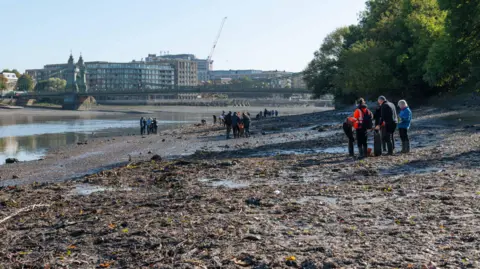
As part of the conservation charity's to keep the river healthy, Transforming the Thames was launched last year, bringing together conservationists, communities, government bodies and landowners to scale up recovery across the Greater Thames Estuary.
Their plans include the creation of oyster reefs, the planting of seagrass meadows, and restoration of saltmarshes that provide critical nesting grounds for local bird populations.
Charlie Wood, London area director at the Environment Agency, said: "This ZSL report is a brilliant spotlight on the health of the River Thames and we are delighted to have contributed.
"It is through such monitoring and evidence that we can understand the progress made to bring the river back to a thriving state but also identify emerging threats from factors such as climate change.
"Strong regulation and steering investment in infrastructure has played a major role in the improvements we see, but the future of the Thames also relies on working in partnership across the public, private and voluntary sectors and we look forward to continuing our role in that."
Listen to the best of BBC Radio London on Sounds and follow BBC London on Facebook, X and Instagram. Send your story ideas to hello.bbclondon@bbc.co.uk
