The city building Parisian streets by an oil-rich sea

 Tim Franco/INSTITUTE
Photographer Tim Franco visited Baku in Azerbaijan, a city determined to demolish its Soviet past and replace it with vast and ambitious new buildings – but the money is running out.
 Tim Franco/INSTITUTE
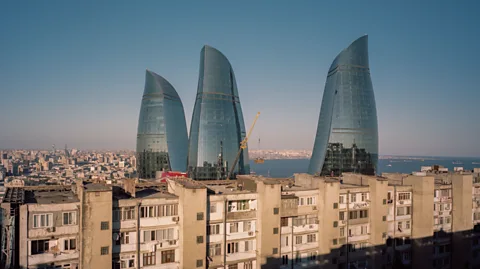
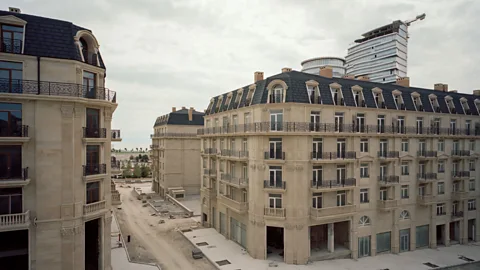
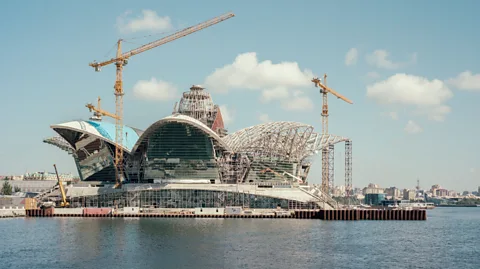
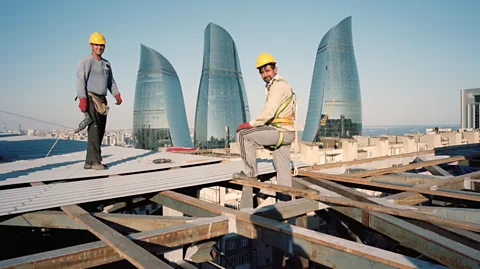
With its broad boulevards and grand apartment buildings, this could be Paris. Not far away, gondolas float on a newly built Venetian-style canal. A crane works on a waterfront building with a roof that resembles the sails of Sydney’s Opera House. And over it all, the magnificent Flame Towers, covered in LED screens, curve into the sky like three glass teeth.
Baku, Azerbaijan’s capital, has a long history of mixing architectural styles. Its medieval walled city – parts of which still stand - blended Arabic, Persian, Ottoman and Oriental influences.
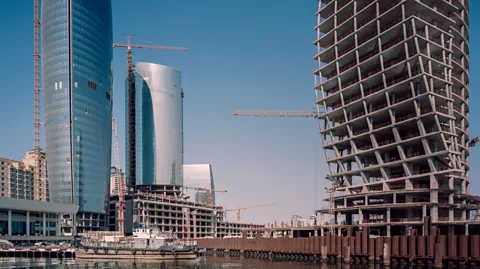
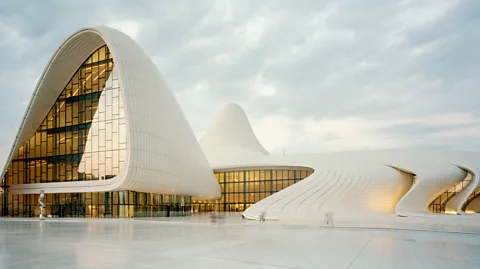
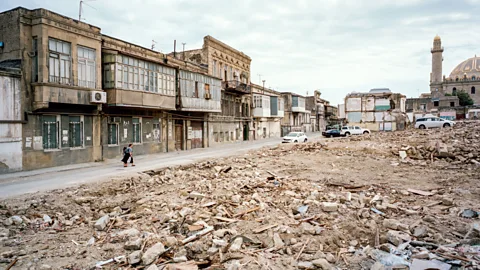
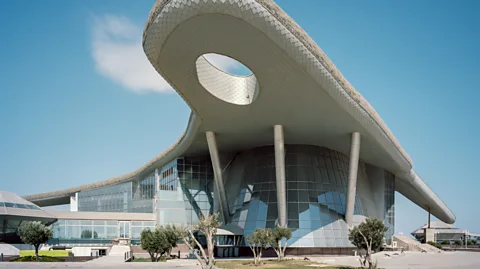
But now the oil-rich city is updating itself. Its dull Soviet-era buildings and industrial zones are being torn down or covered up and echoes of classical Europe, Sydney and Dubai have sprung up on the shores of the Caspian Sea.
The city’s transformation began shortly after the Soviet Union collapsed in 1991. Under President Heydar Aliyev – who came to power in 1993 – billions of dollars were poured into ambitious construction projects in an effort to modernise and gentrify the city. The work now continues under his son, Ilham, who succeeded his father in 2003.
Photographer Tim Franco visited Baku to document a city determined to renew itself.
(Credit: Tim Franco/INSTITUTE)
 Tim Franco/INSTITUTE
 Tim Franco/INSTITUTE
 Tim Franco/INSTITUTE
 Tim Franco/INSTITUTE
 Tim Franco/INSTITUTE
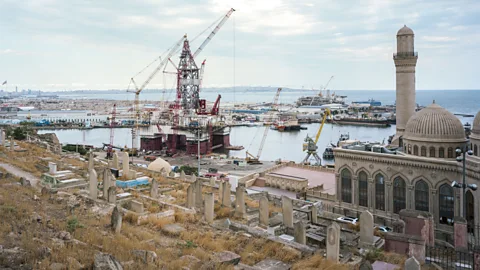
An oil rig being built near downtown Baku
 Tim Franco/INSTITUTE
Unwanted Soviet neighbourhoods have been demolished to make space for open parkland as well as marble-white shopping malls, glinting skyscrapers and luxury residential complexes. Many are pet projects of Azerbaijan’s ruling family.
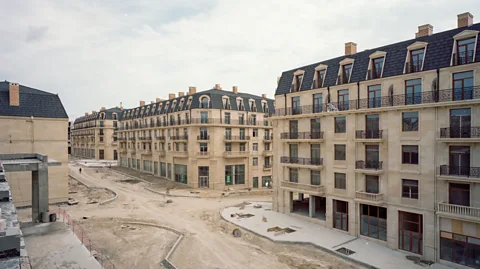
For example, the 221 hectares of city streets that recreate the iconic 19th Century Parisian architecture of Georges-Eugene Haussman were reportedly requested by the first lady, Mehriban Aliyeva.
 Tim Franco/INSTITUTE
Buildings now considered ugly are given fake facades
 Tim Franco/INSTITUTE
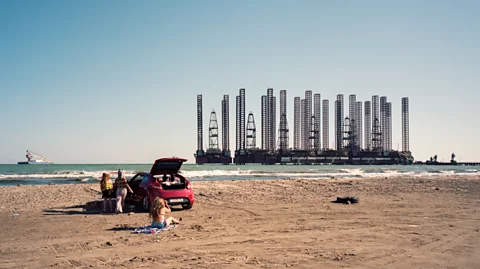
Old oil rigs sit just offshore in the Caspian Sea
 Tim Franco/INSTITUTE
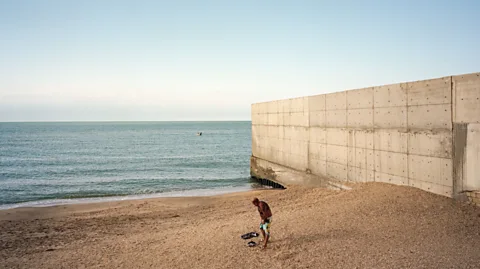
A wall separates a private property from the public beach
 Tim Franco/INSTITUTE
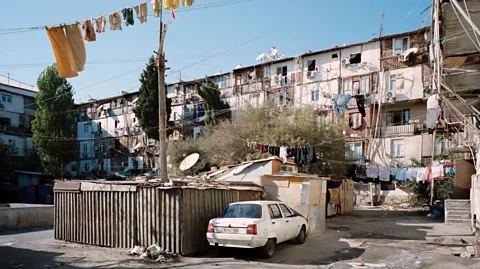
The north of Baku is also home to refugees from Azerbaijan's ongoing border conflict with Armenia
 Tim Franco/INSTITUTE
Many of Baku’s grand projects could be in trouble, however. The falling price of oil has hit Azerbaijan’s economy and some fear that new developments may stand empty – or never be completed.
Khazar Islands is a gigantic development of villas, luxury hotels and commercial buildings planned for the southern outskirts of Baku. It was to occupy 41 islands reclaimed from the Caspian Sea that would stretch over an area covering more than 3,000 hectares.
As a centrepiece, developers planned to erect the tallest building in the world – a tower soaring more than a kilometre into the sky. But the $100bn project has apparently stalled, as funds dried up. What’s more, Ibrahim Ibrahimov, the billionaire oligarch behind a large part of the project, was arrested in 2015 for unpaid debts. The islands now lie unfinished and deserted.
