The surprising downsides of being a cynic

 Serenity Strull/ BBC/ Getty Images
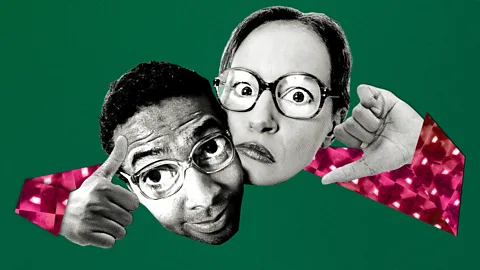
A jaded view of human nature may render you more likely to suffer from disappointment and betrayal than those who see the world through rose-tinted spectacles. But there are ways to avoid being hoodwinked.
Imagine you've agreed to meet up with a new acquaintance, who – you hope – might become a good friend. You arrive at the bar but they fail to turn up at the agreed time. You sit, nursing your cocktail, feeling the tick of time passing with every fibre of your being. After half an hour, you give up and leave.
When you are on the road, you receive a message: "Sorry! My brother's just had a car accident and I need to help him. Can we rearrange for another day?"
Do you give them the benefit of the doubt, offer sympathy, and fix a new date? Or do you assume that they are lying, block them from your contacts and tell yourself the situation just confirms what you've always known: people are fundamentally unreliable?
Your instinctive reaction scenarios like this may be far more revealing than you imagine.
Over the past two decades, scientists have become increasingly interested in measuring people's trust in others and its wider consequences. Surprisingly, they have found that extremely cynical dispositions do little to protect people from lies and scams, but also have the added drawback of inhibiting the cynics' social lives.
While there is no foolproof way to tell who is and isn't trustworthy, the latest research offers some techniques to avoid being hoodwinked while maintaining our faith in humanity. From seeking out the good in others to shifting your mindset, read on to learn how you can protect yourself without the harm of cynicism.
Detecting lies
In the late 1990s, psychologists began using the general trust scale to measure people's overriding opinions about others' nature. You can get a flavour of it here, by rating the following statements from one (completely disagree) to five (completely agree).
• Most people are basically honest
• Most people are trustworthy
• Most people are basically good-natured and kind
You may assume that the highest scorers would be easy to dupe – but this belief is largely unfounded.
Take a recent study in which participants were tasked with watching a series of recorded interviews before determining who was telling the truth and who was lying. Rather astonishingly, the participants' scores on the general trust scale had no influence over their ability to spot the bad actors: the most suspicious were no less likely to be duped than the most trusting.
What's more, the participants all made very similar mistakes, regardless of their opinions about humanity as a whole. In fact, the study confirmed previous research showing that most people have "truth bias", which is the natural tendency to assume that a claim is genuine – and the levels of general trust did not affect this.
 Serenity Strull/ BBC/ Getty Images
Detecting lies from body language and facial expressions is, of course, notoriously difficult – even for police officers. "The behavioural signals distinguishing truths from lies are often too weak and unreliable to be learned or observed from everyday experience," says David Markowitz, a professor of communication at Michigan State University in the US, and a co-author of the research.
Timothy Levine, a professor of communication at the University of Oklahoma in the US, who led the study, puts it even more bluntly: "There is no signal to detect because signals are inconsistent from communicator to communicator."
My tell, in other words, will be very different from your tell – meaning that a stranger will struggle to read anything meaningful from our non-verbal behaviour, no matter how trusting or cynical they are.
Scam awareness
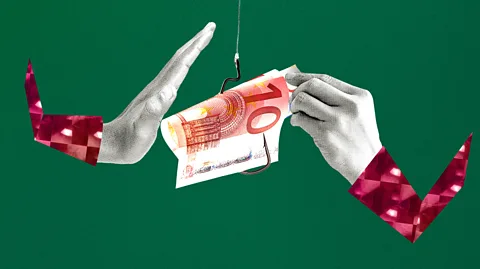
Scams are a little different. If you receive an email from a foreign prince offering to offload a huge sum into your bank account, it's almost certainly too good to be true – even if you think that most people are honest. And you might be even less likely to believe them if you find that their email address is a series of digits that masks their true identity.
It is our capacity to pick up those cues that determines our overall "gullibility", according to recent research by psychologist Alessandra Teunisse. While completing a doctorate at Macquarie University in Sydney, Australia, she designed a Gullibility Scale that asked participants to rate statements such as:
• If anyone is likely to fall for a scam, it's me
• I'm not that good at reading the signs that someone is trying to manipulate me
• People think I'm a little naïve
In one deliciously devious study, she recruited participants to take the questionnaire before sending them a series of fake phishing emails over the next few months. "The people who clicked on the hyperlinks in those emails had significantly higher scores on the Gullibility Scale than those who did not click on that link," says Teunisse.
Crucially, this bore almost no relation to their scores on the Generalised Trust Scale, supporting the idea that we can think the best of humanity without leaving ourselves vulnerable to other people's trickery. "You can be highly trusting, but the second you see a cue that signals that something isn't right, you re-evaluate the situation," Teunisse explains.
Elevated feelings
Such conclusions align with new research on elevation – the uplifting emotion we feel when we see extraordinarily virtuous or altruistic acts, such as someone risking their own life to save another's.
Since numerous experiments have shown that experiencing elevation inspires people to act more pro-socially, Anne Hamby, an associate professor in consumer psychology at Boise State University in the US, wondered whether it would also render them more gullible. "The initial hypothesis was that, when people are elevated, they're feeling this warm buzz with the view that humanity is wonderful, so maybe we can dupe them a little bit more readily," Hamby says. "But after a few studies, we kept finding the reverse effect."
 Serenity Strull/ BBC/ Getty Images
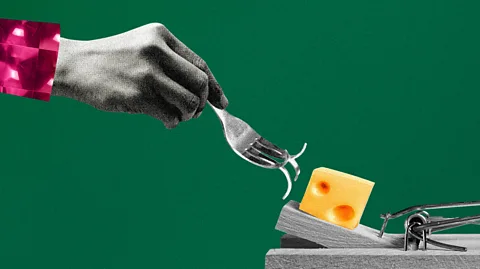
In experiment after experiment, people who were feeling "elevated" tended to be better at detecting scams. They were more likely to discern the false claims in a dubious advert for an herbal medicine, for instance.
Hamby suspects that after viewing the extraordinary acts of generosity, people were simply more likely to think about people's motives, both good and bad. Detecting deception, Hamby says, is "an intelligence… an ability to discern what's actually unfolding in a persuasion context". And – as Teunisse had also discovered – that is perfectly compatible with a generally optimistic outlook.
A self-fulfilling prophecy
Without any benefits for deception detection, universal cynicism may only harm our social relationships, as Eric Neumann recently discovered during his PhD at Stanford University.
He was inspired by personal experience. "My default is to trust people," says Neumann, but when he has his goodwill betrayed, he tends to worry that he has been too trusting for his own good. "Sometimes it feels like, oh my God, I'm too naïve," he says.
That's why he started to wonder whether people's attitudes to trust might become self-fulfilling prophecies. By showing faith in others, we may gain their goodwill and encourage them to behave more honestly around us, in turn reinforcing our positive beliefs. If, however, we always suspect the worst, people could end up living down to those expectations, which only confirms our pessimism.
So Neumann developed the Self-Fulfilling Trust Mindset questionnaire, with statements like the following:
• When people feel that you trust them, they actually become more trustworthy
• When you trust people, that brings out their most trustworthy behaviour
He found people who scored high on the Self-Fulfilling Trust Mindset tended to score higher on the general trust scale and a host of other measures examining people’s faith in human nature. "They're less sceptical of people in general, but they also tend to have more empathy, less malicious envy and less contempt for other people," says Neumann. And this can have a powerful effect on the outcomes of their interactions with others.
For example, Neumann took advantage of a classic two-player game commonly used in psychology to test cooperative behaviour. In each round, one of the players (the sender) is given a small amount of cash, which they can donate to the other (the receiver). The sender knows that the experimenter will triple whatever sum they have given, and that the receiver will have the opportunity to return a portion of their earnings back to the sender.
As you can imagine, the sender's trust will determine how generous they are – they don't want to give away most of their endowment and receive nothing in return. And the receiver's views can shape how much they give back. If they feel insulted by the amount they have been given, they may choose to return nothing.
For these reasons, Neumann suspected that senders primed with the Self-Fulfilling Trust Mindset would be more generous in their initial offers, and that their good faith would then be rewarded by the receiver. And that is exactly what he found: the game brought out the most cooperative behaviour from both parties.
Our trust mindsets can also shape how well we connect with other people. In a further laboratory experiment that has yet to undergo peer review, Neumann asked some participants to read a popular science article about how trust is often repaid, before pairing them off for a five-minute chat. He found that these participants were more willing to engage in deeper conversations, rather than sticking to small talk – compared with participants who had read an article reaffirming the idea that someone's behaviour is fixed and unlikely to change with our treatment of them.
That's especially significant since self-disclosure is one of the best predictors of lasting social connection. Sure enough, these pairs were more optimistic about their potential to become friends in the future.
Soothing a burn
Exactly how you apply these psychological findings will depend on knowing your disposition. "Forewarned is forearmed," says Teunisse. The ideal would be to arm yourself with the skills to detect deception when the cues are there, while maintaining a generally high level of trust.
If you think that you already err on the side of gullibility, Teunisse suggests getting a sense check from others whenever you have any doubts. "It might be worth having a trusted person on call when you need to make important decisions," she recommends.
More like this:
• Feeling anxious? These tips might help
If you find that life has left you cynical, you might look for ways to cultivate a more trusting mindset, considering all the benefits that it might bring to your social interactions. This may include lowering your defences. "I'm coming to learn more and more that it really has to be this embodied learning," Neumann says. "So if we really want to overcome our distrust, the mindset is the first step, but then you actually have to go out and do it." That's especially worth remembering if you've just been burnt.
For instance, let's go back to that last-minute cancelled appointment. If you would usually assume the worst, perhaps this time you might try to suspend judgment and arrange another meeting. Maybe it'll be in the hope that your honesty will be rewarded with greater sincerity from the other side. Over time, you may begin to see enough evidence of others' goodness that you find your cynicism replaced by resilience.
"You can learn that even if you are betrayed again, you can deal with it and move on from it," says Neumann.
* David Robson is an award-winning science writer and author. His latest book, The Laws of Connection: 13 Social Strategies That Will Transform Your Life, was published by Canongate (UK) and Pegasus Books (USA & Canada) in June 2024. He is @davidarobson onInstagram and Threads and writes the 60-Second Psychology newsletter on Substack.
--
If you liked this story, sign up for The Essential List newsletter – a handpicked selection of features, videos and can't-miss news, delivered to your inbox twice a week.
For more science, technology, environment and health stories from the BBC, follow us on Facebook and Instagram.
