The adverts banned for misleading climate claims

 Getty
GettyConsumers can struggle to unravel whether claims about a brand or product's sustainability are accurate, but regulators are cracking down on companies promoting misleading climate claims in their advertising.
In September 2019, Ryanair circulated a series of adverts on TV, radio and online which urged customers to fly with "Europe's Lowest Fares, Lowest Emissions Airline. Everybody knows that when you fly Ryanair you enjoy the lowest fares. But do you know you are travelling on the airline with Europe’s lowest emissions as well?"
The Advertising Standards Agency (ASA), the UK's advertising watchdog, banned the campaign several months later after concluding that these claims were misleading. In its ruling, the ASA said that consumers would find insufficient information in the adverts to substantiate the company's claims that it was Europe's lowest emissions airline. The ASA highlighted that data provided as evidence for the claim dated from eight years earlier and did not appear to include some well-known airlines.
In a statement seen by the BBC at the time, Ryanair said it would comply with the ruling but reiterated its claim that its emissions per passenger km are "25% lower than the other major European airlines".
"The single most important thing any consumer can do to halve their carbon footprint is switch to Ryanair," the airline said in response.
Ryanair is far from the only company to come under fire for making misleading climate claims.
Since the Paris Agreement was signed in 2015, there has been a wave of corporate commitments to reduce emissions. But the increase in enthusiasm for climate responsibility has been matched by a rise in concerns that some companies are using advertising and public messaging, with buzzwords such as "carbon neutrality" and "net zero", to try to appear more sustainable than they actually are. This is referred to by some as "greenwashing".
"Greenwashing is not new. What is new is the amount of sustainability commitments [from companies] and the unfortunate likelihood that many of these are quite empty and won't be delivered," says Joana Setzer, a research fellow at the Grantham Research Institute on Climate Change and the Environment at Imperial College London.
 Sean Gallup/Getty Images
According to Setzer, consumers are increasingly seeing through misleading claims and making more complaints about them as a result. Environmental groups too are taking a more aggressive stance against environmental claims. Almost 50 complaints are currently pending globally before a court or an advertising standards body, according to a recent report co-authored by Setzer.
"Scrutiny is increasing," says Setzer. "There is the question: 'Are companies serious about their commitments and can they deliver them, or is it just blah, blah, blah'?" she adds, referring to the way Swedish youth activist Greta Thunberg has summed up climate promises made by world leaders.
Coming Clean
As individuals, we are encouraged to do our bit for the climate. But it can be hard to get to grips with climate claims. Words like "eco-friendly", "bio" and "green" are pervasive in marketing, but what do they really mean? The symbols on the backs of plastic packages can be confusing, and even when something is made from recyclable materials, in practice it might be too complex to recycle.
So how can consumers separate good environmental practices from fluffy marketing? And how much of the fight against climate change is the consumer's responsibility?
In Coming Clean, BBC Future uncovers the tricks and misdirections that we should all look out for when we see claims about sustainability.
Spotting misleading claims can be difficult, says Sophie Manjanac, a senior lawyer at environmental law charity ClientEarth.
"It is often what these companies don't tell you in their advertising campaigns which is the real problem," says Manjanac. Fossil fuel companies, for example, will often choose to promote clean energy projects, which represent "just a fraction of their overall business, with the majority of their spending pumped into traditional oil and gas operations", she says.
"What we continue to see is companies being misleading [in their advertising] by omission or ambiguity," says Matt Wilson, the ASA's media and public affairs officer.
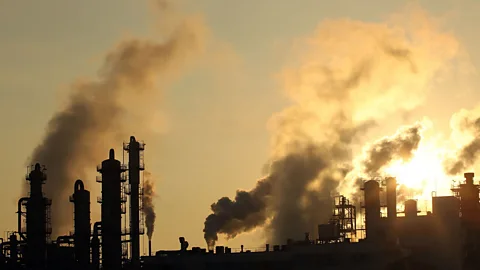
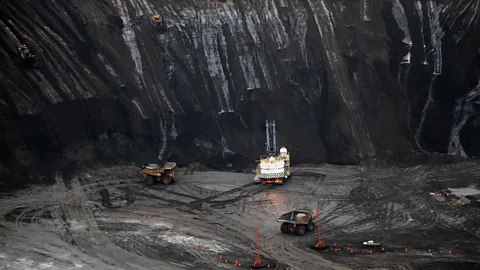
One example of this is a 2008 Shell advert in which the oil giant claimed it was providing a sustainable energy source by extracting oil from a huge tar sands project in Canada. Following a complaint by the World Wide Fund for Nature (WWF), the ASA ruled that the advert was misleading as Shell had not provided "data that showed how Shell was effectively managing carbon emissions from its oil sands projects in order to limit climate change".
Because it is thick and viscous, oil from tar sands takes more energy to extract and refine than crude oil, leading its production to be three to four times more greenhouse gas intensive, according to the environmental advocacy group the Natural Resources Defense Council.
The ASA said the advert should not appear again in its original form and referred to government guidance which states that claims should not be ambiguous and avoid using vague terms such as "sustainable".
 Koichi Kamoshida/Getty
Shell says that the sustainability performance of its former oil sands assets is "well documented" in its annual sustainability report and oil sands report. The company sold all of its interests in Canada's oil sands in 2017. "Prior to the divestment, Shell built an industry-leading oil sands business in terms of carbon management, including developing the first carbon, capture and storage facility in the oil sands," a Shell spokesperson says.
In August 2021, the Netherlands' advertising watchdog told Shell to take down an advert which featured the slogan: "Make the difference. Drive carbon-neutral." In the advert, Shell said that people buying petrol and diesel could pay an extra one euro cent (£0.083) per litre of fuel to fund tree-planting and forest management projects that would offset their emissions.
In its ruling, the regulator (Stichting Reclame Code) said that Shell had not provided evidence that it was offsetting the emissions in full and that the company could not guarantee how much CO2 would be removed from the atmosphere through this scheme.
Shell removed the advert and said in a statement the company "takes its responsibilities as an advertiser extremely seriously" and called the campaign a "genuine and important initiative to give consumers the option to offset CO2 emissions associated with the fuel they purchase".
Shell says it will not appeal the ban and is "in the process to change the communications as and where necessary."
You might also like:
"Shell's Drive Carbon Neutral programme gives consumers the option to offset CO2-emissions associated with the fuel they purchase," says a Shell spokesperson. "We are pleased the Reclame Code Commissie recognised the programme has been backed by extensive research and is in accordance with internationally accepted standards and best practices."
The ASA plans to release new guidance to ensure adverts don't mislead the public about the environment in 2022. The watchdog will, launch an inquiry into claims made by companies in sectors such as aviation, energy, waste and animal-based food, which have been identified by the UK's Committee on Climate Change, which advises the UK Government and Parliament, as priority areas.
The inquiry will also review carbon neutrality and net-zero pledges made in adverts and analyse whether these are backed by scientific evidence.
 Mark Ralston/Getty
Fossil fuel companies are also using social media to promote green claims.
In 2020, fossil fuel companies spent $9.5m (£7.1m) on 25,147 adverts with Facebook, many of which highlighted their investments in renewable energy or promoted natural gas as a sustainable energy source, according to a report by InfluenceMap, a think tank that analyses how businesses are impacting the climate crisis. Just over half of this spending came from one company: the oil and gas firm ExxonMobil.
"The only instances I've seen where Facebook [itself] has stopped running a fossil fuel company advert is if the advertiser did not disclose that it was political in nature," says Faye Holder, a programme manager at InfluenceMap, citing as an example a Chevron advert which stated: "We believe the future of energy is lower carbon, and we're taking action to help get there."
A spokesperson for Meta, Facebook’s parent company, says: "While ads like these run across many platforms, including television, Facebook offers an extra layer of transparency by requiring them to be available to the public in our Ad Library for up to seven years after publication. We reject ads when one of our independent fact-checking partners rates them as false or misleading and take action against Pages, Groups, accounts, and websites that repeatedly share content rated as false."
In 2017, the ASA banned a Facebook advert by BMW. In the video advert, the German car company promoted the electric i3 car with the claim: "Having driven petrol-guzzling cars before, I realised that it is now time to switch to an electric car. With zero emissions, the i3 really is a clean car and helps to give back to the environment."
The ASA said that consumers would interpret the claim as confirmation that the i3 was a clean energy car, despite the fact there was also a model available with a small petrol engine, known as a "range extender".
"Because cars which used petrol cannot be described as 'zero emissions' or as a 'clean car' and it was not clear from the ad that the claim was in relation to the electric battery model only, we concluded that the claims were misleading," the ASA said in its ruling.
A spokesperson for BMW says the company is working to ensure "all of our advertising and marketing materials accurately reflect the advancements which the company is making with our fully electric models".
"When the i3 was first launched in 2013, the range-extender was a useful technology to help persuade people to try electric driving for the first time," the spokesperson adds. "But as battery tech and consumer acceptance of electric cars improved, BMW discontinued the i3 model featuring a petrol range extender in the UK and Europe in 2018 - it has been an all-electric model ever since."
According to Holder, environmental claims can be incredibly subtle and nuanced, making it difficult for consumers to get the full picture. "Many companies are playing [in] this grey area where they are using bits of climate science so you can't always say it's an outright lie," she says.
 Alamy
AlamyFossil fuel companies, airlines and car manufacturers are far from the only ones to have adverts banned for misleading environmental claims.
In January, the ASA banned an advertising campaign by Swedish company Oatly, which produces plant-based dairy alternatives, after ruling that its green claims were misleading. In its adverts, Oatly claimed that "the dairy and meat industries emit more CO2 equivalent than all the world's planes, trains, cars, boats etc, combined".
The ASA said this claim was "overstated" as it did not take into account the emissions from the full lifecycle of the transport industry, only those generated when directly using a vehicle. The company also claimed that Oatly production generates 73% less CO2 than cow's milk. The ASA concluded that this claim was based on evidence from one product, rather than evidence comparing all Oatly products with all types of dairy milk.
"It's clear that we could have been more specific in the way we described some of the scientific data," says Tim Knight, a spokesperson for Oatly. "We're a science-based company and take pride in being precise, but we could have been clearer. We talk about these things a lot, because we want to make it easy for people to make an informed switch from dairy to oat drink."
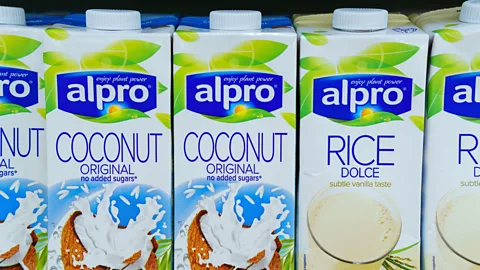
An advert for Alpro almond milk was banned in October after the ASA concluded that its slogans "Good for the planet, good for you" and "Next stop. Your recipe to a healthier planet!" were misleading. The ASA said Alpro failed to explain why its product had a lower environmental impact than dairy-based alternatives. Alpro had not responded to BBC requests for comment at the time of publication.
"The Advertising Code requires that the basis of environmental claims must be clear and that unqualified claims could mislead if they omit significant information," says Wilson.
To date, most complaints regarding misleading climate claims are dealt with by watchdogs, rather than taken to court, as this is faster and less expensive, says Setzer. Since 2016, 20 cases involving such complaints have been filed before a court in the Netherlands, Australia, France and the US, according to the Grantham Institute report. Both Setzer and Manjanac say this number is likely to increase as awareness about climate issues grows and companies face more scrutiny for their sustainability plans.
In the US, where legislation on consumer protection and fraud is well-established and has been litigated for decades, there are several court rulings pending, says Setzer.
One noteworthy case, which is ongoing, was brought by New York City against Exxon, Shell, BP and the American Petroleum Institute. The city council argues that the companies are misleading the public by portraying the fuels they sell as "cleaner" and "emissions-reducing" at branded petrol stations, while not disclosing their climate impacts. Exxon, BP and the American Petroleum Institute UK did not respond to requests by the BBC for a comment on the ruling.
"If society is to meaningfully address climate change, consumers in all sectors – from motorists to manufacturers to other industries such as aviation and shipping – will need to make substantial and lasting changes in their energy choices," says a Shell spokesperson. "Making consumers aware of lower-carbon alternatives such as electric mobility, hydrogen or the option to drive carbon neutral through the use of nature-based carbon credits is an important and valid part of our marketing activities."
What will happen next? Setzer says she expects the focus of greenwashing litigation to grow beyond fossil fuels. We may also start seeing lawsuits brought against other parts of the food industry, as well as against cities and countries in future, she says.
"We usually think about corporate greenwashing, but governments are also starting to engage in greenwashing with their net-zero commitments. There is a possibility that they will be challenged," she says.
--
