'Embrace the imperfection': Eight quick fixes to revitalise your home

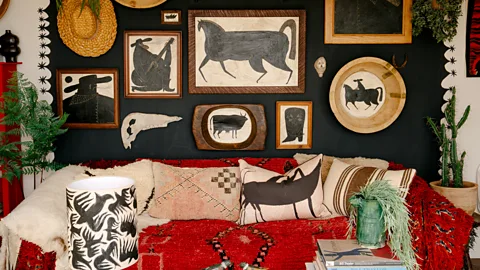 Imogen Rosemary/ Tabby Booth artist
How to transform your living space for the new year – and create a unique, artisan-style look, without spending on "fast furniture".
The new year offers a fresh start, a blank page for reinvention, a moment to refresh mentally and physically – and to reconsider and revitalise our interior spaces. In a world where fast-changing trends and relentless newness are celebrated, many of us have turned to "fast furniture" – factory-made, poor quality – to create an instantaneous new look at home. But it turns out that this easy-come-easy-go attitude to furniture, fixtures and fittings is just as damaging to the planet as fast fashion and single-use plastics.
According to the Environmental Protection Agency (EPA), more than 12 million tonnes of furniture are discarded each year in the US, with around 80% ending up in landfill. In the UK, approximately 670,000 tonnes of furniture are dumped annually, with a quarter of adults replacing their furniture at least once a year.
There are alternatives, though, to characterless, production-line interiors and unsustainable furniture. Finding salvaged materials and unique pieces of furniture can be an easy, accessible way to create a bespoke, distinctive interior. "Vintage items are characterful and often one of a kind, so adding them to your interiors creates a highly personal living space," says Will Hanness of second-hand store The Old Cinema.
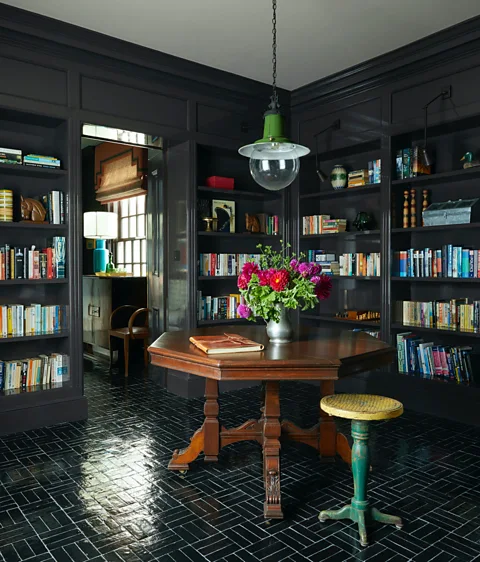 Nicola Harding/ Paul Massey
And combining antique and modern elements is a good way to create a distinctive, personal look. "Things are at their most powerful in combination," says interior designer Nicola Harding. "By putting something new together with something old, both shine more brightly." Meanwhile, finding antiques, vintage materials and fabrics provides an opportunity to lower our carbon footprint, while reducing landfill waste. Unlike a lot of mass-produced, non-recyclable items, antiques are often crafted using sturdier materials, adding longevity to the mix.
Designer Maria Speake and her architect partner, Adam Hills, began salvaging architectural materials in 1998. Their early commitment to reuse eventually grew into the London salvage and design studio Retrouvius. "Using good-quality salvaged materials will always be a long-term cost-saving choice," Speake tells the BBC.
Today, the ethos of salvage is more accessible than ever. Second-hand furniture can be sourced online, from high-end auctions to second-hand sites and apps, while architectural materials can be uncovered at car boot sales or flea markets across the world. Below, designers and vintage experts reveal eight practical ideas for using salvaged and second-hand furniture, fabrics, and decorative details to refresh your home quickly and easily.
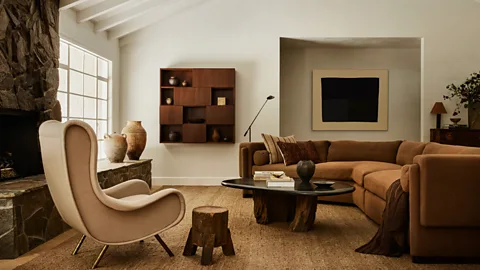 1st Dibs/ Maggie Smith
1. Antiques and mid-century furniture
"The more battered, the more beautiful," says Speake of antique or second-hand furniture that instantly instils a sense of history in a room. Beyond armchairs and dressers, look for pieces with unique origins – such as church pews or old shop counters – for added panache. Curate them alongside modern furniture: a pew as a hallway bench, for instance, or a vintage counter as a kitchen island. Meanwhile, mid-century furniture is coming into its own, Will Hanness tells the BBC: "With its clean lines, organic shapes, and minimalism, this era of vintage blends easily into modern and period homes alike."
"A lovely old farmhouse table is going to bring much more personality than a flat-packed one," says Helen Hanson, owner and founder of Mayfly Vintage. In her own home she uses an old wooden bakers' trolley to display items and store shoes, she says, adding that stools make great bedside tables.
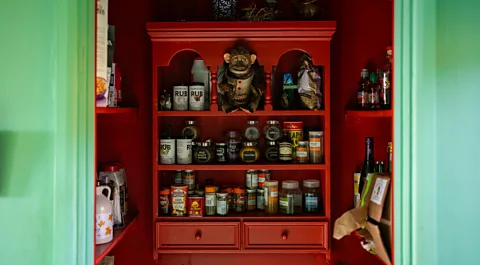 Rebecca Hook Photography/ Tabby Booth
2. Repainting old furniture
Repainting old furniture, chairs or cupboards will completely change the mood of a room. Chalky tones and bright vibrant finishes pair well with natural textures and reused elements. Brands like Backdrop, Little Greene, Edward Bulmer and Farrow & Ball offer sustainable ranges inspired by lived-in tones.
"If you want a colourful look for a kitchen or children's playroom, paint a few chairs in different colours or paint just part of a piece, like the drawers," advises Hanson.
"My general rule of thumb is work out whether the wood is good quality. If it is, leave it. But if you love the shape of something and dislike the wood or colour, that's the perfect opportunity to transform it," gallery owner Tabby Booth tells the BBC.
"Instead of paying for a fitted kitchen, we picked up random cupboards from Facebook Marketplace, added a reclaimed wood countertop and painted everything red to tie it together. It instantly felt unique, characterful and completely ours."
 Mark Anthony Fox/ Jules Haines
3. Textiles
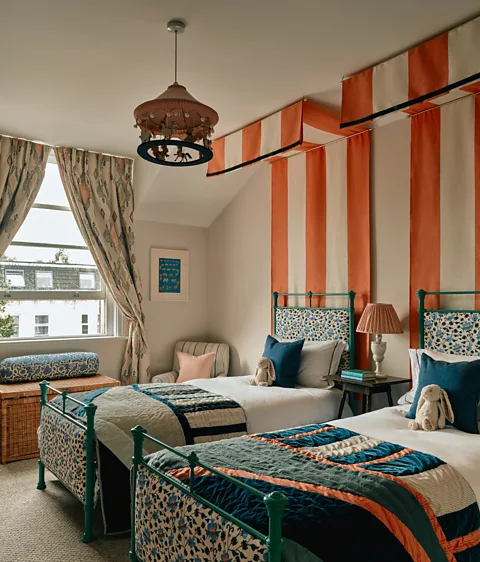
Jules Haines, founder of the surplus textiles platform Haines Collection, champions antique, vintage and discarded materials: she is on a mission to counter the interiors industry's hidden waste problem. Her work has seen more than 42,000 metres of surplus textiles, that would otherwise have gone to landfill, rehomed.
Haines frames offcuts of vintage fabric to create new pieces of art for the walls, and in her daughters' bedroom she designed a pair of bed canopies. "I love using fabric as a canopy to add softness, colour and drama without any permanent changes," she says. "The structure can stay in place while the textile itself is swapped out as tastes change simply and inexpensively, while creating an instant focal point."
 Mayfly Vintage
4. Re-purposed metals
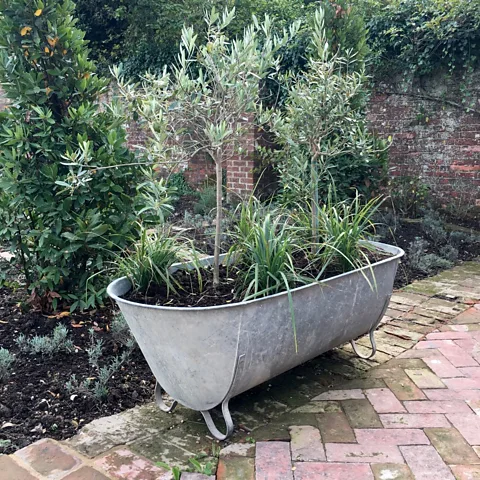
Salvaged brass and other metal fixtures and household items add patina and personality, while also being brilliantly practical – door handles and knockers add texture, and enamel bowls, jugs, pans and bathtubs can become planters in the garden. Mix antique brass with matt black to balance new and old – a vintage door handle can be the quickest architectural update. Choose reclaimed bathtubs or mid-century enamel sinks as statement bathroom pieces, or add a copper backsplash in the kitchen.
More like this:
Booth says that knockers, taps and old door handles "add elements of unexpected detail". She adds: "Don't forget walls are not just for artwork: old tools, kitchen objects, carved metal pieces or trinkets can all be mounted. If something brings you joy to look at, I'm a firm believer that you should get it up on the wall!"
Interior designer Elle Kemp of Ridge & Furrow, whose own work is inspired by her grandfather's workshop, has a collection of reclaimed house hardware. "It is an invaluable resource," she explains. "Handles, bolts, hooks, these incidental items make a big difference to the personality of a space and are easily added".
 Nicola Harding/ Fire hydrant lamps
5. Vintage lighting
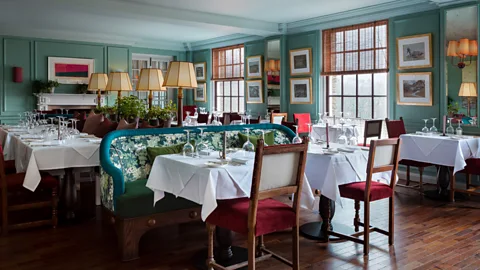
Light fittings are among the easiest elements to reuse, and often the most transformative. Nicola Harding discovered a box of old fire hydrant nozzles on a project and repurposed them as lamp bases, then found fabric remnants in the attic which became the lampshades. Another idea is to pair a salvaged pendant or chandelier with modern LED bulbs. Add traditional corded wires for an elegant renewal. Repair, rewire, or repaint, and look out for industrial or mid-century styles.
 Retrouvius/ Tom Fallon Design
6. Salvaged tiles and marble offcuts
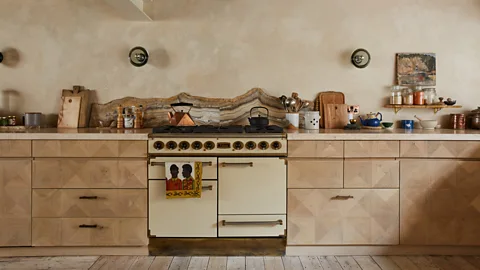
Salvaged tiles bring colour, pattern and texture into your living space, add them into the kitchen as a splashback, grout them into a countertop or simply use them as drinks coasters. At Retrouvius, Speake re-uses unwanted marble over mantles and as kitchen splashbacks. "Marble offcuts are often overlooked as wastage," she says, "but celebrate the personality of the material, the rough edges: make a feature of it."
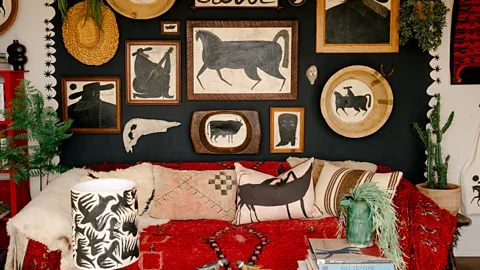 Imogen Rosemary/ Tabby Booth Artist
7. Vintage frames
"From a sustainability standpoint, we already have so many objects in the world," says artist Booth, whose 1970s bungalow in Cornwall is crammed with vintage collectibles, stone busts, eel spears, random crockery and repurposed objects. "I love the idea that everything you could possibly need already exists somewhere, you just have to find it." Booth uses old frames for her work and interiors, finding them online or at car-boot sales. "Old frames add so much character," she adds. "I love the mix of antique alongside modern. Most of the artwork in my home is a complete mishmash: beautiful hand-carved folk frames next to simple Ikea ones. The contrast is what makes it interesting."
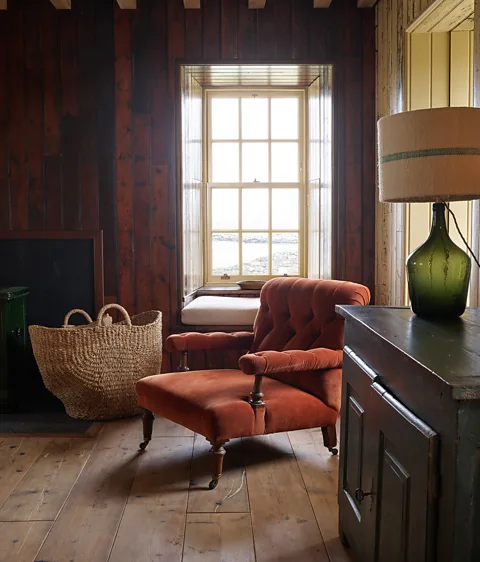 Retrouvis/ Simon Upton/ Rodel
8. Imaginative upcycling
Re-use is a creative exploration: finding something you love at a flea market or online then weaving it into your interiors takes you on your very own design adventure. An old wooden ladder could be a clothing rack; vintage bottles as vases or light bases; wooden crates, old tins or trunks make neat storage. Speake uses unusual cast-offs in her design projects – including old cheeseboards, cigar moulds, parquet and other flooring – to create cladding for doors, walls and cabinets, adding texture and warmth.
If we learn to embrace the history and imperfection of used materials, then their second, third or even fourth life proves that style and sustainability naturally co-exist.
Retrouvius: Contemporary Salvage – Designing Homes from a Philosophy of Re-Use by Maria Speake is published by Rizzoli.
--
If you liked this story, sign up for The Essential List newsletter – a handpicked selection of features, videos and can't-miss news, delivered to your inbox twice a week.
