Why we are in 'the age of artificial islands'

Richard Fisher and Javier HirschfeldFeatures correspondent
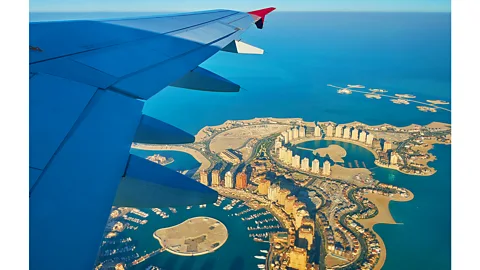
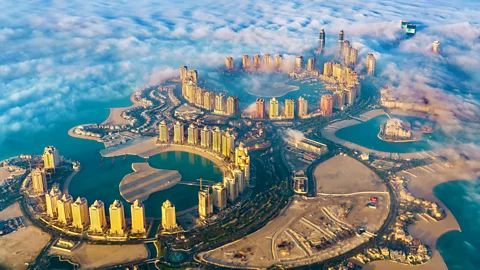
News imageAlamy Pearl-Qatar Island (Credit: Alamy)Alamy
Pearl-Qatar Island (Credit: Alamy)

We are building more islands than ever before. In the latest edition of our photographic series Anthropo-Scene, we explore the striking results of humanity's attempts to colonise the world's lakes and oceans with new land.

Hundreds of years ago, the Lau people of the Solomon Islands built around 80 artificial islands in a lagoon, placing bits of coral and rock into the water, piece by piece. It took them centuries.

Throughout history, humans have sought to create dry land within lakes, rivers and oceans, which they could then populate. But the 21st Century has brought a new ambition – and perhaps a touch of hubris – to this endeavour.

We are living in an "age of islands", according to the social geographer Alastair Bonnett of Newcastle University, UK. "New islands are being built in numbers and on a scale never seen before."

This new generation of islands are bolder, grander – and potentially more damaging – than anything our ancestors constructed, writes Bonnett in his book Elsewhere: A Journey Into Our Age Of Islands.

The geographer visited human-made islands all over the world, exploring a variety of constructions. Giant artificial archipelagos, created by pouring millions of tonnes of sand into the ocean. Concrete-coated "Frankenstein" atolls, designed to consolidate military and political power. And dizzyingly tall oil rigs extending hundreds of metres down to the seafloor.

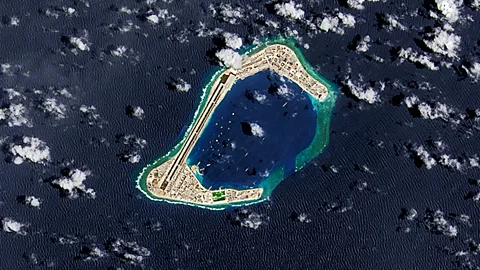
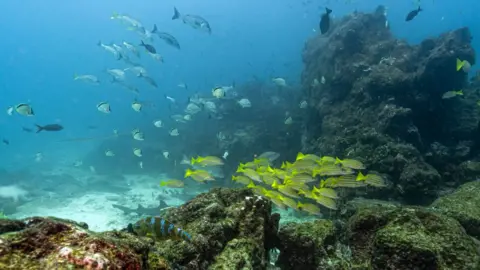
While some artificial structures have been reclaimed by nature, that process takes time. Often, there's little life beneath the waters surrounding man-made islands. "All too often artificial islands are dead zones. Trying to make them live again is hard work," writes Bonnett. In places like the South China Sea, "once pristine and untouched reefs…have been horribly mutilated: squared off and concreted over".

See more from the Anthropo-scene series:

But nonetheless, Bonnett found himself drawn to these artificial creations, to try and understand how they were built, and why they came to be. Whether you approve of them or not, they will tell future generations a story of how humanity saw itself in the early Anthropocene.

To understand what the age of islands looks like, scroll down to take a brief tour of some of the most visually striking and impactful examples from around the world – taking in the Gulf States, the seas off Asia, and the coasts of the UK and US.
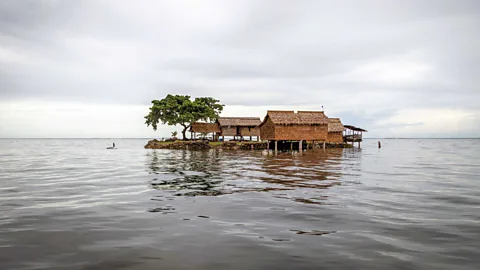
News imageAlamy A traditional house on an artificial island in Lau Lagoon in the Solomon Islands (Credit: Alamy)Alamy
A traditional house on an artificial island in Lau Lagoon in the Solomon Islands (Credit: Alamy)
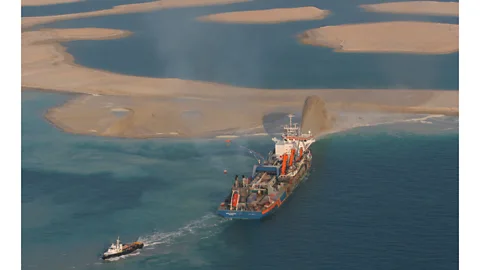
News imageGetty A ship in the Persian Gulf pumping tonnes of sediment into the sea, gradually growing an island (Credit: Getty)Getty
A ship in the Persian Gulf pumping tonnes of sediment into the sea, gradually growing an island (Credit: Getty)
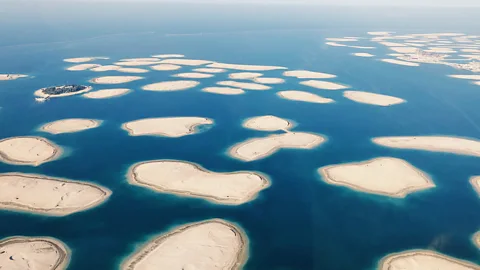
News imageGetty Images Dubai's map-like The World was intended for the super-wealthy, but many of the islands remain sand, while others are for retail, hotels and apartments (Credit: Getty Images)Getty Images
Dubai's map-like The World was intended for the super-wealthy, but many of the islands remain sand, while others are for retail, hotels and apartments (Credit: Getty Images)
News imageAlamy The man-made Pearl island, in Qatar, spans nearly 4 million sq metres and cost billions to build (Credit: Alamy)Alamy
The man-made Pearl island, in Qatar, spans nearly 4 million sq metres and cost billions to build (Credit: Alamy)
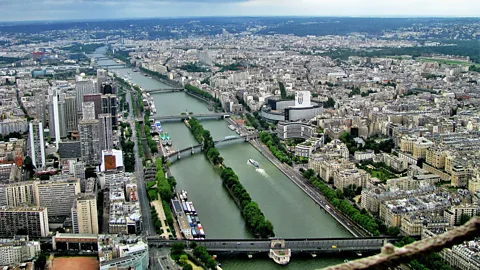
News imageGetty Images Swan Island in Paris was created in the early 1800s to protect the city's bridges (Credit: Getty Images)Getty Images
Swan Island in Paris was created in the early 1800s to protect the city's bridges (Credit: Getty Images)
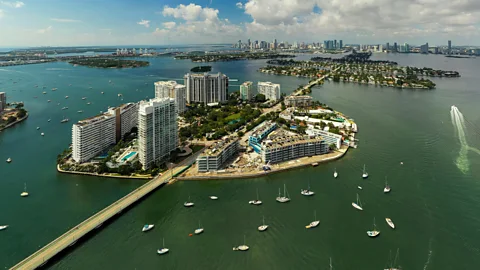
News imageAlamy Built in the early 20th Century, property on the six Venetian Islands of Miami was sold while they were still underwater (Credit: Alamy)Alamy
Built in the early 20th Century, property on the six Venetian Islands of Miami was sold while they were still underwater (Credit: Alamy)
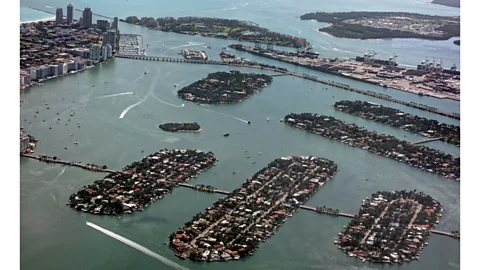
News imageAlamy The Venetian project was meant to be much bigger – but then a hurricane, property bubble and the Great Depression happened (Credit: Alamy)Alamy
The Venetian project was meant to be much bigger – but then a hurricane, property bubble and the Great Depression happened (Credit: Alamy)
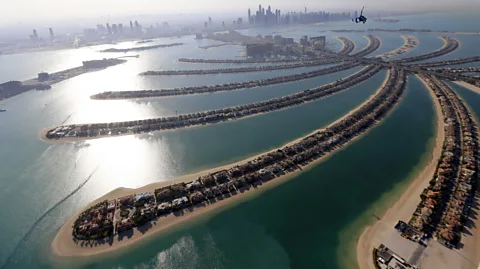
News imageGetty Images The Palm, in Dubai, required 120 million cubic metres of sand to build (Credit: Getty Images)Getty Images
The Palm, in Dubai, required 120 million cubic metres of sand to build (Credit: Getty Images)
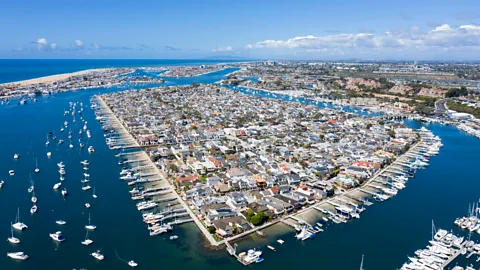
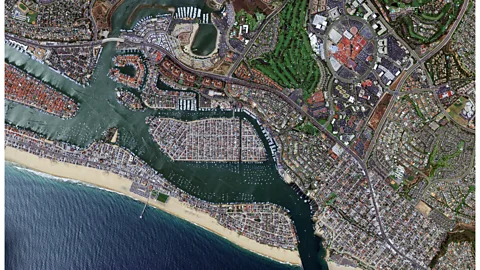
News imageAlamy Balboa Island in California was built on a mudflat, and for years residents struggled with poor infrastructure (Credit: Alamy)Alamy
Balboa Island in California was built on a mudflat, and for years residents struggled with poor infrastructure (Credit: Alamy)
News imageAlamy Now it's one of the most expensive real estate markets in the US, populated by 3,000 people (Credit: Alamy)Alamy
Now it's one of the most expensive real estate markets in the US, populated by 3,000 people (Credit: Alamy)
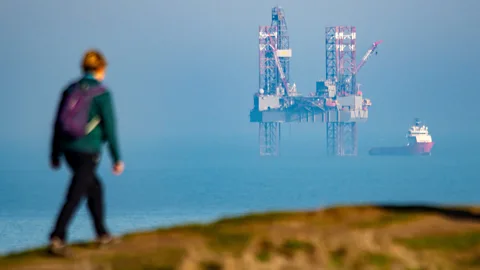
News imageGetty Images While oil rigs might not seem to qualify as islands, many emerge from the seafloor, sitting on columns taller than skyscrapers (Credit: Getty Images)Getty Images
While oil rigs might not seem to qualify as islands, many emerge from the seafloor, sitting on columns taller than skyscrapers (Credit: Getty Images)
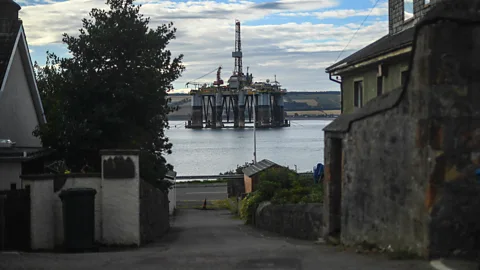
News imageGetty Images From the dry land of a Scottish village, an oil rig can seem like an alien structure… (Credit: Getty Images)Getty Images
From the dry land of a Scottish village, an oil rig can seem like an alien structure… (Credit: Getty Images)
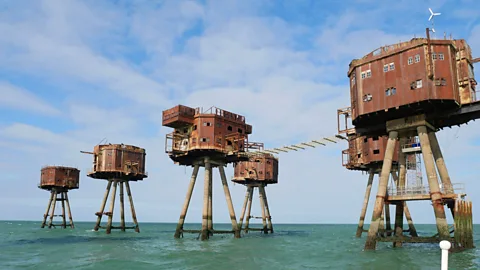
News imageAlamy …but there are few structures more alien-like than the Red Sands Fort in the Thames Estuary, UK, built for anti-aircraft guns in WW2 (Credit: Alamy)Alamy
…but there are few structures more alien-like than the Red Sands Fort in the Thames Estuary, UK, built for anti-aircraft guns in WW2 (Credit: Alamy)
News imageGetty Images The future of islands? Subi Reef is one clue, part of a huge Chinese island-making project in the South China Sea (Credit: Getty Images)Getty Images
The future of islands? Subi Reef is one clue, part of a huge Chinese island-making project in the South China Sea (Credit: Getty Images)
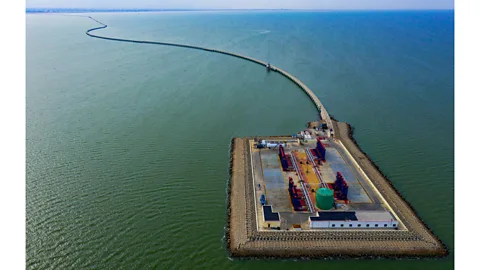
News imageGetty Images As well as accruing geopolitical power, artificial islands are also helping China access oil, like this one called Qingdong-5 (Credit: Getty Images)Getty Images
As well as accruing geopolitical power, artificial islands are also helping China access oil, like this one called Qingdong-5 (Credit: Getty Images)

--

Join one million Future fans by liking us on Facebook, or follow us on Twitter orInstagram.

If you liked this story, sign up for the weekly bbc.com features newsletter, called "The Essential List". A handpicked selection of stories from BBC Future, Culture, Worklife, and Travel, delivered to your inbox every Friday.
More from the BBC