The greatest foreign-language films of the 21st Century?

 Alamy
AlamyOur poll of the 100 best foreign-language films included 13 from the 21st Century, including a French romantic comedy and a Japanese anime. Nicholas Barber takes a look.
In BBC Culture’s list of the 100 best foreign-language films, there were 87 entries from the last century and 13 from this one. What makes them stand out as the greatest foreign-language films of the 21st Century?
 Alamy
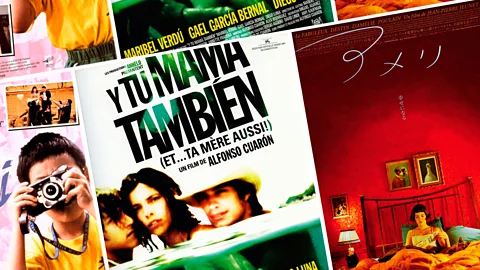
Alamy13. Amélie (Jean-Pierre Jeunet, 2001) – ranked 82 in poll
Romantic comedies don’t tend to do well in critics’ polls. They don’t tend to do well at the international box office, either, unless they’re in English: there’s something about love and laughter that gets lost in translation. Nonetheless, Amélie attracted audiences who would normally shun subtitles, as well as critics who would normally have an allergic reaction to whimsical tales of doe-eyed Montmartre waitresses. Audrey Tautou’s industrial-strength charm in the title role was a significant factor, of course, but it was Jean-Pierre Jeunet’s whirringly inventive film-making that persuaded viewers that this wasn’t just another rom-com, but a cinematic event.
 Alamy
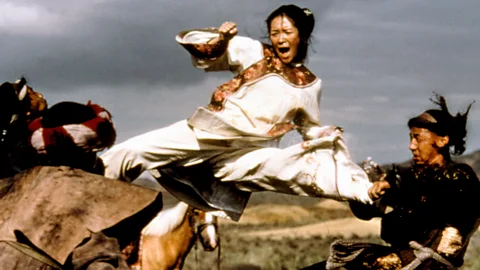
Alamy12. Crouching Tiger, Hidden Dragon (Ang Lee, 2000) – ranked 78 in poll
Some films are on this list because they brought a particular genre to a new audience: Crouching Tiger, Hidden Dragon is one example. Its Taiwanese director, Ang Lee, was a critical darling thanks to two classy literary adaptations, Sense and Sensibility and The Ice Storm, so when he tried his hand at gravity-defying swordplay, the beautifully lavish result became, for many western viewers, the definitive “wuxia” martial-arts movie. Crouching Tiger… is one of those rare non-English language films to make it into the best picture category at the Oscars (as well as winning in the best foreign language category).
 Alamy
Alamy11. Y Tu Mamá También (Alfonso Cuarón, 2001) – ranked 76 in poll
After a difficult stint in Hollywood, Alfonso Cuarón returned to Mexico for Y Tu Mamá También, a coming-of-age road movie about two teenage boys (Gael Garcia Bernal and Diego Luna) driving to a beach with a (slightly) older woman. In common with some other films on this list, it’s simultaneously an intimate anecdote about a handful of characters and an insider’s guide to a whole country. And it confirmed Cuarón’s status as a major director. He went onto make a trio of English-language hits – Harry Potter and the Prisoner of Azkaban, Children of Men, and Gravity – before directing another Mexican film, the autobiographical Roma. If BBC Culture’s poll had been conducted a year later, Roma would undoubtedly have been on this list.
 Alamy
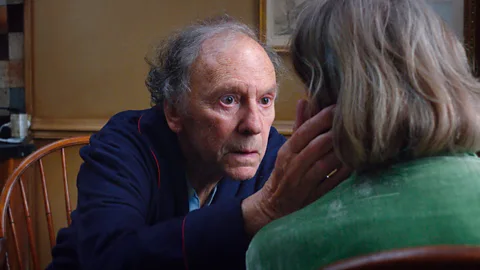
Alamy10. Amour (Michael Haneke, 2012) – ranked 69 in poll
Film critics adore Michael Haneke almost as much as they adore free chocolate biscuits at press screenings. In BBC Culture’s survey of the best films of the 21st Century, the Austrian writer-director had two entries in the top 25 – Caché and White Ribbon – a total matched only by Paul Thomas Anderson and the Coen Brothers. What’s even more impressive is that, in our foreign-language films poll, Caché and White Ribbon were overtaken by a third Haneke work, Amour, which won the Palme d’Or at Cannes and then the Oscar for best foreign language film. (It was a best picture nominee, too.) A gripping portrait of an aged Parisian (Jean-Louis Trintignant) whose wife (Emmanuelle Riva) has been immobilised by a stroke, Amour is more humane and less oblique than some of Haneke’s earlier films – which could be why it, rather than one of the others, made it into the top 100.
 Alamy
Alamy9. 4 Months, 3 Weeks and 2 Days (Cristian Mungiu, 2007) – ranked 47 in poll
Several films on this list won the Oscar for best foreign language film. Cristian Mungiu’s 4 Months, 3 Weeks and 2 Days, on the other hand, wasn’t even nominated. It won the Palme d’Or at Cannes, and was cited as one of the year’s highlights by a number of critics – but an arduous Romanian drama about illegal abortion was too contentious for the Academy. Not that that description does it justice. Like The Lives of Others (see below), 4 Months… was a window into life in the Eastern bloc in the 1980s. And, as Maggie Lee of Variety told BBC Culture, Mungiu’s tightly focused film has “the brutal tension of a crime thriller”.
 Alamy
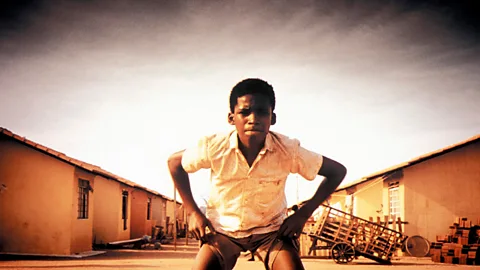
Alamy8. City of God (Fernando Meirelles, Kátia Lund, 2002) – ranked 42 in poll
Along with 2000’s Amores Perros, City of God was one of the films that proved that if you wanted down-and-dirty urban excitement in the early 21st Century, combining gritty social realism and the adrenalised action of a gangster movie, then Latin America was the place to go. City of God – or “Cicade de Deus” – remains the defining film about crime and poverty in Rio de Janeiro’s favelas. And as educational as it might be, the opening scene of a hen being chased through the streets has more energy than anything in The Fast and the Furious.
 Alamy
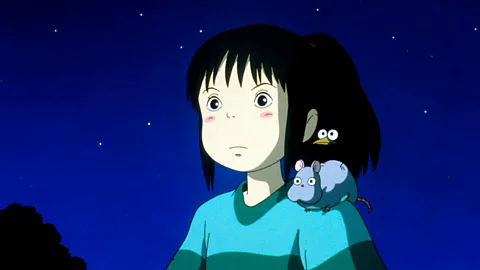
Alamy7. Spirited Away (Hayao Miyazaki, 2001) – ranked 37 in poll
Some films feel as if they are the ultimate distillation of their creators’ unique genius. For instance: Spirited Away, the sparkling fantasy adventure directed by Studio Ghibli’s near-legendary co-founder, Hiyao Miyazaki. It may not be everyone’s favourite Ghibli/Miyazaki cartoon, but if you had to introduce a newcomer to the hand-drawn magic of his work – or to modern Japanese animes in general – then this would be the title to choose. Spirited Away is the only non-English-language cartoon to have won the Oscar for best animated feature. It’s also the only entry on this list that could possibly be classed as a children’s film.
 Alamy
Alamy6. The Lives of Others (Florian Henckel von Donnersmarck, 2006) – ranked 31 in poll
When The Lives of Others came out in 2006, it was a revelation. Despite being a debut film, it was so assured in its plotting and pacing that it could have been the work of a veteran. And despite the fact that its director, Florian Henckel von Donnersmarck, was in his early thirties, his depiction of Communist-controlled East Berlin in 1984 was so precise and atmospheric that it could have been autobiographical. For most viewers who hadn’t lived in East Germany, this melancholy story of a Stasi agent (Ulrich Muhe) spying on a playwright (Sebastian Koch) was a chilling insight into a state where the secret police watched and listened to your every move. Not surprisingly, it won the Oscar and the Bafta for best foreign language film. More surprisingly, von Donnersmarck’s follow-up was The Tourist with Johnny Depp and Angelina Jolie.
 Alamy
Alamy5. Oldboy (Park Chan-wook, 2003) – ranked 29 in poll
Cinema-goers in 2003 might have been familiar with Quentin Tarantino’s stylised Asian-influenced shockers about guys in black suits slicing off each other’s body parts, but Park Chan-wook’s Oldboy was something else: a man (Choi Min-sik) being locked in a cell for 15 years, and then eating a live octopus, and then having a brutal three-minute one-shot corridor fight, and then being subjected to one of the darkest twists in film history. Jaws dropped, and stayed dropped. Years later, Spike Lee’s US remake of Oldboy flopped, but Park would win plaudits for The Handmaiden and The Little Drummer Girl.
 Alamy
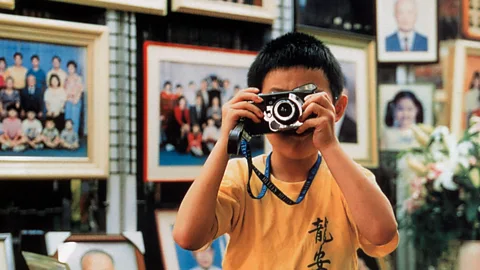
Alamy4. Yi Yi (Edward Yang, 2000) – ranked 25 in poll
Edward Yang’s three-hour masterpiece, Yi Yi – aka, 'A One & a Two' – chronicles the life of an engineer (Wu Nien-jen) and his family in Taipei, the capital of Taiwan. But as David Sims wrote for BBC Culture, “Yang was a master of transmuting grand socio-political narratives into something deeply intimate: the story of a young couple or a family could be the story of a city, a country, an entire era.” That’s one reason why films in different languages are so nourishing. Watching Yi Yi, among other films on this list, you feel as if you’re not just learning about another person, or a few other people. You’re learning about another part of the globe.
 Alamy
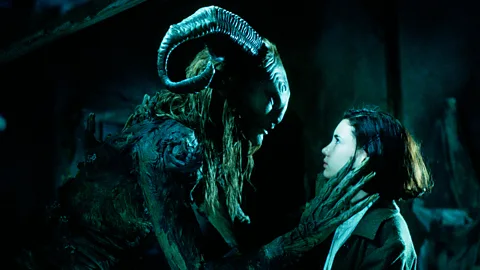
Alamy3. Pan’s Labyrinth (Guillermo del Toro, 2006) – ranked 22 in poll
One trend that’s borne out by BBC Culture’s list is Latin American cinema’s rocket-like rise in the 21st Century. There are three films by Mexican and Brazilian directors in the line-up, and there would probably be more if Guillermo del Toro and his friend and compatriot Alfonso Cuaron hadn’t made so many of their subsequent films in English. The most recent Spanish-language offering from del Toro is Pan’s Labyrinth, an intoxicating brew of fizzing fairy-tale fantasy and bitter real-world politics. He whisked up a similar concoction recently, his Oscar-winning The Shape of Water, which would probably have been on this list, too, if it had been in Spanish.
 Alamy
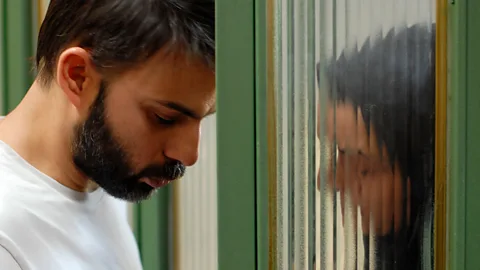
Alamy2. A Separation (Asghar Farhadi, 2011) – ranked 21 in poll
Iranian film had already stepped onto the international stage by the start of the 21st Century, but its global audience was limited to devotees of art-house world cinema. Then came Asghar Farhadi’s A Separation, which didn’t shy away from the religious strictures and chaotic legal mechanisms peculiar to Tehran, but which was more accessible than any of its predecessors. Set largely in an ordinary flat in a bustling metropolis, its fast-moving mystery plot and its underlying marital break-up could be understood and enjoyed by everyone. A Separation won the Oscar for best foreign language film. Farhadi won the same award again last year for The Salesman, but boycotted the ceremony in protest against the US travel ban.
 Alamy
Alamy1. In the Mood for Love (Wong Kar-wai, 2000) – ranked 9 in poll
Wong Kar-wai’s delicate romance charts a chaste yet achingly sensual relationship between two neighbours (Tony Leung and Maggie Cheung) in 1960s Hong Kong who realise that their spouses have been having an affair. What’s so mesmerising is that the director pays forensic attention to every downward glance, every drummed finger, every chunk of steak that’s dabbed into a blob of mustard – so the viewer pays attention, too. But there’s more to the film than its director’s perfectionism. Writing for BBC Culture, Justin Chang of the Los Angeles Times said: “Never before has a film spoken so fluently in the universal language of loss and desire.”
Read more about BBC Culture’s 100 greatest foreign-language films:
And if you liked this story,sign up for the weekly bbc.com features newsletter, called “If You Only Read 6 Things This Week”. A handpicked selection of stories from BBC Future, Earth, Culture, Capital and Travel, delivered to your inbox every Friday.
