The Oscars that celebrated change and diversity

 Fox Searchlight
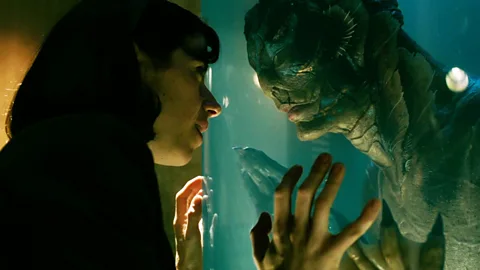
The 90th Academy Awards celebrated inclusion in a night where Guillermo del Toro’s outsider fantasy The Shape of Water triumphed.
Hooray for Hollywood! That’s been the message of the Academy Awards for the past nine decades, but the last year has raised the question of whether there’s really all that much to cheer about. The fall of Harvey Weinstein has triggered reverberations that are still shaking the industry, as more and more of its men are exposed as abusers, predators and, if nothing else, unequal payers. In the circumstances, it seemed likely that the 90th Oscar ceremony would be a muted affair, with apologies instead of accolades.
But that’s not how things turned out. Returning for his second stint as host, Jimmy Kimmel was upfront enough to make a crack about Weinstein in his opening monologue, and he joked about why the Oscar statuette was so respected: you can always see his hands are and he doesn’t have a penis. But, as ever, the Academy Awards ceremony didn’t showcase a business which was dwelling on its failings, but one which was celebrating its triumphs.
No one was wearing sackcloth and ashes. For that matter, black dresses weren’t mandatory, as they were at the Baftas and the Golden Globes, and Time’s Up badges were missing from plenty of lapels. The set designers clearly weren’t going for humble remorse, either. Beneath a proscenium arch of glittering rocks, the background scenery for much of the night was a distinctly Trumpish collection of gilded pillars and baroque swags, like a Beauty and the Beast-themed suite in a Las Vegas hotel.
As for the content of the show, the entertainment between each award didn’t suggest that Hollywood was taking a long hard look at itself. Or rather, it suggested that Hollywood was indeed taking a long hard look at itself - but that it was absolutely loving what it saw. As this was the Oscars’ 90th anniversary, there was montage after nostalgic montage of the Industry’s Greatest Hits. And when the awards themselves were presented, the recurring theme wasn’t that change was needed, but that it was already well underway.
Ashley Judd, Annabella Sciorra and Salma Hayek presented a segment in celebration of the MeToo movement’s “trailblazers” - and Judd had viewers googling “intersectionality”. Later, a barnstorming Frances McDormand asked every female nominee in the room to stand up in solidarity - and she had viewers googling “inclusion rider”. And throughout the evening, there were very few speeches or songs which didn’t touch upon diversity and representation, support for immigrants and opposition to the NRA (although the US president was barely mentioned).
 Fox Searchlight
There was Wes Studi introducing a montage in praise of war films, first in English and then in Cherokee. There was A Fantastic Woman winning the Best Foreign Film prize, and its trans star, Daniela Vega, introducing Sufjan Stevens’ performance of Mystery of Love from Call Me By Your Name. There was a female producer, Darla Anderson, thanking her wife, and a male writer, Adrian Molina, thanking his husband, when they accepted the Best Animated Feature award for Coco, a Disney/Pixar love letter to Mexico. And there was Jordan Peele winning his Oscar for Get Out, making him the first ever African-American to get the Best Original Screenplay prize - and making Get Out the first ever horror movie to get that prize, too.
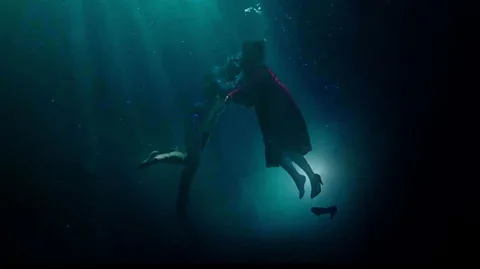
Most entertainingly, there were Tiffany Haddish and Maya Rudolph delivering an uproarious “Oscars So Black” sketch. And, to cap it all, The Shape of Water was the evening’s big winner, having taken the prizes for production design, score, best director and best picture. Other awards were shared by a generous range of films, but it seemed apt that Guillermo del Toro’s Cold-War sci-fi romance, a call for the marginalised to band together against white patriarchy, should be victorious.
For all of its genuinely ground-breaking moments, though, the ceremony couldn’t hold the attention for four - yes, four - hours. Partly this was because Kimmel was a safe pair of hands: funny, fast, relaxed, but no longer surprising. (Haddish and Rudolph next year, perhaps?) Partly it was because almost all of the awards went to their excepted recipients: you would have been a fool to bet against Frances McDormand winning best actress (Three Billboards Outside Ebbing, Missouri), Gary Oldman winning best actor (Darkest Hour), Allison Janney winning best supporting actress (I, Tonya), Sam Rockwell winning best supporting actor (Three Billboards), the 89-year-old James Ivory winning best adapted screenplay (Call Me Your Name), Coco winning best animated feature, or Roger Deakins winning best cinematography (Blade Runner 2049) on his 14th time of asking.
But a more significant factor was the ceremony’s sheer mass of self-congratulation. There are only so many times you can watch someone getting a standing ovation for singing an inspirational anthem before you reach for the remote control and go searching for a monster-truck rally. What with all of the political tub-thumping, and all of the showbiz razzle dazzle, viewers were relentlessly assured of how wholesome Hollywood was, but also how glitzy it was, until you had the queasy sensation you might get from eating a bowlful of muesli with chocolate cupcake frosting on top.
Towards the end of the ceremony, it felt as if Hollywood was protesting too much. Its belated willingness to address its gender-related crimes and misdemeanours has been astonishing in its speed and its impact, not just on the film business, but on all walks of life. Nonetheless, considering that it’s less than a year since the Weinstein scandal broke, maybe it’s slightly too soon for the Academy to be so complacently comfortable with itself - so certain that its problems are in the past.
Still, you could say that Tinseltown was simply doing what it has always done. It was taking something as depressing as a decades-long history of sexual misconduct, and turning it into a cheesily uplifting narrative with a heartwarming happy ending. That’s Hollywood.
If you would like to comment on this story or anything else you have seen on BBC Culture, head over to our Facebook page or message us onTwitter.
And if you liked this story, sign up for the weekly bbc.com features newsletter, called “If You Only Read 6 Things This Week”. A handpicked selection of stories from BBC Future, Earth, Culture, Capital and Travel, delivered to your inbox every Friday.
