Claire Foy and Matt Damon – in a film shot on a smartphone

 Bleeker Street
A new film starring Claire Foy was shot on a smartphone. Emma Jones asks whether this is the future of film-making.
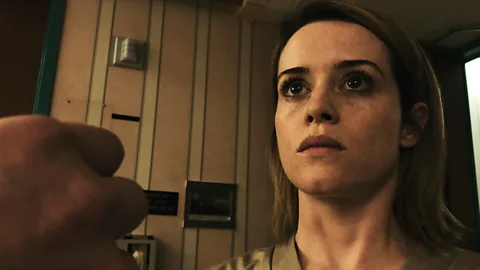
Mobile phone film-making must be going mainstream when Matt Damon has a cameo in a feature film shot on an iPhone. It might be a movie made by his greatest collaborator, director Steven Soderbergh, but still – the entire camera department for Soderbergh’s latest film, Unsane, fitted into a backpack.
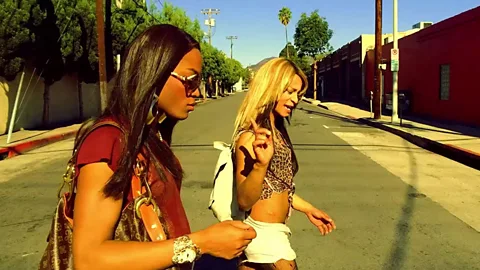
Unsane is in competition at the Berlin International Film Festival. Soderbergh’s choice to make a film using mobile technology has been much publicised, unlike the last widely acclaimed feature film shot on an iPhone – Sean Baker’s Tangerine, which revealed its source only as the credits rolled during its premiere.
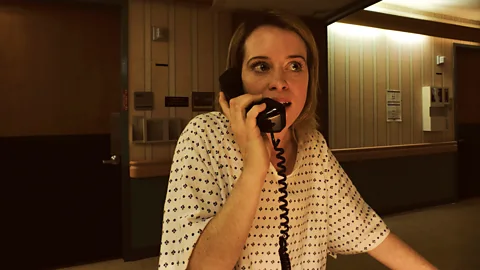
Soderbergh, who started his career with the ultra experimental Sex, Lies and Videotape in 1989, says he was seeking more of the same thrill, rather than a gimmick, with Unsane, which stars The Crown’s Claire Foy as a young woman who is involuntarily committed to a mental health institution, where she believes her stalker works.
 Bleeker Street
“I wanted to release it under a different name,” the film-maker reveals. “But that didn’t work out, so I tried to keep it secret for as long as possible. I’ve decided not to be defensive about it being defined as ‘that iPhone movie’ and if people only turn up out of curiosity – well, that’s still the price of a movie ticket.”
RIP celluloid?
A major film shot this way is rare enough that it’s still dubbed ‘that iPhone movie’, but the rave reviews Sean Baker received for Tangerine in 2015, which made back eight times its original budget at the box office, made Baker fret he was helping to kill off the medium he loved.
“I’m worried about the death of film,” he confessed at the time. “There’s a quality to film that no matter what filters you have on your digital camera, you can’t achieve the same effect.”
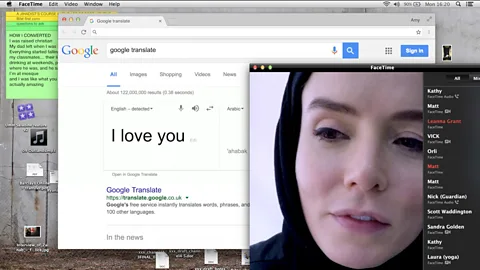
Timur Berkmambetov, the Kazakh-born director behind 2008’s Wanted, starring Angelina Jolie, and the more ill-fated re-imagining of blockbuster Ben Hur in 2016, has no such qualms. His film, Profile, also showing at Berlin, is the story of a journalist who creates a fake Facebook profile of a radicalised Muslim convert. The action unfolds entirely within the confines of a computer screen, and its production included the use of Skype and mobiles in order to film simultaneously in different countries. Berkmambetov already successfully made Unfriended in 2015 using the same methods, and calls them ‘Screenlife’ films.
“Human drama has moved on,” he claims, “and if our stories are to stay true they have to move on too. We’ve migrated to living on digital interfaces and the way we interact has become inseparable from our phones and tablets. People go to sleep with their phones in their hands.”
Berkmambetov is now planning a film shot entirely using mobiles, along with an on-screen version of Romeo and Juliet.
Life through a screen
“Also, I would be happy to see a disaster movie happening on the screen of a device just because that’s how we’re all going to see it if, God forbid, something terrible happens, we will all be taking pictures and streaming no matter what’s happening around us,” he adds.
 Bazelevs Entertainment
Profile’s storyline clearly lends itself to smartphones, and so did Tangerine’s. While tech has moved a long way from the shaky cameras of The Blair Witch Project of 1999 – and the plot its makers said they wrote to explain its poor technical quality – Soderbergh admits that even in 2018, he needed a project that would lend itself to using phones. Unsane, a psychological horror romp with B-movie overtones, seemed to fit the bill.
“I think the positives are I can put the lens anywhere in a matter of seconds, and within minutes you can watch a rehearsal, lock a scene and then shoot it, which keeps the energy going. The only real downsides are that the phone is very sensitive to vibration, and the sensors are very small,” he explains.
Bruno Smadja founded the Mobile Film Festival back in 2005, just as cameras were added to phones, but he still believes this kind of film-making should be “pictures before paintings. With great artists, you can see their sketches and often they’re wonderful in themselves, but then they go on to paint.”
The 2018 festival competition features filmmakers from 22 countries, and their films can only last one minute. Its star is young French director Morgan Simon, who after competing at the festival, went on to make his first feature film, A Taste of Ink, which showed at the Toronto Film Festival in 2016.
 Magnolia Pictures
Despite founding the event, Smadja says: “I’m not sure that it’s ever going to be normal to shoot a feature on a phone, no. The movie industry is one of art, and a lot of creations need to have technicians behind it in order to create the beauty of film. I wouldn’t want to lose this.”
But while Sean Baker, immediately after shooting Tangerine, returned to traditional methods of making films, and got the Oscar-nominated The Florida Project out of it, Steven Soderbergh says he’s been re-invigorated by the experience of shooting Unsane.
“I’m supposed to start a new movie in a week,” he muses. “I’m thinking about whether I can go back to the ‘normal’ way of working or am I too enamoured of what the new technology allows me to do? It’s been as close to the sensation I had when I was making films as a teenager.”
Lowkey cinema
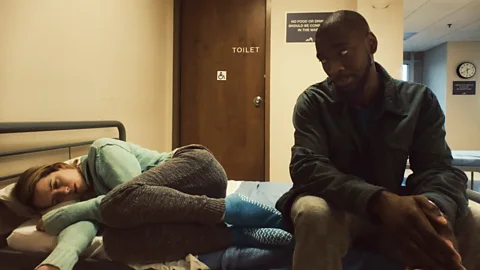
The deciding factor may be critical reaction to Unsane. Soderbergh says he warned his actors that making a guerilla-style, smartphone film in a week “wouldn’t just feel like kids from high school making a movie, it would feel like kids from junior high school making a movie,” but the Hollywood Reporter’s David Rooney isn’t impressed by its look.
“It mostly looks drab. It’s also distinctly unflattering on many of the actors, although possibly this was the desired effect,” he writes.
 Bleeker Street
The director may or not make take comfort, however, in the mixed reviews the film has received being directed at the plot – one critic called it ‘a pantomime’ – rather than the method used to shoot it.
“My intention is that the movie is one that anyone could go into a cinema and watch, and have no concept of what it was shot on, or care, because it looks like a normal film,” he explains.
It’s doubtful that without Soderbergh and Foy’s name attached, Unsane would be getting a cinema release. However Soderbergh maintains his foray into mobile movie-making is part of a potential seismic shift for modern film-makers.
‘Technology is evolving so rapdily that within the next year you’ll see cameras that aren’t much bigger than a phone with very sizeable sensors on it, and it will be interesting to see who will embrace it and who won’t,” he predicts.
“I did this because I wanted to put myself in the space of a young film-maker, and what kind of decisions I would make,” Soderbergh adds. “When I was starting out it was incredibly expensie even to make a short film, but now you have no excuse, the only obstacle is yourself.”
And if you liked this story, sign up for the weekly bbc.com features newsletter, called “If You Only Read 6 Things This Week”. A handpicked selection of stories from BBC Future, Culture, Capital and Travel, delivered to your inbox every Friday.
