Members Only: The genius of The Sopranos' most shocking episode

 Barry Wetcher/ HBO
In 2006, The Sopranos' season six opener gave viewers two of the most startling scenes in television history. Twenty years on, here's why it's time to reconsider Members Only.
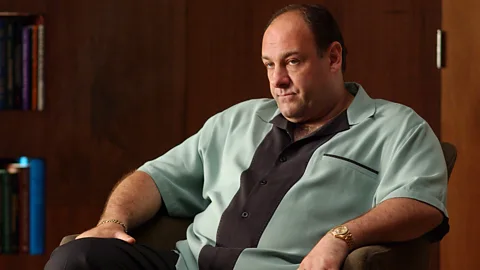
At the very end of Members Only – the first episode of The Sopranos' sixth season – viewers are left wondering whether its protagonist, mob boss Tony Soprano, (James Gandolfini) is dead.
Warning: This article contains descriptions of violence, strong language and mentions of suicide.
Tony has been shot by his dementia-suffering Uncle Junior (Dominic Chianese), who mistakes him for a former Mafia rival. Mortally wounded, Tony struggles to dial 911, then loses consciousness as the screen cuts to black.
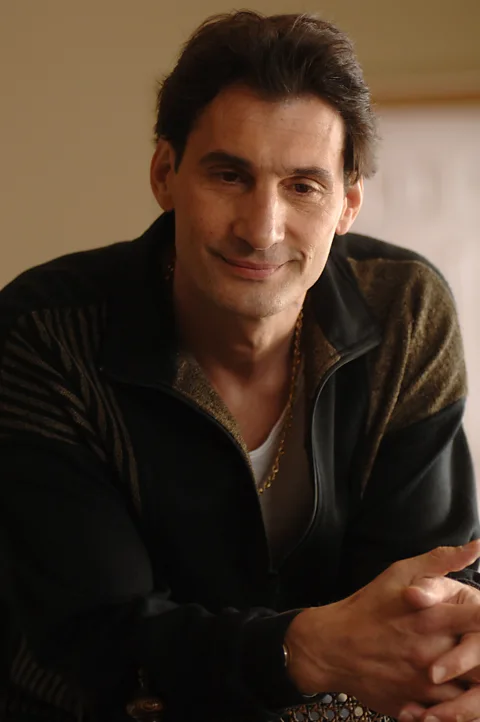
Just before the episode's shocking climax comes the prolonged suicide of Eugene Pontecorvo (Robert Funaro), a peripheral character who takes his own life after learning there is no chance he can quit the mob.
Members Only is remembered primarily for these sudden bursts of violence. But the episode has more artistic ingenuity and significance than it might seem. In the 2019 book The Sopranos Sessions, critics Matt Zoller Seitz and Alan Sepinwall credit it for breaking from The Sopranos' traditional, "slow-build" approach, "by jam-packing two hours of plot into 60 minutes and capping the episode with one of its most startling violent acts".
When fans and critics consider The Sopranos' best episodes of all time, it's the comedy of Pine Barrens (s3:11), the performances in Whitecaps (s4:13) and a particularly heartbreaking death in Long Term Parking (s5:12) that most often get namechecked. But Members Only deserves a place alongside them. It encompasses all of the creative qualities and thematic depth that made the series, in the words of critics, "revolutionary", "Shakespearean", and "the most influential television drama ever".
 Barry Wetcher/ HBO
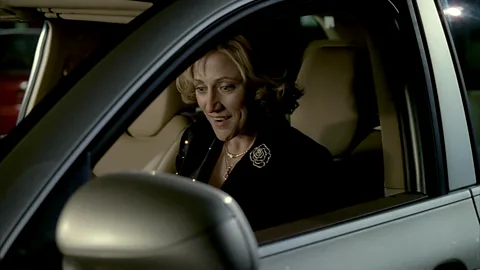
The episode probes many of the show's overarching concerns: materialism (Tony buys his wife Carmela [Edie Falco] a car as an apology), gluttony (Tony can't stop eating sushi), greed (Tony steals sunglasses just because he can), and existential dread (Eugene ultimately feels so suffocated by his responsibilities he takes his own life). It follows the series' trend for picking pitch-perfect montage music, includes hilarious banter between characters – "'Startin' to grow mushrooms out my ass' … 'There's an image'" – and is punctuated by sharp moments of characterisation that encourage viewers to be intrigued and repulsed by its ensemble.
Unexpected violence
Tony's shooting is arguably the ultimate example of how The Sopranos' consistently surprised viewers with violence. It follows Ralph Cifaretto (Joe Pantoliano) murdering Tracee (Ariel Kiley) in University (s3:6) and Janice Soprano (Aida Turturro) shooting Richie Aprile (David Proval) in The Knight In White Satin Armor (s2:12). "Years of watching more conventional movies and television makes you think you know where the next threat to one of the characters is coming from," Seitz tells the BBC. "But on The Sopranos you don't. That's what makes Uncle Junior shooting Tony so stunning."
If viewers had predicted that Tony would one day be shot, no one "expected it to happen in the first episode of the season" and "by a frail, senile old man," Sepinwall wrote in the Star-Ledger the day after the episode aired. Before Members Only, television shows would save such dramatic plots for season-ending cliffhangers, especially those where it looked like a character might die.
 HBO
HBOMembers Only is notable for ever-so-briefly promoting Eugene to being a major character, continuing The Sopranos' practice of letting unknown or inexperienced actors thrive. After starring on stage opposite Gandolfini in A Streetcar Named Desire some years earlier, Funaro was managing a Manhattan comedy club when he auditioned for The Sopranos. Creator David Chase had also previously convinced E Street Band guitarist Steve Van Zandt to make his acting debut as Silvio Dante, and cast Tony Sirico, who had appeared in only minor film roles before The Sopranos, as Paulie Walnuts. "The best decision I ever made," Chase tells the BBC, when asked about casting local talent. "That gave it such a sense of realism. We could give them anything and they could do it."
Before Members Only, Eugene had appeared in 24 episodes of The Sopranos across three seasons but had uttered little dialogue and nothing was known of his backstory. Over the course of the episode, we learn that Eugene has a wife, daughter, and a son with a drug problem. He's an FBI informant, has just inherited $2m and wants to leave his New Jersey mob life to retire in Florida. After both Tony and the FBI tell Eugene he can't leave, he decides to kill himself.
The depiction of Eugene's death epitomises the shocking and impactful nature of Members Only. It comes just moments after we've learned Eugene is an FBI informant – a revelation that had previously been followed by multi-episode or season arcs for Sopranos characters Salvatore Bonpensiero (Vincent Pastore), Adriana La Cerva (Drea De Matteo), and Ray Curto (George Loros). Eugene dies in one of television's most harrowing sequences, with a lingering, 45-second long shot. Chase says of the graphic nature of Eugene's death that he believes it was "the only way to express" the tragedy.
A turning point in the show
This brutal death marked a turning point in the show's tone and style. Two episodes before Members Only, in Long Term Parking, Chase and the other Sopranos creatives chose not to show Silvio murdering Adriana. Chase says of her death, "The truth is, I couldn't bear to see it." According to Seitz, Chase "kept cranking up the violence and the unpleasantness" in episodes like Members Only, because he wanted to make it clear without being didactic, "that these are not good people and that you're not supposed to be rooting for them".
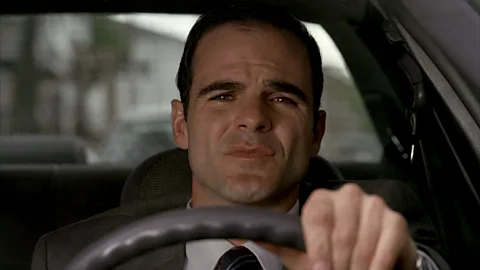
From Members Only's opening line, the audience's views of The Sopranos' characters and their immoral lives are challenged. In the most bizarre and thought-provoking opening scene to a Sopranos season ever, FBI agent Goddard (Michael Kelly) quotes essayist HL Mencken's famous line "Nobody ever went broke underestimating the taste of the American public", only for his partner, Agent Harris (Matt Servitto) to vomit. The episode then cuts to a montage of the main characters set to the foreboding song Seven Souls, from experimental band Material. Its lyrics and spoken-word narration, from beat poet William S Burroughs, describe the seven elements of the soul that depart the body at death.
 HBO
HBOOn his podcast Talking Sopranos, Michael Imperioli, who played Christopher Moltisanti, said he believes Mencken's quote reflects Chase's attitude towards consumer culture. This is at its most prominent in Members Only, when Carmela forgives Tony after he buys her a new car, which she rubs in the faces of her friends Ginny Sacrimoni (Denise Borino-Quinn) and Angie Bonpensiero (Toni Kalem). The action abruptly cuts to Carmela showing off her new car to Angie shortly after Tony has been shot, as the painful and bloody reality of his criminal life is juxtaposed against Carmela's hollow materialism. When Angie then reveals that she bought a more expensive car through her own hard work, Carmela can't help but look disappointed.
More like this:
• How The Sopranos began as a comedy about a mother
• A revolutionary show we'll talk about forever
• 12 of the best TV shows to watch in April
Imperioli suggests that Mencken's quote sums up Chase's thoughts on some of the viewers, who wanted The Sopranos to have more deaths. "A lot of fans felt there should be a killing or beating every episode and people lost patience with episodes that went [down] different avenues," Imperioli says. He suggests that the bloodshed that follows in Members Only is Chase's response to those demands. That's because, in addition to Eugene's death and Tony's shooting, the episode also depicts the murder of debt-ridden Teddy Spirodakis (Joe Caniano), Hesh Rabkin (Jerry Adler) being beaten, his son-in-law Eli Kaplan (Geoffrey Cantor) getting hit by a car, and Ray Curto dying of a stroke.
Mencken's quote has always struck a chord with Chase. He believes it's as prescient as ever – suggesting that Americans continue to be drawn to the simple and sensationalist over the complex. "I wanted to say that forever. I still want to say it. I've been proven right."
Members Only signifies the beginning of the end for The Sopranos. Over the remaining 20 episodes, its bleakness intensifies. The murkier tones and colder aesthetic become so dominant that Seitz says its final episode, Made in America, looks like it was shot in Siberia. This mirrors the plight of Tony Soprano, who, after surviving a near-death experience, isn't reformed in any way. "The whole sick joke here is that Tony doesn't really change at all," says Seitz. "Except perhaps for the worse."
And twenty years on, David Chase is finally in a place where he can appreciate The Sopranos: "I don't watch it all. But in the last few weeks, I've seen four episodes. I was shocked at how good it was. This probably sounds conceited and arrogant, which I don't mean. But now, with the distance, I see what people are talking about."
All episodes of The Sopranos Seasons 1-6 are now available to stream exclusively on HBO Max in the UK and Ireland.
--
If you liked this story, sign up for The Essential List newsletter – a handpicked selection of features, videos and can't-miss news, delivered to your inbox twice a week.
For more Culture stories from the BBC, follow us on Facebook and Instagram.
